
Bacterial Self-Healing Concrete
Can bacteria embedded in concrete remain viable long enough to seal later cracks and provide lasting protection against water and damaging ions?
Following this research connects bacterial survival and mineral formation to the practical question of whether concrete can need fewer repairs. The trajectory spans protective carriers, concrete durability studies, and a footbridge prototype field study.
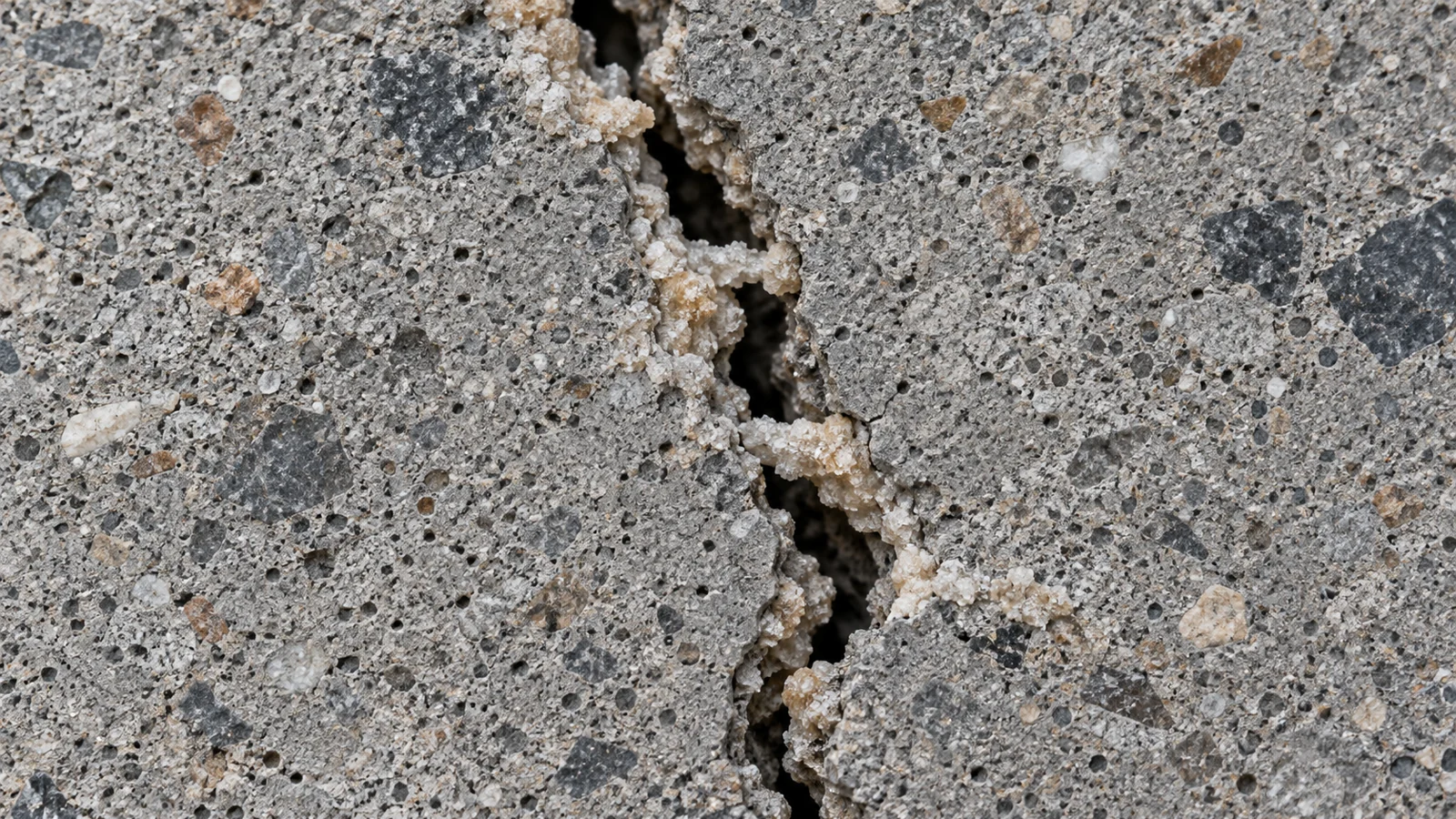
Where it stands now
Main bottleneck
Establishing that bacteria survive within aging concrete and reliably produce durable crack sealing under changing exposure conditions, while preserving the concrete's mechanical performance.
Watch next
Controlled, long-term field measurements showing that aged bacterial concrete retains healing activity after cracking and reduces water and ion penetration compared with otherwise equivalent concrete without bacteria.
Progress timeline
How the evidence has changed over time.
2026 · 9 updates
- Choosing and feeding one bacterium for possible concrete microcrack repairResearch note 41 of 49 · Source date 2026-01-01
Since the previous research note · Earlier expectation not tested
Track continuity
Since the previous research note: How concrete can store and release a mineral-making repair system
Previous expectation: Dependable internal microcrack sealing could reduce difficult maintenance work if repair activity survives real exposure without weakening concrete.
What this study adds: The current source identifies a candidate bacterial strain and preliminary nutrient conditions, reporting enhanced germination and urea hydrolysis alongside inhibition from excessive calcium. These findings address preparation of the biological component; they do not establish the earlier forecast’s infrastructure benefit.
Current research note
- Can a porous mineral shelter keep concrete repair bacteria ready?Research note 42 of 49 · Source date 2026-01-16
Since the previous research note · Earlier expectation not tested
Track continuity
Since the previous research note: Choosing and feeding one bacterium for possible concrete microcrack repair
Previous expectation: A prepared bacterium might eventually help concrete seal small cracks and reduce local patching if its activity persists inside the material and produces durable sealing.
What this study adds: This study examines a different bacterium, Bacillus pasteurii, and shows retained mineral-making capacity after aging with an expanded-perlite carrier in simulated cement environments. It adds evidence about preserving a repair ingredient, without testing the earlier strain-and-nutrient combination or establishing its predicted maintenance benefit.
Current research note
- Bacteria that survive cement chemistry filled narrow mortar cracksResearch note 43 of 49 · Source date 2026-03-06
Since the previous research note · Earlier expectation not tested
Track continuity
Since the previous research note: Can a porous mineral shelter keep concrete repair bacteria ready?
Previous expectation: Protected bacterial spores might retain repair capacity through years of dormancy and eventually help seal small concrete cracks.
What this study adds: The current study connects enzyme screening and alkaline survival with calcite bridging and mechanical recovery in small mortar specimens after 28 days of wet curing. It addresses strain selection and nutrient matching without testing the earlier carrier-aging forecast.
Current research note
- How bacteria might seal a concrete crack and what that repairsResearch note 44 of 49 · Source date 2026-03-13
Since the previous research note · Earlier expectation not tested
Track continuity
Since the previous research note: Bacteria that survive cement chemistry filled narrow mortar cracks
Previous expectation: Matching bacteria to cement chemistry might enable locally tailored crack-sealing ingredients if laboratory performance survives longer exposure and construction-scale use.
What this study adds: This preprint presents a Bacillus subtilis concrete concept and performance claims, but its declaration of no laboratory access conflicts with its experimental narrative. The supplied evidence establishes no test of the earlier screening principle or its predicted transfer to local materials and larger mixes.
Current research note
- How adding bacteria changed concrete under loadPartly supportedResearch note 45 of 49 · Source date 2026-03-16
Since the previous research note · Partly supported
Track continuity
Since the previous research note: How bacteria might seal a concrete crack and what that repairs
Previous expectation: Bacterial mineral formation might help infrastructure owners slow water-driven deterioration through protection built into concrete, provided the material remains functional and structurally suitable.
What this study adds: This laboratory study reports improved mechanical response alongside reduced electrical charge passage and capillary water uptake in concrete containing Bacillus subtilis solution. Those findings support parts of the earlier practical expectation but do not establish persistent self-repair or reduced maintenance.
Current research note
- Pineapple fibres change how bacterial concrete handles load and waterResearch note 46 of 49 · Source date 2026-05-14
Since the previous research note · Earlier expectation not tested
Track continuity
Since the previous research note: How adding bacteria changed concrete under load
Previous expectation: Bacterial concrete could eventually reduce disruptive repairs in salt-exposed infrastructure if its damage tolerance and resistance to inward transport persist under realistic conditions.
What this study adds: The current study adds a fibre-and-mineral formulation comparison, showing that compression, splitting tension and water uptake respond differently to fibre choices. It does not test the earlier forecast's persistence under realistic salt exposure and loading.
Current research note
- How conditions can pause and restart bacteria in self-healing concreteResearch note 47 of 49 · Source date 2026-06-17
Since the previous research note · Earlier expectation not tested
Track continuity
Since the previous research note: Pineapple fibres change how bacterial concrete handles load and water
Previous expectation: A bacterial concrete formulation might reduce maintenance if it retained useful performance in realistic service and gained durable crack-repair capability.
What this study adds: The current study reports the timing between spore germination, renewed urease activity, and deposition, together with potentially reversible environmental inhibition for Bacillus sphaericus LMG 22257. It adds a biological activation milestone without establishing a test of the earlier formulation's performance forecast.
Current research note
- How a soil bacterium changed laboratory mortar strength while calcium set the termsResearch note 48 of 49 · Source date 2026-06-23
Since the previous research note · Earlier expectation not tested
Track continuity
Since the previous research note: How conditions can pause and restart bacteria in self-healing concrete
Previous expectation: Controlling bacterial activation could make self-healing concrete more dependable if restarting activity translates into lasting crack sealing in real structures.
What this study adds: The current source adds controlled mortar-strength and selected chemical-exposure results for Bacillus albus W39, including a reversal in the preferred bacterial concentration as calcium availability changes. It does not establish that the earlier activation-and-recovery behavior produces lasting crack repair.
Current research note
- How one bacterial application filled small mortar cracksResearch note 49 of 49 · Source date 2026-06-30
Since the previous research note · Earlier expectation not tested
Track continuity
Since the previous research note: How a soil bacterium changed laboratory mortar strength while calcium set the terms
Previous expectation: A bacterial cement formulation could reduce deterioration and disruptive repairs if its laboratory gains survive realistic service conditions and practical delivery constraints.
What this study adds: A different strain, ITBMC36, produced calcite-rich deposits in externally treated mortar cracks and reduced early water absorption, alongside a complete genome that identifies candidate mineralization and survival functions. This supplies a distinct crack-sealing and water-entry milestone rather than testing the earlier Bacillus albus W39 calcium-dependent strength result.
Current research note
2025 · 12 updates
- Bacteria may close concrete cracks, but strength still mattersResearch note 29 of 49 · Source date 2025-03-26
Since the previous research note · Earlier expectation not tested
Track continuity
Since the previous research note: When the material sheltering bacteria shapes concrete repair
Previous expectation: Persistent bacterial crack sealing could reduce deterioration and disruptive maintenance if bacterial reserves and concrete performance remain adequate in service.
What this study adds: The current source reports controlled crack-healing observations in specimens and reinforced beams, alongside mechanical-property comparisons involving manufactured sand. These findings address laboratory healing and mix performance but do not establish the earlier forecast's service-life protection or maintenance benefits.
Current research note
- Could bacteria give recycled tire rubber a useful role in stronger concrete?Partly supportedResearch note 30 of 49 · Source date 2025-04-28
Since the previous research note · Partly supported
Track continuity
Since the previous research note: Bacteria may close concrete cracks, but strength still matters
Previous expectation: Bacterial concrete might eventually reduce disruptive repairs if local healing persists after construction while the material retains the strength its application requires.
What this study adds: In a different concrete formulation containing recycled tire rubber, one bacterial mixture nearly matched conventional-control compressive strength and exceeded its measured flexural strength, while water-cured cracked specimens showed reported closure over 80 days. This supports part of the materials-performance premise without testing field maintenance savings or post-healing strength recovery.
Current research note
- How crack pathways shape concrete that can seal its own cracksResearch note 31 of 49 · Source date 2025-05-06
Since the previous research note · Earlier expectation not tested
Track continuity
Since the previous research note: Could bacteria give recycled tire rubber a useful role in stronger concrete?
Previous expectation: Bacterial assistance might make recycled-rubber concrete useful for suitable applications and eventually reduce localized repairs if strength and repeated healing persisted in service.
What this study adds: The current paper supplies a microstructure-based transport and precipitation model for generalized bacterial concrete, with literature-calibrated comparisons and explicit limits on mechanical coupling. It does not test the recycled-rubber formulation or repeated healing under service loads.
Current research note
- How bacteria embedded in concrete are proposed to seal cracksResearch note 32 of 49 · Source date 2025-05-09
Since the previous research note · Earlier expectation not tested
Track continuity
Since the previous research note: How crack pathways shape concrete that can seal its own cracks
Previous expectation: Concrete designed to distribute mineral-forming ingredients more evenly might sustain useful crack sealing and reduce localized repairs if modeled advantages persist in service.
What this study adds: This source presents a conceptual proposal using Bacillus subtilis spores and nutrients, with performance estimates adapted from existing literature because laboratory access was unavailable. It does not establish a test of the earlier transport-based forecast.
Current research note
- Can bacterial concrete regain strength while facing chemical damage?Partly supportedResearch note 33 of 49 · Source date 2025-06-17
Since the previous research note · Partly supported
Track continuity
Since the previous research note: How bacteria embedded in concrete are proposed to seal cracks
Previous expectation: Reliable bacterial mineral formation could let concrete handle some cracking internally and reduce repair visits while preserving its performance in service.
What this study adds: This preprint reports strength recovery in cracked specimens and mitigation of sulfate damage, providing experimental support for parts of that expectation. It does not establish reduced repair visits, repeated autonomous healing, or reliable performance throughout a structure's service life.
Current research note
- Combining bacteria changed mortar strength, but more was not always betterResearch note 34 of 49 · Source date 2025-07-01
Since the previous research note · Earlier expectation not tested
Track continuity
Since the previous research note: Can bacterial concrete regain strength while facing chemical damage?
Previous expectation: Bacterial mineral formation that remains effective during sulfate exposure and repeated cracking could reduce infrastructure repair needs while preserving mechanical performance.
What this study adds: The current study reports improved strength and reduced water absorption in mortar containing a Bacillus cereus–Vibrio natriegens mixture, alongside mineral characterization and bacterial recovery after curing. Its verified comparisons concern formulation performance and do not test the earlier sulfate-exposure and repeated-damage forecast.
Current research note
- The protective shell around concrete’s repair bacteria faces fireResearch note 35 of 49 · Source date 2025-08-01
Since the previous research note · Earlier expectation not tested
Track continuity
Since the previous research note: Combining bacteria changed mortar strength, but more was not always better
Previous expectation: A reproducible bacterial mixture could give cast mortar useful starting strength and reduced water uptake, provided those advantages persist at production scale and in service.
What this study adds: The current study examines a different requirement for bacterial concrete: protecting Bacillus subtilis spores during fire exposure using carbon-fiber or gelatin carriers and relating thermal predictions to observed recovery. It does not test the earlier mixture or its manufacturing forecast.
Current research note
- From dormant bacterial spores to mineral bridges in cracked concreteResearch note 36 of 49 · Source date 2025-08-07
Since the previous research note · Earlier expectation not tested
Track continuity
Since the previous research note: The protective shell around concrete’s repair bacteria faces fire
Previous expectation: Bacteria protected during a fire might later seal water-entry paths if they survive, reactivate and function within structurally adequate concrete.
What this study adds: This study examines activation chemistry, assisted repair, mineral bridging and mortar properties in laboratory preparations. It does not test biological repair following the representative fire exposure on which the previous expectation depended.
Current research note
- What bacterial concrete reveals about water uptake and recovery after crackingPartly supportedResearch note 37 of 49 · Source date 2025-08-14
Since the previous research note · Partly supported
Track continuity
Since the previous research note: From dormant bacterial spores to mineral bridges in cracked concrete
Previous expectation: Bacterial mineral repair could reduce water entry and some recurring crack repairs if bacterial function could be sustained within usable concrete.
What this study adds: This source reports lower water absorption and capillary uptake in bacterial concrete mixtures, alongside post-cracking strength recovery. Those observations support the water-entry part of the expectation without testing the earlier capsule activation, placement or lifetime-survival conditions.
Current research note
- Following recovered bacteria through self-healing concretePartly supportedResearch note 38 of 49 · Source date 2025-09-08
Since the previous research note · Partly supported
Track continuity
Since the previous research note: What bacterial concrete reveals about water uptake and recovery after cracking
Previous expectation: Bacterial concrete could reduce recurring repairs if its healing function survives real exposure and delivers useful protection after cracking.
What this study adds: The current preprint reports healing after specimens underwent two years of seasonal exposure, followed by induced cracking and 28 days of curing. That bears on the persistence condition and adds microbial recovery and transfer procedures, without directly testing the earlier study's forecast of water protection, maintenance savings, or environmental and economic benefits.
Current research note
- When a sealed concrete crack meets a new loadPartly supportedResearch note 39 of 49 · Source date 2025-09-30
Since the previous research note · Partly supported
Track continuity
Since the previous research note: Tracing concrete crack repair back to the bacteria
Previous expectation: Built-in bacterial repair could reduce disruptive concrete maintenance if the bacteria remain functional and healing proves durable under service conditions.
What this study adds: The current study supplies laboratory observations of crack closure and behavior after renewed loading, including reinforced-beam results relevant to a useful repair capability. Residual cracks during the second loading sequence and the stated need for field validation leave the service-life conditions unresolved.
Current research note
- How concrete can store and release a mineral-making repair systemResearch note 40 of 49 · Source date 2025-11-01
Since the previous research note · Earlier expectation not tested
Track continuity
Since the previous research note: When a sealed concrete crack meets a new load
Previous expectation: Built-in bacterial crack sealing could reduce water entry and maintenance disruption once durability under real exposure and repeated loading, affordability and environmental tradeoffs were demonstrated.
What this study adds: The November 2025 review compares microbial, enzyme, capsule and composite approaches, making protection, release, environmental requirements and fabrication tradeoffs more explicit. It does not itself test the earlier forecast's repeated-loading or infrastructure-maintenance outcomes.
Current research note
2024 · 4 updates
- How bacteria and mix ingredients shape concrete predictionsResearch note 25 of 49 · Source date 2024-04-10
Since the previous research note · Earlier expectation not tested
Track continuity
Since the previous research note: How bacterial repair changed damaged concrete’s grip on steel
Previous expectation: Bacterial repair might help damaged lightweight reinforced-concrete components retain useful load transfer between steel and concrete when repair delivery and durability under service conditions can be secured.
What this study adds: The April 2024 source adds a modeling contribution using an existing dataset to predict concrete strength and slump from bacteria concentration and conventional mix ingredients. Those prediction outputs do not test the earlier forecast about durable recovery of steel-concrete bond.
Current research note
- How the material carrying repair bacteria changes concrete under loadResearch note 26 of 49 · Source date 2024-07-04
Since the previous research note · Earlier expectation not tested
Track continuity
Since the previous research note: How bacteria and mix ingredients shape concrete predictions
Previous expectation: Predictive models might help concrete producers narrow formulation trials if their predictions transfer to fresh mixes that also meet strength, workability and healing requirements.
What this study adds: This laboratory study compares bacterial carriers and concentration readings across mechanical and environmental tests, identifying carrier reinforcement and endpoint-dependent results. It does not test prediction transfer or a reduction in formulation effort.
Current research note
- When water helps bacterial concrete repair and when it acts too soonPartly supportedResearch note 27 of 49 · Source date 2024-11-26
Since the previous research note · Partly supported
Track continuity
Since the previous research note: How the material carrying repair bacteria changes concrete under load
Previous expectation: Bacterial concrete could make difficult infrastructure maintenance more manageable if its repair effect, carrier durability and structural performance remain reliable in service.
What this study adds: The current study supports the bacterial-survival part of that expectation under a bounded laboratory cold-exposure protocol and reports modest crack narrowing in a separate simulated-rain experiment. It adds curing history and water exposure to the track's explanation of what governs useful repair.
Current research note
- When the material sheltering bacteria shapes concrete repairPartly supportedResearch note 28 of 49 · Source date 2024-12-31
Since the previous research note · Partly supported
Track continuity
Since the previous research note: When water helps bacterial concrete repair and when it acts too soon
Previous expectation: A bacterial reserve that survives production and later maintains crack sealing could reduce damaging ingress and disruptive infrastructure maintenance.
What this study adds: This review brings carrier design and distinct engineering outcomes into the account, including a cited specimen study linking bacterial crack closure with inhibited reinforcement corrosion. That supports one part of the earlier pathway through synthesized evidence rather than a new test of the combined forecast.
Current research note
2023 · 7 updates
- How wood ash carries bacteria into self-healing concreteResearch note 18 of 49 · Source date 2023-01-10
Since the previous research note · Earlier expectation not tested
Track continuity
Since the previous research note: How bacterial mineral deposits formed at small concrete cracks
Previous expectation: Stable bacterial mineral deposits might reduce water entry through small cracks and postpone some sealing work if they remain effective under service conditions.
What this study adds: This study compares direct bacterial incorporation with wood-ash carriers in water-treated mortar, then reports mechanical properties for concrete containing the selected carrier treatment. It adds evidence about delivery and material performance, without establishing the earlier forecast's durable moisture-protection outcome.
Current research note
- How old mortar on recycled concrete helps crack-sealing bacteria workResearch note 19 of 49 · Source date 2023-03-16
Since the previous research note · Earlier expectation not tested
Track continuity
Since the previous research note: How wood ash carries bacteria into self-healing concrete
Previous expectation: Waste-derived bacterial carriers could reduce later crack-sealing work if their biological response and concrete performance remain useful under realistic service conditions.
What this study adds: The March 2023 study compares coarse and fine recycled-concrete carriers, linking their different laboratory repair behavior to attached old mortar and examining water-flow behavior. It expands the carrier-design evidence without testing wood ash or resolving the earlier service-performance condition.
Current research note
- How bacteria-associated minerals connect repair mortar with cracked travertineResearch note 20 of 49 · Source date 2023-04-04
Since the previous research note · Earlier expectation not tested
Track continuity
Since the previous research note: How old mortar on recycled concrete helps crack-sealing bacteria work
Previous expectation: Recycled concrete particles might carry useful bacteria into new concrete and eventually help limit water entry and recurring crack repairs if microbial activity and concrete performance endure in service.
What this study adds: The current study reports mineral formation and bonding in a deliberately applied repair mortar on artificially aged travertine. It adds a heritage-stone repair application without testing the earlier recycled-carrier forecast.
Current research note
- Predicting crack-area repair in concrete with bacteria and fibersResearch note 21 of 49 · Source date 2023-07-05
Since the previous research note · Earlier expectation not tested
Track continuity
Since the previous research note: How bacteria-associated minerals connect repair mortar with cracked travertine
Previous expectation: Durable, conservation-compatible bacterial mortar repairs could help conservators stabilize localized travertine damage while retaining original stone.
What this study adds: The July 2023 source introduces predictive modeling of cracked-area repair in concrete formulations containing bacteria and fibers. Its reported model fits concern formulation development and do not test the earlier travertine-conservation expectation.
Current research note
- A bacterium and thickener were tested together to repair concrete cracksResearch note 22 of 49 · Source date 2023-08-22
Since the previous research note · Earlier expectation not tested
Track continuity
Since the previous research note: Predicting crack-area repair in concrete with bacteria and fibers
Previous expectation: Computational screening might help researchers select promising bacteria-and-fiber mixtures before laboratory testing, provided predictions work on genuinely new mixtures.
What this study adds: The current abstract reports a soil-derived Bacillus cereus strain and a four-thickener comparison, with the selected formulation achieving over 90% reported crack repair. This adds a formulation experiment to the timeline but supplies no basis for treating it as a test of the earlier predictive models.
Current research note
- What bacterial capsules achieved inside cracked mortarResearch note 23 of 49 · Source date 2023-09-26
Since the previous research note · Earlier expectation not tested
Track continuity
Since the previous research note: A bacterium and thickener were tested together to repair concrete cracks
Previous expectation: A bacterial crack treatment might reduce recurring repair work if its repairs persist in real service conditions and the formulation proves practical.
What this study adds: The September 2023 study examines a different formulation using alginate-encapsulated Bacillus spores, with separate measurements of mineralization, colony recovery and crack closure. It identifies sustained curing heat as a vulnerability for B. pseudofirmus and reports narrow-crack filling under water immersion.
Current research note
- How bacterial repair changed damaged concrete’s grip on steelResearch note 24 of 49 · Source date 2023-12-30
Since the previous research note · Earlier expectation not tested
Track continuity
Since the previous research note: What bacterial capsules achieved inside cracked mortar
Previous expectation: Internal bacterial mineral formation might help maintainers repair small cracks in hard-to-access concrete, provided the capsule system survives construction and delivers durable protection in service.
What this study adds: The December 2023 study examines a different carrier system and measures steel–concrete bond after damage and treatment, with the highest relative bond-strength ratio in specimens receiving chemical immersion and warm incubation. It adds a mechanical endpoint without testing the earlier capsule-based maintenance forecast.
Current research note
2022 · 13 updates
- Why making more room for bacteria did not produce the strongest mortarResearch note 5 of 49 · Source date 2022-03-15
Since the previous research note · Earlier expectation not tested
Track continuity
Since the previous research note: How packaging bacteria changes crack sealing in mortar
Previous expectation: Embedded bacterial carriers could help restrict water entry through small cracks and reduce later intervention if their sealing behavior persists under practical exposure and material requirements are met.
What this study adds: The current study examines a different delivery approach, using air entrainment with directly incorporated bacteria, and reports short-term bacterial gene-copy, mineral and strength responses. It does not test carrier swelling, crack sealing or water ingress, so it leaves the earlier forecast untested.
Current research note
- Bacterial mortar was loaded, kept moist and put to the test againPartly supportedResearch note 6 of 49 · Source date 2022-07-05
Since the previous research note · Partly supported
Track continuity
Since the previous research note: Why making more room for bacteria did not produce the strongest mortar
Previous expectation: Directly mixed bacteria could eventually help cementitious materials seal small cracks and reduce repair needs if bacterial function persists without compromising material performance.
What this study adds: This study reports mineral deposition, reduced water uptake and mechanical recovery after loading in directly amended mortar and reinforced laminates maintained under moist laboratory conditions. It supports portions of that causal route without establishing service-life persistence or testing the earlier air-entrainment formulation.
Current research note
- What does concrete need for bacteria to deliver useful crack repair?Research note 7 of 49 · Source date 2022-07-07
Since the previous research note · Earlier expectation not tested
Track continuity
Since the previous research note: Bacterial mortar was loaded, kept moist and put to the test again
Previous expectation: Bacteria that remain functional in service and restrict water entry after small cracks develop could reduce external repair needs.
What this study adds: The July 7, 2022 synthesis broadens the engineering picture by connecting mineralization pathways, delivery methods, formulation-dependent performance, and proposed biological modifications. It does not directly test sustained in-service function or the maintenance benefit anticipated in the earlier milestone.
Current research note
- How bacterial minerals reshape the process of concrete repairResearch note 8 of 49 · Source date 2022-07-11
Since the previous research note · Earlier expectation not tested
Track continuity
Since the previous research note: What does concrete need for bacteria to deliver useful crack repair?
Previous expectation: Concrete that sustains crack repair under service conditions could reduce external maintenance interventions.
What this study adds: The July 11, 2022 review explains how deposition can restrict the transport needed for further microbial activity and why surface closure can leave repair depth unresolved. It sharpens the conditions behind the earlier expectation without testing the maintenance benefit.
Current research note
- A mineral can seal concrete cracks while carbonation puts steel at riskChanged directionResearch note 9 of 49 · Source date 2022-08-12
Since the previous research note · Changed direction
Track continuity
Since the previous research note: How bacterial minerals reshape the process of concrete repair
Previous expectation: If bacterial activation and mineral deposition can be coordinated through relevant crack depths under service conditions, while preserving concrete performance, components could gain a more durable barrier to damaging ingress.
What this study adds: The August 12, 2022 review redirects that durability question toward reinforced concrete: closing an entry route and preserving alkalinity around embedded steel are related but distinct requirements. It connects bacterial mineral filling with carbonation chemistry but does not demonstrate long-term reinforcement protection.
Current research note
- How a soil bacterium helps build mineral filling inside cracksResearch note 10 of 49 · Source date 2022-08-29
Since the previous research note · Earlier expectation not tested
Track continuity
Since the previous research note: A mineral can seal concrete cracks while carbonation puts steel at risk
Previous expectation: Bacterial healing could support reinforced-concrete durability if crack sealing also preserves the conditions that protect embedded steel.
What this study adds: This study supplies a screened bacterial candidate, laboratory crack-filling observations and analysis of mineral formation. It does not test the connection between sealing, sustained alkalinity around reinforcement and steel condition.
Current research note
- How repeated bacterial and calcium-lactate baths sealed mortar cracksResearch note 11 of 49 · Source date 2022-09-23
Since the previous research note · Earlier expectation not tested
Track continuity
Since the previous research note: How a soil bacterium helps build mineral filling inside cracks
Previous expectation: Incorporated bacteria and available reactants might eventually give concrete a local response to small cracks that reduces some manual sealing work.
What this study adds: This study examines external treatment of already-cracked mortar and reports surface sealing and reduced permeability after repeated bacterial and calcium-lactate immersions. It develops a repair branch for existing material without testing an incorporated, service-activated healing system.
Current research note
- How bacterial minerals narrow cracks and change water passageResearch note 12 of 49 · Source date 2022-10-19
Since the previous research note · Earlier expectation not tested
Track continuity
Since the previous research note: How repeated bacterial and calcium-lactate baths sealed mortar cracks
Previous expectation: Durable bacterial mineral sealing delivered through a practical external treatment could help maintenance crews reduce water entry into existing cementitious structures.
What this study adds: This study examines a Bacillus mucilaginosus healing agent containing spores and calcium nitrate for early-age cracks, reporting closure, permeability repair and decreasing deposition with depth. It contributes a different formulation and a spatial account of mineral deposition without testing the earlier treatment's durability or delivery.
Current research note
- A computer model separates carrying more from bending less in bacterial concreteResearch note 13 of 49 · Source date 2022-10-26
Since the previous research note · Earlier expectation not tested
Track continuity
Since the previous research note: How bacterial minerals narrow cracks and change water passage
Previous expectation: Persistent bacterial mineral sealing could reduce water entry and related deterioration if the healing agent could be delivered practically.
What this study adds: The current source adds reinforced-beam simulations comparing load capacity, bending and loading arrangements, with numerical verification against two earlier experimental beams. Those results do not test the earlier conditional forecast about persistent resistance to water entry.
Current research note
- What can bacteria help repair inside lightweight concrete after severe heating?Research note 14 of 49 · Source date 2022-11-04
Since the previous research note · Earlier expectation not tested
Track continuity
Since the previous research note: A computer model separates carrying more from bending less in bacterial concrete
Previous expectation: If bacterial repair works in real reinforced members, infrastructure could retain structural performance while needing fewer repair interventions.
What this study adds: This study examined heat-exposed fiber-reinforced lightweight concrete specimens, finding lower post-curing water absorption and a stiffness-recovery signal without a compressive or flexural strength advantage over the control. It did not directly test the earlier reinforced-beam model or its predicted capacity increase.
Current research note
- At a Vilnius footbridge, rain meets concrete designed to seal cracksResearch note 15 of 49 · Source date 2022-12-01
Since the previous research note · Earlier expectation not tested
Track continuity
Since the previous research note: What can bacteria help repair inside lightweight concrete after severe heating?
Previous expectation: Reliable biological filling in heat-damaged concrete could reduce moisture entry and later deterioration if it persists beyond controlled curing and structural adequacy is independently verified.
What this study adds: The current source reports laboratory crack closure under simulated rain and establishes outdoor monitoring of deliberately cracked structural footbridge beams. It creates a distinct service-exposure milestone without testing repair after severe heating.
Current research note
- A treated wall reveals a bacterial mix for concrete surface repairResearch note 16 of 49 · Source date 2022-12-07
Since the previous research note · Earlier expectation not tested
Track continuity
Since the previous research note: At a Vilnius footbridge, rain meets concrete designed to seal cracks
Previous expectation: Repeated biological sealing of small cracks under outdoor service conditions could eventually reduce deterioration and maintenance if structural performance remained adequate.
What this study adds: The current source examines resident calcifying bacteria on treated indoor walls and reports improved calcifying capacity in a three-species mixture. It adds a treatment-composition direction without establishing the earlier forecast about repeated outdoor sealing and infrastructure protection.
Current research note
- How bacterial mineral deposits formed at small concrete cracksResearch note 17 of 49 · Source date 2022-12-08
Since the previous research note · Earlier expectation not tested
Track continuity
Since the previous research note: A treated wall reveals a bacterial mix for concrete surface repair
Previous expectation: A bacterial mixture selected from organisms living on concrete might become a useful surface treatment for small defects in existing indoor walls if its mineral deposits remain effective.
What this study adds: This source reports a different spores-and-calcium-nitrate treatment for early-age cracks, with crack-closure and water-permeability repair outcomes after 28 days of dry–wet cycles. It does not establish that the earlier wall-treatment consortium achieved persistent repair.
Current research note
2021 · 4 updates
- How plastic capsules age inside concrete and change its strengthResearch note 1 of 49 · Source date 2021-02-18
- How a thin coating changes concrete’s bacterial carriersResearch note 2 of 49 · Source date 2021-05-21
Since the previous research note · Earlier expectation not tested
Track continuity
Since the previous research note: How plastic capsules age inside concrete and change its strength
Previous expectation: The earlier work suggested that capsules could make repair chemistry available when small cracks form if they survive mixing, keep enough payload and open reliably without an unacceptable strength penalty.
What this study adds: This study did not test that capsule-release route. It addressed a different delivery problem: protecting bacteria in coated expanded-clay carriers so more usable cells survive the hostile early life of cement.
Current research note
- Selecting bacteria and shaping calcite for concrete repairResearch note 3 of 49 · Source date 2021-09-01
Since the previous research note · Earlier expectation not tested
Track continuity
Since the previous research note: How a thin coating changes concrete’s bacterial carriers
Previous expectation: The previous note left open whether protective carrier coatings could keep bacteria usable through curing and long enough to act as a dormant repair reserve when a crack eventually opens.
What this study adds: This study did not test long-term coated carriers. It moved to another part of the repair problem: selecting a stronger bacterial strain and controlling calcite formation in an externally applied treatment.
Current research note
- How packaging bacteria changes crack sealing in mortarResearch note 4 of 49 · Source date 2021-10-15
Since the previous research note · Earlier expectation not tested
Track continuity
Since the previous research note: Selecting bacteria and shaping calcite for concrete repair
Previous expectation: The previous research note left open whether strain selection and calcite control could move from repeated 45 °C laboratory treatment toward practical bacterial concrete repair.
What this study adds: This study did not test that route. It shifted the track to a different bottleneck: embedding bacteria in methylcellulose pellets and measuring whether that delivery approach can restrict water entry through small mortar cracks without unacceptable handling and strength penalties.
Current research note
How this Track works
This page changes as new evidence arrives. Open any update to see what researchers found at that point in the story.