
Editorial team
ioQuanta Research Desk
-
 Evidence date ·
How the womb lining prepares for implantation through cell change and immune clearance
Review or Meta-AnalysisA 2025 review explains how active, nondividing cells help remodel the womb lining, why disease findings differ, and what selective treatments must preserve.
-
 Evidence date ·
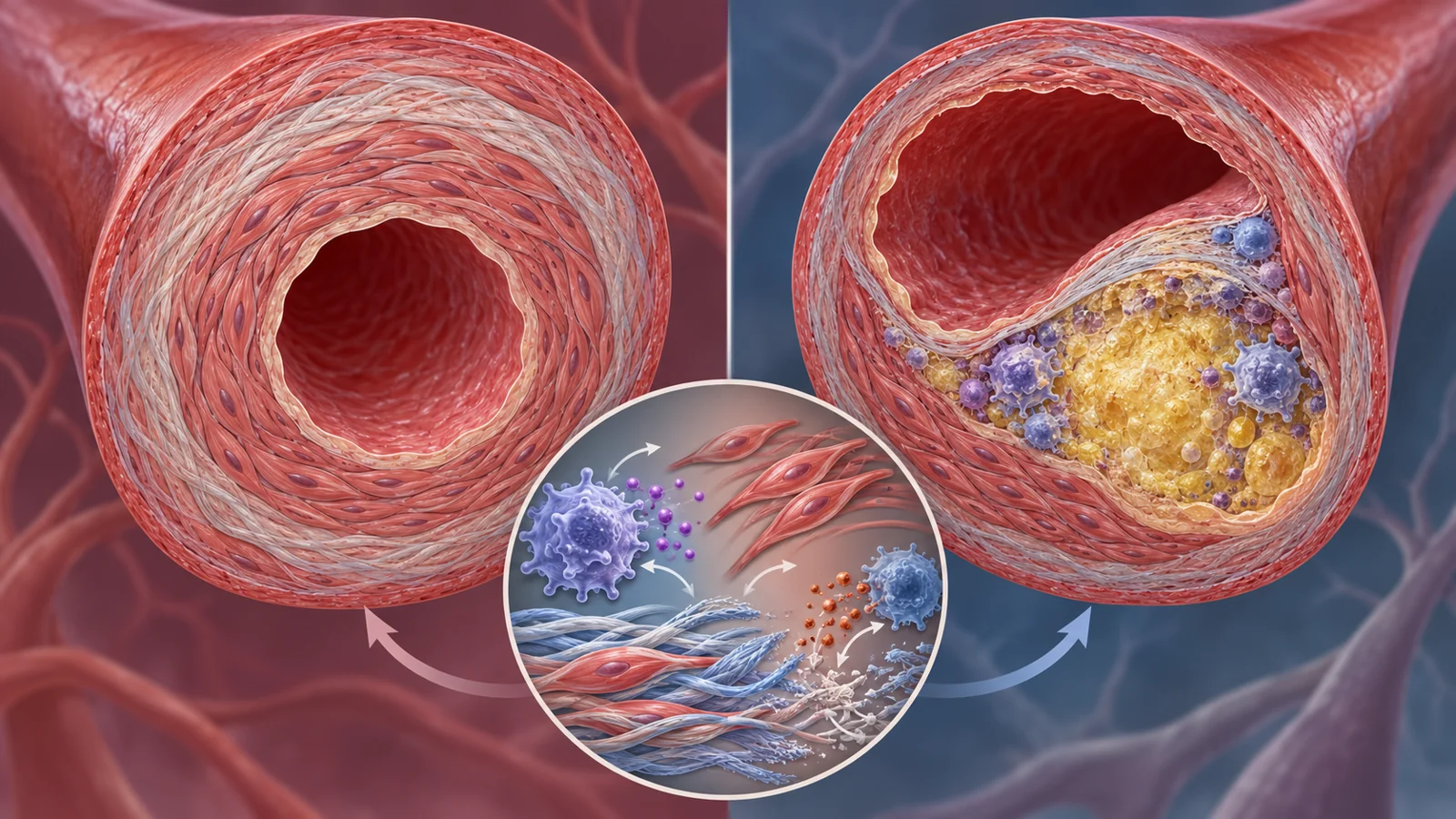
How aging cells reshape the heart’s supporting tissue
Review or Meta-AnalysisA 2025 review links senescent cells and inflammation to stiff vessel walls and fragile plaques, while explaining why some senescent cells may aid repair.
-
 Evidence date ·
Sweet Night compares familiar music with audiobooks in protected living
Clinical TrialSweet Night compares bedtime music with therapist-led audiobooks using actigraphy and caregiver reports. It is recruiting, with no posted results.
-
 Evidence date ·
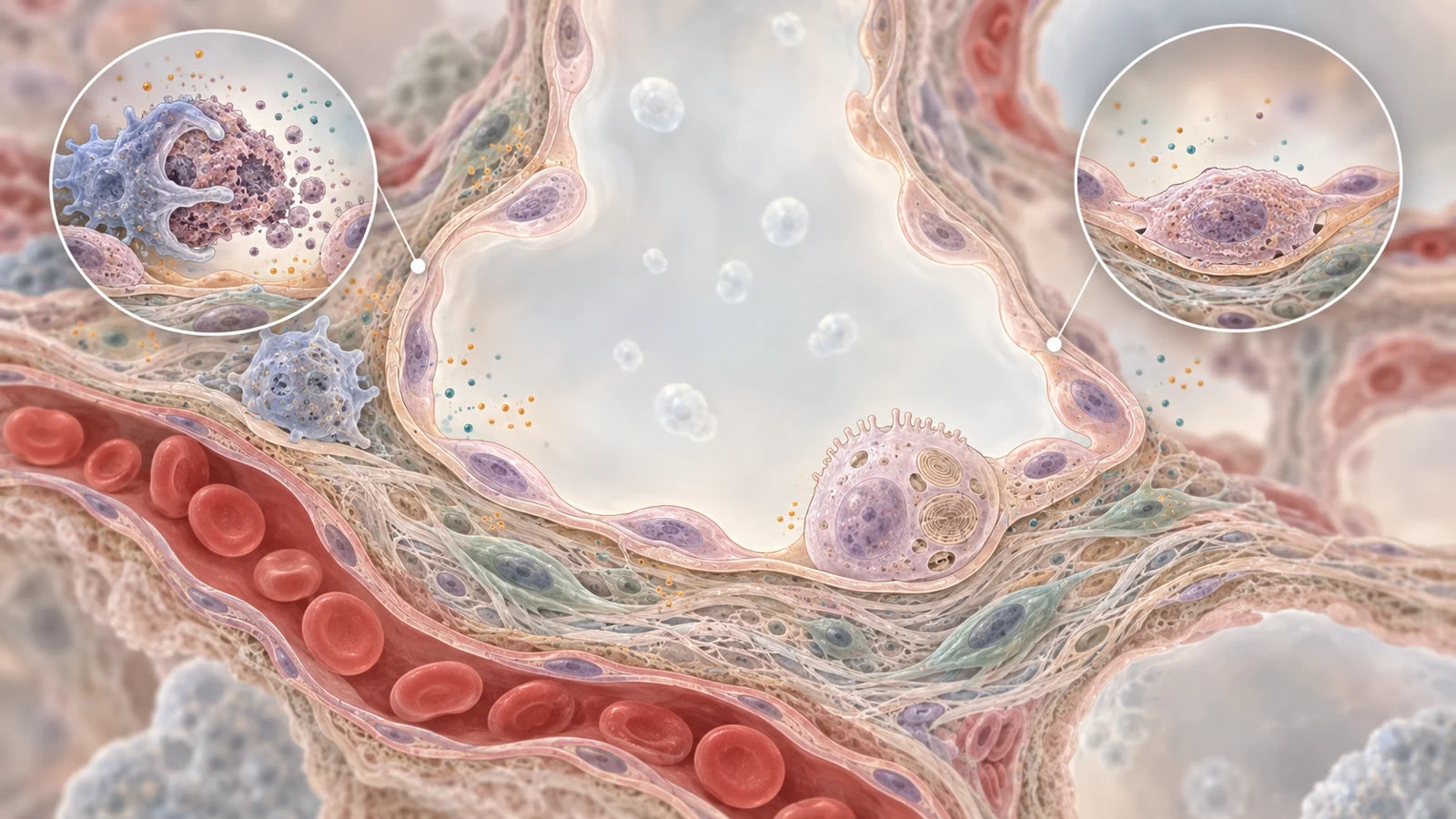
When lung cells stop dividing, treatment may depend on which cells they are
Review or Meta-AnalysisA 2025 review compares removing senescent lung cells with quieting their secretions and explains what early patient findings actually show.
-
 Evidence date ·
How persistent senescent cells reshape the tumor neighborhood
Review or Meta-AnalysisAn October 2025 review examines how senescent cells alter tumor immunity, what aging clocks measure, and preclinical tests of selective drug delivery.
-
 Evidence date ·
How anti-aging drugs differ and what human studies measured
Review or Meta-AnalysisA September 2025 review surveys proposed anti-aging drugs, the outcomes measured in human studies and the safety gaps that still limit preventive use.
-
 Evidence date ·
An autoimmune blistering skin disease raises a question about sleep
Clinical TrialA bullous pemphigoid study planned a sleep comparison with matched dermatology controls. Its registry snapshot contains no posted results.
-
 Evidence date ·
When Alzheimer’s disrupts the body clock, what can better sleep change?
Review or Meta-AnalysisA 2025 review links sleep and body-clock disruption with Alzheimer’s biology, but whether circadian treatments can slow the disease remains unproven.
-
 Evidence date ·
What a brain scan can reveal about disease timing after acting out dreams
Peer-Reviewed PaperTracked over timeA study of REM sleep behavior disorder linked an MRI marker to disease timing, but did not establish a way to predict an individual’s progression.
-
 Evidence date ·
What brain measurements reveal about hand and walking changes in isolated REM sleep behavior disorder
Peer-Reviewed PaperTracked over timeIn 44 people with isolated REM sleep behavior disorder, MRI findings accompanied subtle movement differences. The study did not test future disease risk.