
Engineering CAR NK Cells
Which CAR designs and engineering methods most reliably improve NK cells’ activity against cancer?
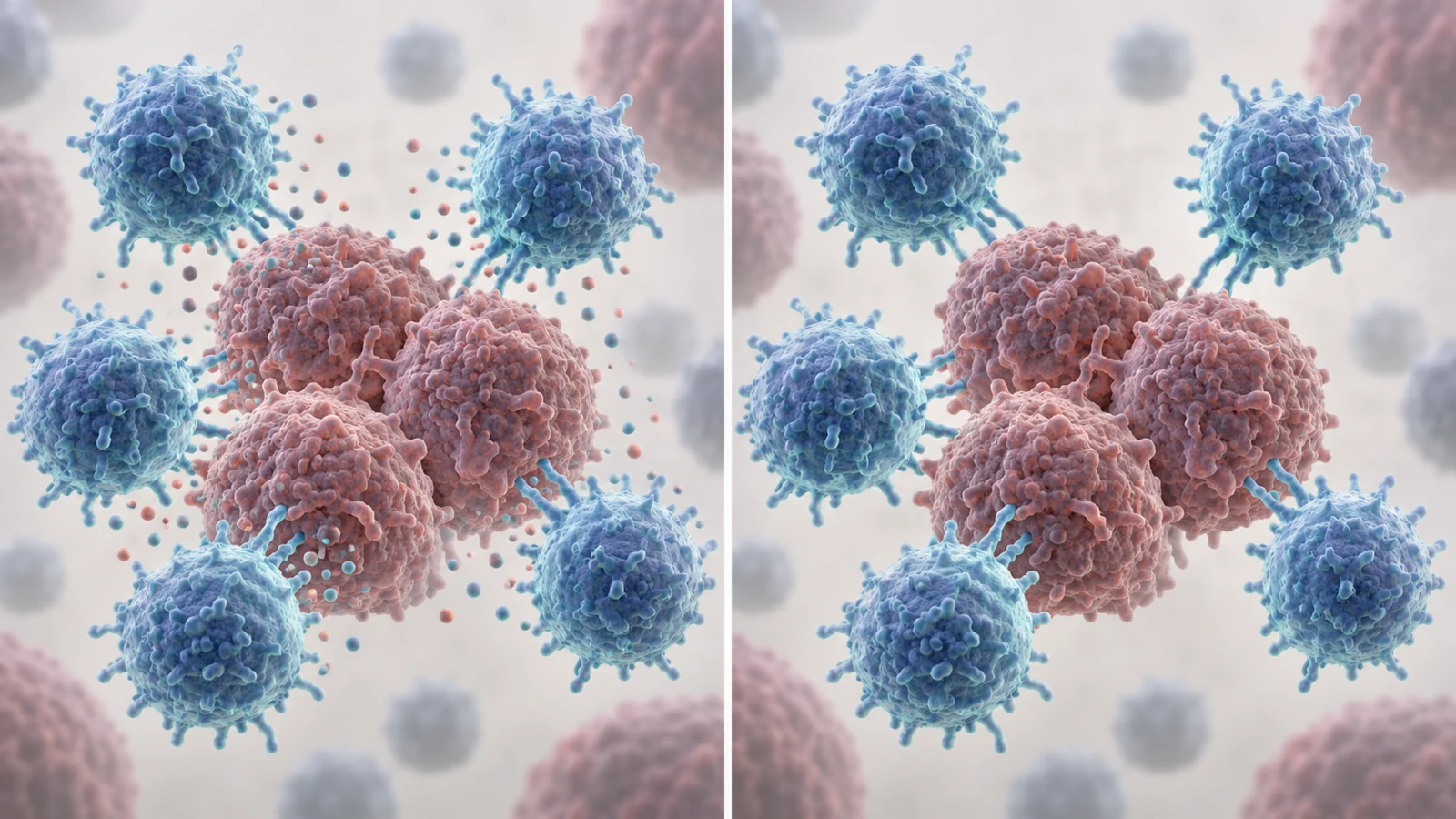
Following comparisons of CAR designs, added secreted proteins and non-viral engineering could reveal which modifications provide reproducible gains in antitumour activity.
Where it stands now
Main bottleneck
The bounded evidence does not establish which improvements extend beyond a particular CAR design or cancer target, or how non-viral engineering compares with other methods.
Watch next
A controlled comparison showing that a specific CAR design or non-viral engineering method reproducibly improves antitumour activity against a defined cancer target.
Progress timeline
How the evidence has changed over time.
2025 · 1 update
- How non-viral engineering turns natural killer cells into cancer-targeting cellsResearch note 3 of 3 · Source date 2025-04-01
Since the previous research note · Earlier expectation not tested
Track continuity
Since the previous research note: How receptor design changes what engineered natural killer cells can do against leukemia
Previous expectation: Banked engineered natural killer cells might offer ready-to-use leukaemia treatment if their activity survives storage and translates into durable, acceptably safe tumour control.
What this study adds: This review connects non-viral receptor delivery and stable modification with cell-source, manufacturing and storage constraints. Its supplied evidence does not test whether the earlier receptor designs deliver the forecast banked-treatment capability.
Current research note
2024 · 1 update
- How receptor design changes what engineered natural killer cells can do against leukemiaResearch note 2 of 3 · Source date 2024-06-03
Since the previous research note · Earlier expectation not tested
Track continuity
Since the previous research note: Engineered natural killer cells deliver an extra protein to mouse breast tumors
Previous expectation: Engineered natural killer cells might help patients with resistant HER2-positive breast cancer by combining tumour recognition with local delivery of an immune-inhibition-relieving protein.
What this study adds: The June 2024 study compares seven CD19 receptor designs in cord-blood natural killer cells against leukaemia, distinguishing tumour-killing performance from persistence in mice. It does not test the earlier HER2-targeted delivery strategy or its forecast for resistant breast cancer.
Current research note
2023 · 1 update
- Engineered natural killer cells deliver an extra protein to mouse breast tumorsResearch note 1 of 3 · Source date 2023-04-06
How this Track works
This page changes as new evidence arrives. Open any update to see what researchers found at that point in the story.