
Bacterial Control of Carbonate Precipitation
How do bacterial activities and combinations of strains determine how much calcium carbonate precipitates?
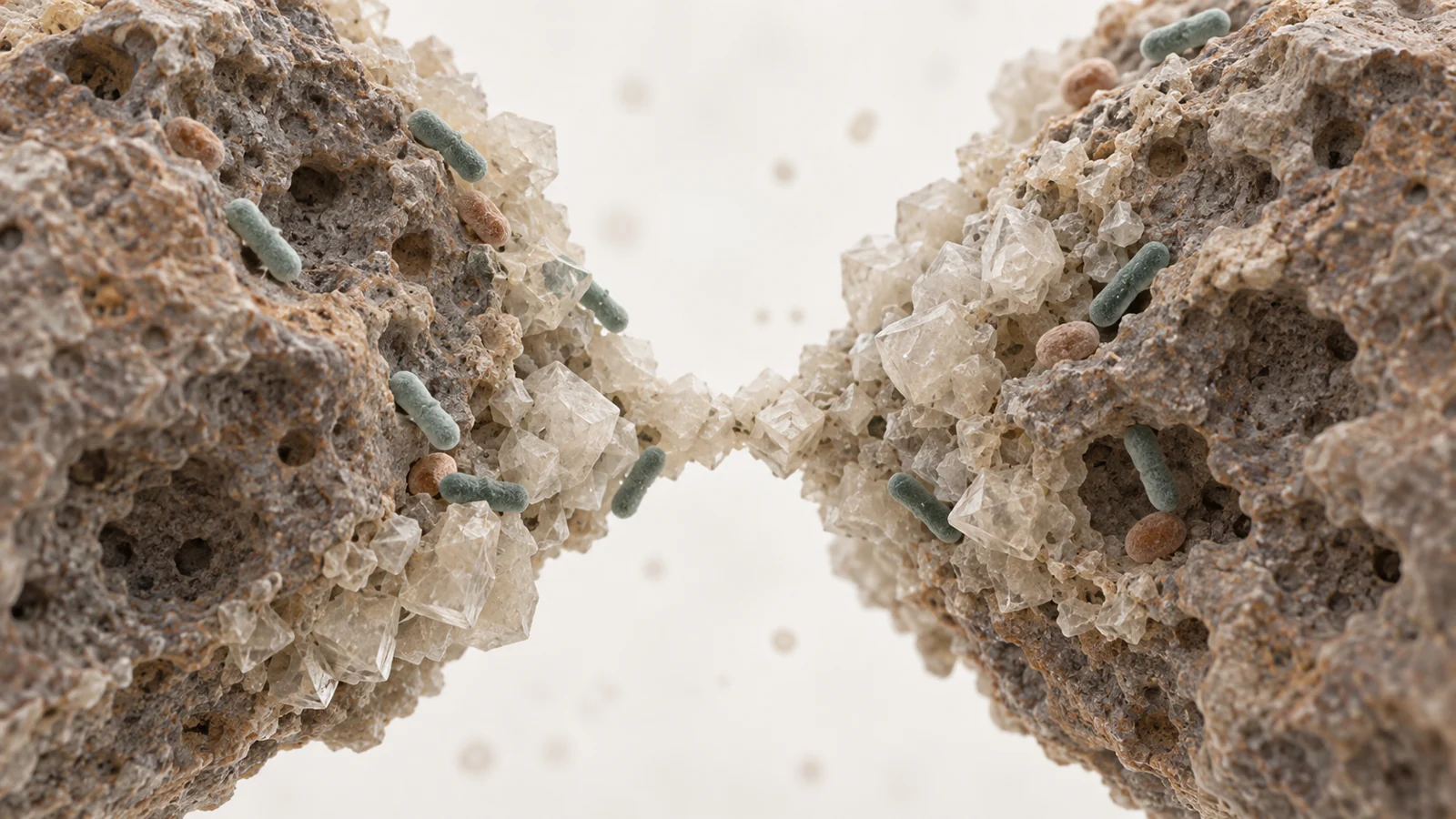
It could reveal whether bacterial mineral formation can be predictably controlled. Mixed cultures containing ureolytic and nonureolytic strains provide a concrete test of how bacterial combinations affect precipitation.
Where it stands now
Main bottleneck
Connecting the mechanisms of bacterial mineral formation to reproducible control of precipitation in mixed cultures. Current evidence does not establish which strains or interactions account for the reported high precipitation.
Watch next
A controlled comparison of mixed cultures and their constituent strains that measures carbonate precipitation and identifies each strain’s contribution.
Progress timeline
How the evidence has changed over time.
2022 · 1 update
- A bacterial mixture increased the mineral producedPartly supportedResearch note 2 of 2 · Source date 2022-06-23
Since the previous research note · Partly supported
Track continuity
Since the previous research note: How bacterial surfaces and chemistry shape mineral growth
Previous expectation: Choosing bacterial properties could enable mineral treatments tailored to sealing and binding if deposition remained reliable under application conditions.
What this study adds: The current study reports a three-strain culture with greater calcium carbonate mass than its reference strain, alongside individual-strain precipitation under alkaline and warm conditions. These results support parts of the biological-selection premise but do not, on the supplied evidence, demonstrate tailored mineral identity, controlled deposition rate or reliable sealing and binding.
Current research note
2021 · 1 update
- How bacterial surfaces and chemistry shape mineral growthResearch note 1 of 2 · Source date 2021-04-01
How this Track works
This page changes as new evidence arrives. Open any update to see what researchers found at that point in the story.