
Evidence date · 2021-03-01 · Research note 1 of 3
1 2 3
See current Track status →
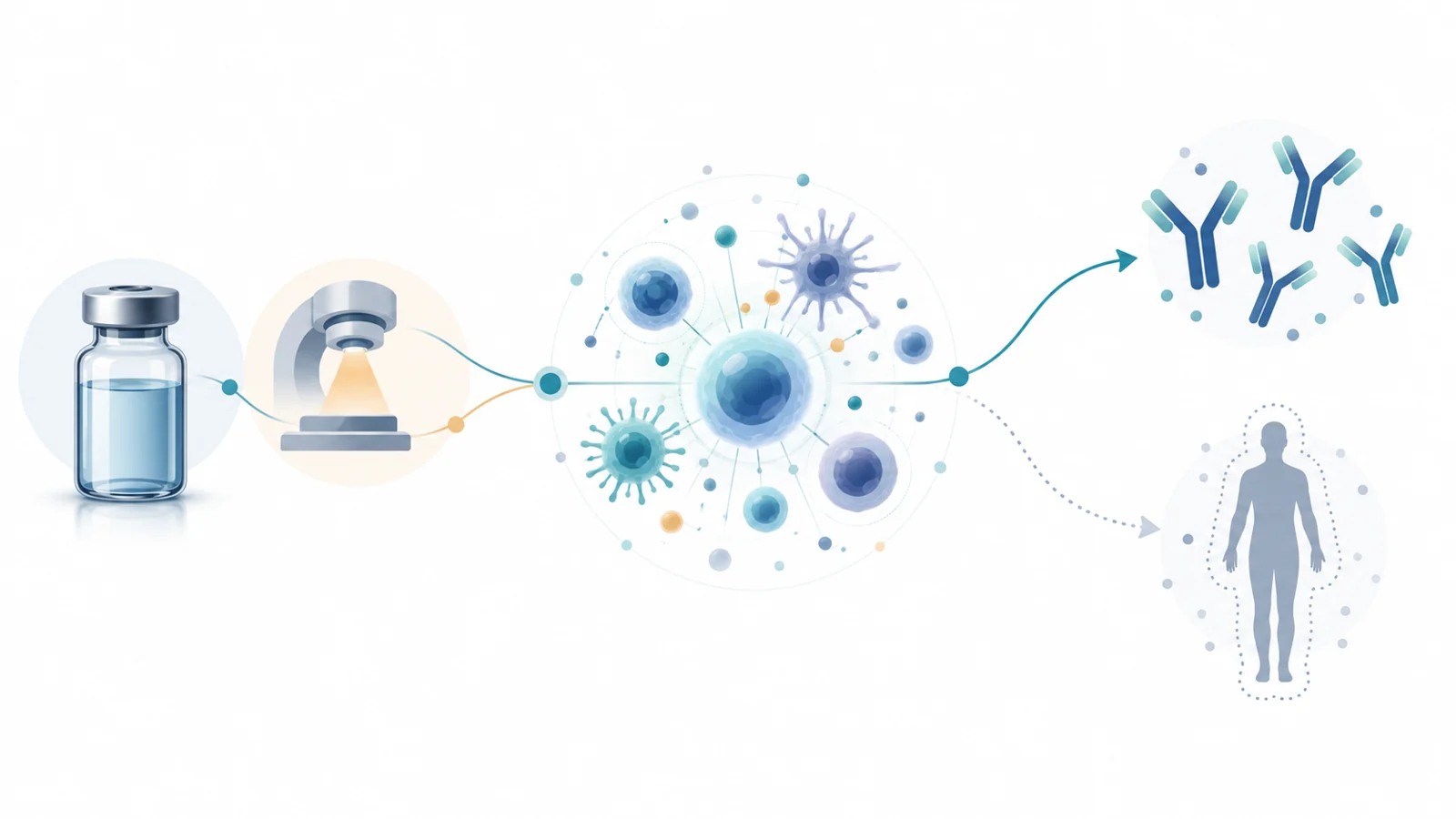
A review published in March 2021 found evidence of an antibody response after vaccination during checkpoint treatment, while also raising concern about possible immune-related side effects. Immune checkpoint inhibitors are cancer treatments. Immune-related adverse events are side effects linked to immune activity, so vaccine response and treatment safety matter together.
The review’s findings came from existing research, not a new trial. Its authors described the available literature as sparse and called for larger prospective studies before a consensus could be established.
The evidence centered mostly on influenza vaccination
The authors systematically assessed literature by searching PubMed (MEDLINE) and major oncology meetings, following PRISMA guidance. Most of the studies they found concerned influenza vaccination. The evidence therefore speaks most directly to the vaccines represented in those reports; it cannot establish that every vaccine produces the same response or has the same safety profile during checkpoint treatment.
This narrow base still offers a useful early view of the question. The authors report that vaccination during treatment was associated with a humoral response and an apparent increase in seroconversion. Those are observations from the studies they reviewed, rather than results from a single new comparison conducted by the review authors.
Antibodies show a response, not protection
A humoral response is the body’s production of antibodies, proteins that can be measured after vaccination. The review says patients receiving checkpoint inhibitors mounted this kind of response. It also describes an increased rate of seroconversion, a laboratory term for a measurable change in antibody status after vaccination.
These measurements show that an antibody response was detected. They do not, on their own, show how well people were protected from infection or whether vaccination led to a clinical benefit. The review’s finding is about an immune response measured in the studies, not demonstrated protection across the range of vaccines people might receive during cancer treatment.
The possible side-effect risk remained unresolved
The authors also raised the possibility that vaccination may provoke immune-related adverse events in people treated with checkpoint inhibitors. That concern matters because the treatment itself is associated with side effects involving immune activity. An event occurring after vaccination, however, does not by itself establish that the vaccine caused it.
The review’s summary provides no comparative estimate of how much additional risk vaccination might bring, if any. It therefore identifies a safety question for further study without showing that vaccination increases these events or establishing their cause. The antibody findings and the side-effect concern address separate outcomes; one does not answer the other.
What the inactivated-vaccine statement means
The authors state that inactivated vaccines had not been contraindicated during checkpoint treatment. In plain terms, the review did not describe this vaccine category as formally ruled out in that setting. The statement is narrower than a routine vaccination recommendation, and it is not proof that every inactivated vaccine is universally safe for every patient.
The review also noted that there was no recommendation regarding routine vaccination during checkpoint treatment. Read in its March 2021 context, its inactivated-vaccine statement describes the position reported in the literature at that time. It does not set an individual vaccination schedule or remove the need to consider both the potential immune response and the possible side effects.
How better vaccine guidance could help people on cancer immunotherapy
Larger prospective studies could clarify whether measured antibody responses translate into clinically meaningful protection and characterize immune-related side effects during treatment. If that evidence supports a clearer consensus, clinicians and patients could make vaccination decisions with a better understanding of both infection-prevention options and the possible immune-related risks. That could help preserve access to prevention while accounting for the uncertainties this review identified.
Key Sources
- Primary source: Vaccination and Immune Checkpoint Inhibitors: Does Vaccination Increase the Risk of Immune-related Adverse Events? A Systematic Review of Literature.
DOI or Journal Page · Review or Meta-Analysis · 2021-03-01