
Evidence date · 2026-02-09 · Research note 3 of 3
1 2 3
See current Track status →
Since the previous research note · Partly supported
Track continuity
Since the previous research note: What did flu shot safety studies find during cancer immunotherapy?
Previous expectation: Prospective evidence could clarify flu-shot safety and meaningful influenza protection during checkpoint treatment.
What this study adds: This 2026 review brings together 28 human studies, including prospective cohorts, and finds broadly favorable flu-vaccine safety results alongside COVID-19 findings. It describes vaccine immune responses but does not establish clinical influenza protection in checkpoint recipients.
What changed in this study
Across 28 human studies, influenza and COVID-19 vaccination generally was not linked to more immune-related complications among people receiving checkpoint inhibitors. That is the main finding of a 2026 review of earlier research, not the result of one new trial.
One large study in the review did find more mild-to-moderate immune-related events among vaccinated patients. Severe or worse events, however, were reported at about the same rate in vaccinated and unvaccinated patients. Understanding why those results can coexist helps make sense of what the evidence says—and what it cannot yet answer.
Checkpoint drugs can help cancer treatment and complicate safety questions
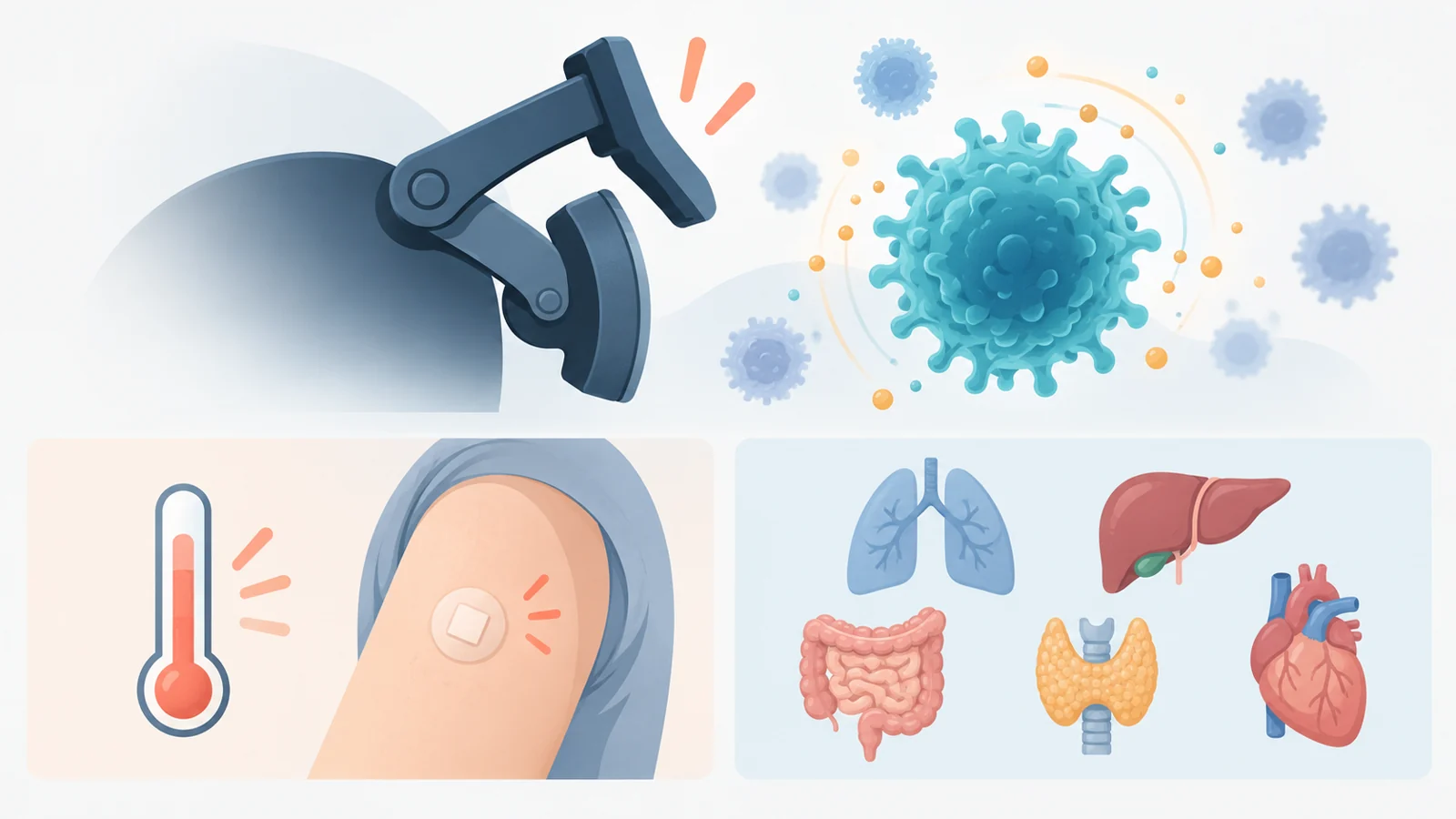
Immune checkpoint inhibitors are cancer drugs that release some of the immune system’s brakes. By increasing immune activity, they can help the body attack cancer, and they have become standard treatment for many cancers. The same heightened activity can sometimes affect healthy tissue, causing what doctors call immune-related adverse events, or irAEs. These can range from mild to life-threatening and can affect many parts of the body, including the gut, skin, liver, hormone-producing organs and lungs.
That risk raises a reasonable question about vaccination: could a vaccine’s immune response add to the treatment’s effects? The question matters because people with cancer face serious illness from infections such as influenza and COVID-19, as well as other vaccine-preventable diseases. Vaccination is an important prevention tool for people at higher risk, but its safety during checkpoint treatment needs to be judged against the complications that can arise from treatment itself.
The review found that most published studies reported no increase in local or systemic reactions potentially related to vaccination and no increase in irAEs after flu or COVID-19 vaccination. The finding supports a broadly favorable safety picture for those vaccines in the studied groups. It does not amount to a guarantee for every person, cancer or treatment combination.
A comparison asks more than whether an event happened
Some studies counted outcomes among vaccinated patients and compared those counts with previously published rates. Such a study can describe what happened after vaccination, but the count alone cannot show whether vaccination raised the risk. People receiving checkpoint inhibitors already have a background risk of irAEs, whether or not they are vaccinated.
Other researchers made direct comparisons. They looked at vaccinated and unvaccinated patients, or compared time periods after vaccination with control periods in the same people. Comparative studies varied in size, from 29 patients in one analysis to 983 in another. Across the reviewed comparisons, researchers did not find a link between vaccination and higher rates of immune-related events or heart inflammation (myocarditis).
Timing also matters. IrAEs are more common in the first two to four weeks after checkpoint treatment begins, although they can arise much later. If someone is vaccinated soon after starting treatment, an event that follows the shot may also fall in a period when treatment-related events are more likely. That overlap makes it harder to identify what contributed to an event. The review recommends that future analyses clearly define whether vaccination occurred after treatment began and account for the early treatment period when comparing risk.
The mild-event difference did not carry into severe events
A large prospective study followed 2,048 people receiving PD-1 inhibitors, a type of checkpoint cancer drug. In a matched subset of 1,060 patients, chosen to make the vaccinated and unvaccinated groups more comparable, mild-to-moderate immune-related events were recorded in 34% of vaccinated patients and 20% of unvaccinated patients. Severe-or-worse events were reported in about 6% of each group.
The split matters. A higher count of mild-to-moderate events does not mean the study found more severe complications. Nor does the difference show that vaccination caused the mild events. The researchers noted that vaccinated patients in the broader cohort were healthier and had fewer other health problems before vaccination; matching can make groups more comparable, but an observational comparison cannot establish cause and effect.
An earlier study did raise a possible concern, but it involved only 23 people. It did not specify which checkpoint inhibitors participants received or account for possible combination treatment, and the time between starting treatment and vaccination varied widely. The review weighs that result alongside larger cohorts and additional studies, most of which found a favorable safety profile for influenza and COVID-19 vaccines. A small, limited signal deserves attention, but it does not outweigh the broader pattern by itself.
A fever after vaccination is a different outcome from an irAE
COVID-19 vaccine studies also recorded local and systemic reactions after individual doses. Fever and other systemic effects were reported more often after the second dose in several studies, though results varied: some found more local reactions after the first dose, while another found both local and systemic reactions more often after the second. One study did not report dose-specific results for people receiving checkpoint inhibitors separately from other cancer patients.
These short-term reactions answer a different question from whether vaccination is followed by an immune-related complication of checkpoint treatment. Most studies assessing irAEs did not separate events by vaccine dose, in part because these complications can develop over time and overlap with treatment cycles. A report of fever after a dose therefore should not be treated as equivalent to a serious organ-related irAE, and dose-by-dose reaction counts alone do not settle the longer-term safety question.
Better cancer outcomes may reflect who got vaccinated
Some studies also reported associations between vaccination and longer survival, longer periods without cancer progression, or fewer interruptions to checkpoint treatment. In the large cohort, vaccinated patients were less likely to discontinue treatment. These observations are interesting, but they do not show that vaccination improved cancer control or prevented infection in this population.
People may be more likely to get vaccinated when they and their care team consider the timing favorable—for example, when they are not dealing with an irAE, fever or other treatment-related problems. That pattern can make vaccinated patients appear to fare better even if the vaccine did not cause the difference. To understand whether fewer complications or deaths relate to infection prevention, future studies would need information about vaccine-preventable infections and causes of death. The survival associations alone do not show whether flu vaccination prevented influenza among people receiving checkpoint inhibitors.
Most evidence stops at two vaccine groups
The review covers 28 primary research articles, but all except one focused on seasonal influenza or COVID-19 vaccines. The exception assessed a broad group of recommended vaccines without identifying them individually. Very few studies addressed vaccines for other infections that also pose risks to people with cancer, such as respiratory syncytial virus or pneumococcal disease. The reviewed evidence also does not establish the safety of receiving multiple vaccines on the same day during checkpoint treatment.
Many studies included fewer than 200 people, and their participants differed in cancer type, checkpoint treatment, use of other cancer therapies, vaccine, outcome definitions and follow-up. That variety reflects real differences in cancer care, but it also makes results harder to compare and apply across treatment settings. Rare complications are especially difficult to estimate from small groups. The favorable findings for flu and COVID-19 vaccines should not be stretched into a zero-risk claim for every combination of treatments or into a conclusion about vaccines that were barely studied.
How broader vaccine evidence could help protect people on checkpoint therapy
If larger, more comparable studies continue to support the current safety findings and include other vaccines and treatment combinations, clinicians could have a firmer basis for planning infection prevention during checkpoint care. Better evidence could help people with cancer avoid vaccine-preventable illness without unnecessary treatment interruptions. Whether vaccination prevents clinical influenza in this group, and how well these findings extend beyond flu and COVID-19 vaccines, remain open research questions.
Key Sources
- Primary source: Vaccine safety for individuals receiving immune checkpoint inhibitor therapy: A narrative review of current literature and recommendations for future research.
DOI or Journal Page · Review or Meta-Analysis · 2026-02-09