
Research Signal – Source date 2024-01-24
A device can produce a reading during sleep without establishing what that reading means biologically. To interpret it as information about brain fluid clearance, researchers need to connect it with measurements of that process. Connecting it with cognitive performance poses a further question.
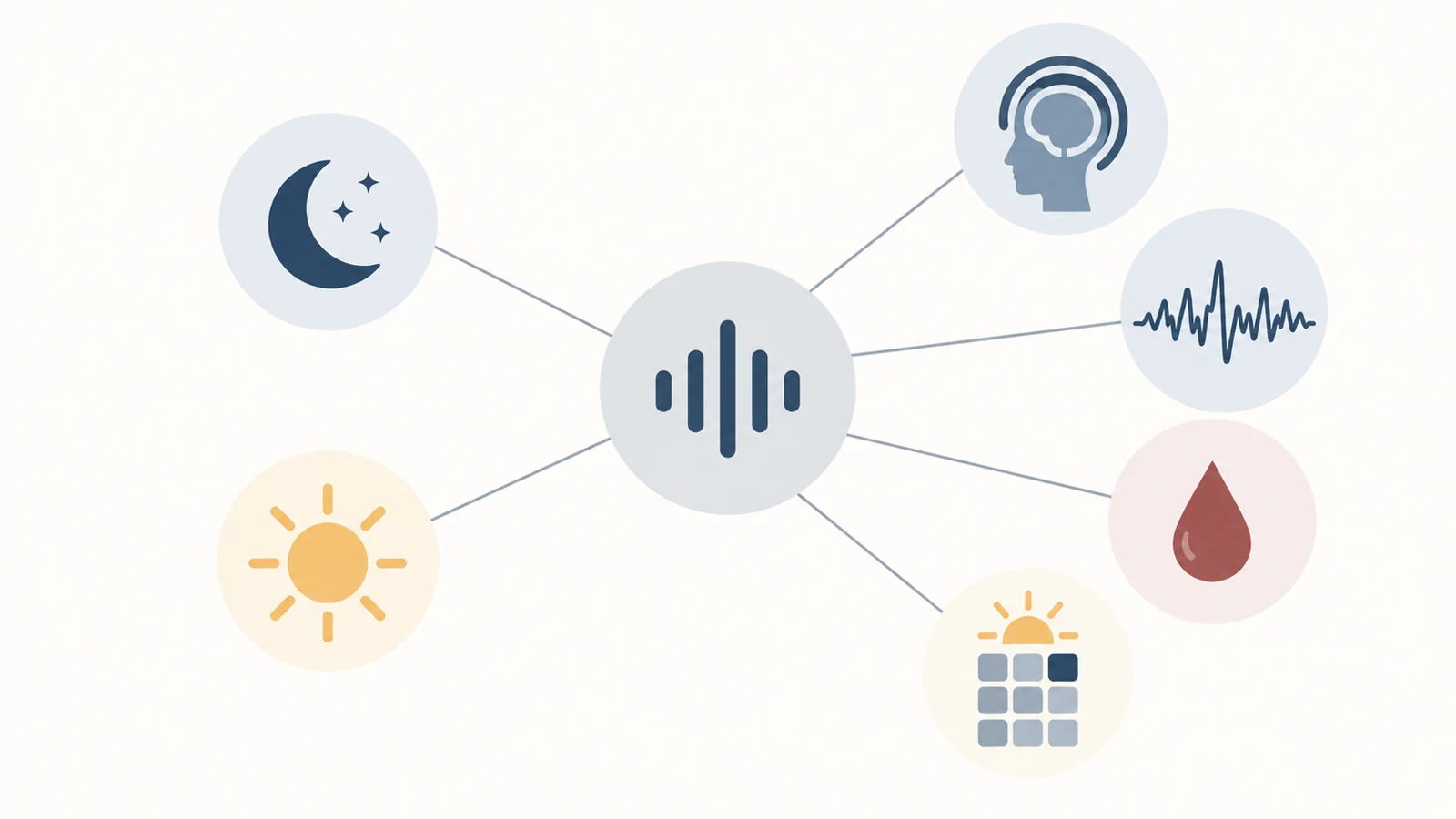
The Applied Cognition Benchmarking Study, described in a ClinicalTrials.gov registry publication dated January 24, 2024, proposes investigating those connections. The planned randomized crossover study aims to validate an investigational medical device in healthy adults aged 55–65. Its objectives bring together brain imaging, electrical brain activity, blood measurements and morning cognitive tests. The registry abstract establishes the questions researchers intend to ask; it does not establish that the device has answered them.
Comparing the readings with brain imaging
The central measurement target is glymphatic function, described here in plain language as brain fluid-clearance activity. The study asks whether device measurements associated with sleep and wakefulness faithfully reflect that activity as measured through MRI brain imaging.
Two imaging approaches are included in the objective. The registry describes contrast-enhanced MRI as the gold-standard comparison and also specifies non-invasive MRI-based measures of glymphatic function. These comparisons would give researchers a reference against which to interpret the device readings. The relevant relationship is between what the device records and what the imaging measures indicate about fluid clearance.
Sleep and wakefulness both matter to the stated question. The aim covers readings associated with each state, rather than assuming that a measurement taken during sleep already represents clearance activity. Establishing that relationship would give the device measurements a more specific biological meaning.
Brain activity, blood measurements and performance
The EEG objective asks a different kind of question. EEG measures brain electrical activity, and its power bands describe activity across different frequency ranges. Researchers intend to examine whether relationships between sleep EEG power bands and glymphatic flow replicate preclinical findings. This is a proposed test of whether an earlier research relationship also appears in these human volunteers.
The blood measurement objective concerns prediction. Researchers ask whether the device measurements can predict levels of Alzheimer’s disease-related biomarkers in plasma, the liquid portion of blood. Here the target is a measured biomarker level. A relationship with those levels would connect the device readings to another biological measurement, separate from the imaging comparison.
Morning cognitive testing adds performance to the picture. The study asks whether device measurements can predict how participants perform on cognitive tests the next morning. That is a question about a person’s measured performance at a particular time. It is distinct from the EEG question about brain electrical activity and the blood question about biomarker levels. Success on one objective would not automatically answer the others.
What the selected volunteers can establish
The intended participants are cognitively normal adults aged 55–65 without a medical history of neurological or sleep disorders, cardiovascular disease, hypertension or diabetes. Those criteria define a selected group. Any eventual findings would need to be interpreted within that population before being extended to people with Alzheimer’s disease, sleep disorders or the other excluded conditions.
The abstract provides the study’s aims and population criteria, but it is not enough to assess achieved accuracy or predictive performance. Its description also does not provide a basis here for evaluating the crossover conditions, randomization procedures, enrollment size or analytical methods. Calling the study randomized and crossover identifies its broad design; those labels alone cannot establish how convincingly it answers the measurement questions.
The possible interpretations also have limits. Predicting Alzheimer’s-related blood biomarker levels would not by itself establish a diagnostic test, a forecast of future disease or a way to prevent it. Predicting morning cognitive performance would not demonstrate sustained cognitive improvement or reduced neurodegeneration. Neither objective, even if achieved, would establish a treatment benefit.
What this could change
If the imaging comparisons validate the readings and the relationships with morning cognition prove reproducible, the device could eventually help assess sleep interventions intended to improve next-morning cognitive test performance. The potential payoff would be identifying interventions that improve performance alongside measurable changes in brain fluid-clearance activity. That use would still require evidence that the device reliably tracks changes over time and controlled intervention studies demonstrating cognitive benefit. Neither capability nor benefit is established by the supplied study description.
Key Sources
- Primary source: Applied Cognition Benchmarking Study
Government or Regulator · Peer-Reviewed Paper · 2024-01-24
Keep exploring