
OX40 Agonist Development for Cancer
Can OX40 agonists produce a clinically demonstrated benefit for cancer patients, alone or in combination with other immunotherapies?
Following this Track shows whether the patent and review literature develops into evidence that OX40 agonists can improve cancer treatment. The key question is whether combination approaches overcome the challenges identified in their development.
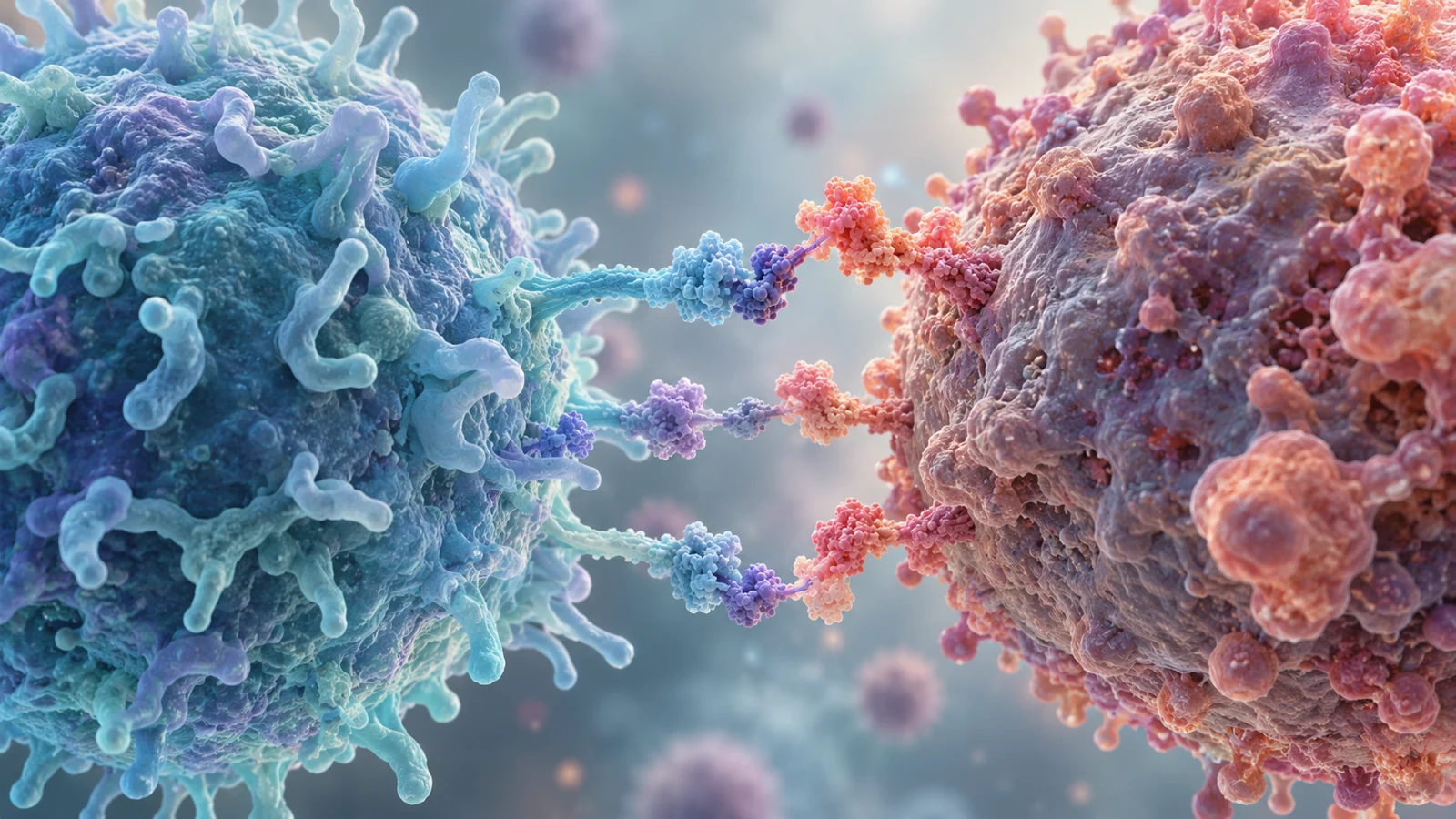
Where it stands now
Main bottleneck
Current evidence describes patent activity and reviews of development challenges and clinical applications, but does not establish reproducible clinical benefit. Translating the proposed approaches into convincing patient evidence remains unresolved.
Watch next
Watch for verifiable clinical evidence reporting safety and treatment outcomes for an OX40 agonist, especially in a combination regimen, with enough detail to assess whether it adds benefit.
Progress timeline
How the evidence has changed over time.
2026 · 1 update
- Why has an immune-cell activation signal been hard to turn into cancer treatment?Partly supportedResearch note 3 of 3 · Source date 2026-03-06
Since the previous research note · Partly supported
Track continuity
Since the previous research note: What does an OX40 immune boost need around it to help fight a tumor?
Previous expectation: Coordinating a sufficiently active OX40 agonist with tumor-specific T-cell activation might make treatment combinations useful.
What this study adds: The 2026 review describes combination approaches and newer agonist designs, while reporting limited single-agent responses and early-stage combination signals.
Current research note
2023 · 1 update
- What does an OX40 immune boost need around it to help fight a tumor?Changed directionResearch note 2 of 3 · Source date 2023-08-20
Since the previous research note · Changed direction
Track continuity
Since the previous research note: What a patent review shows about OX40 cancer drug development
Previous expectation: OX40 agonists could add a cancer treatment option if clinical testing showed meaningful benefit with acceptable safety.
What this study adds: The 2023 review describes limited benefit from early OX40 treatment alone or with checkpoint inhibitors despite strong animal results. It examines antigen signals, scheduling, drug potency, and different partners as possible routes forward.
Current research note
2021 · 1 update
- What a patent review shows about OX40 cancer drug developmentResearch note 1 of 3 · Source date 2021-01-01
How this Track works
This page changes as new evidence arrives. Open any update to see what researchers found at that point in the story.