
Senescence-driven tissue fibrosis
Can targeting senescent cells’ secretions limit tissue fibrosis associated with an aging extracellular matrix?
It can show whether explanations of senescence-related scarring translate into measurable ways to reduce fibrosis.
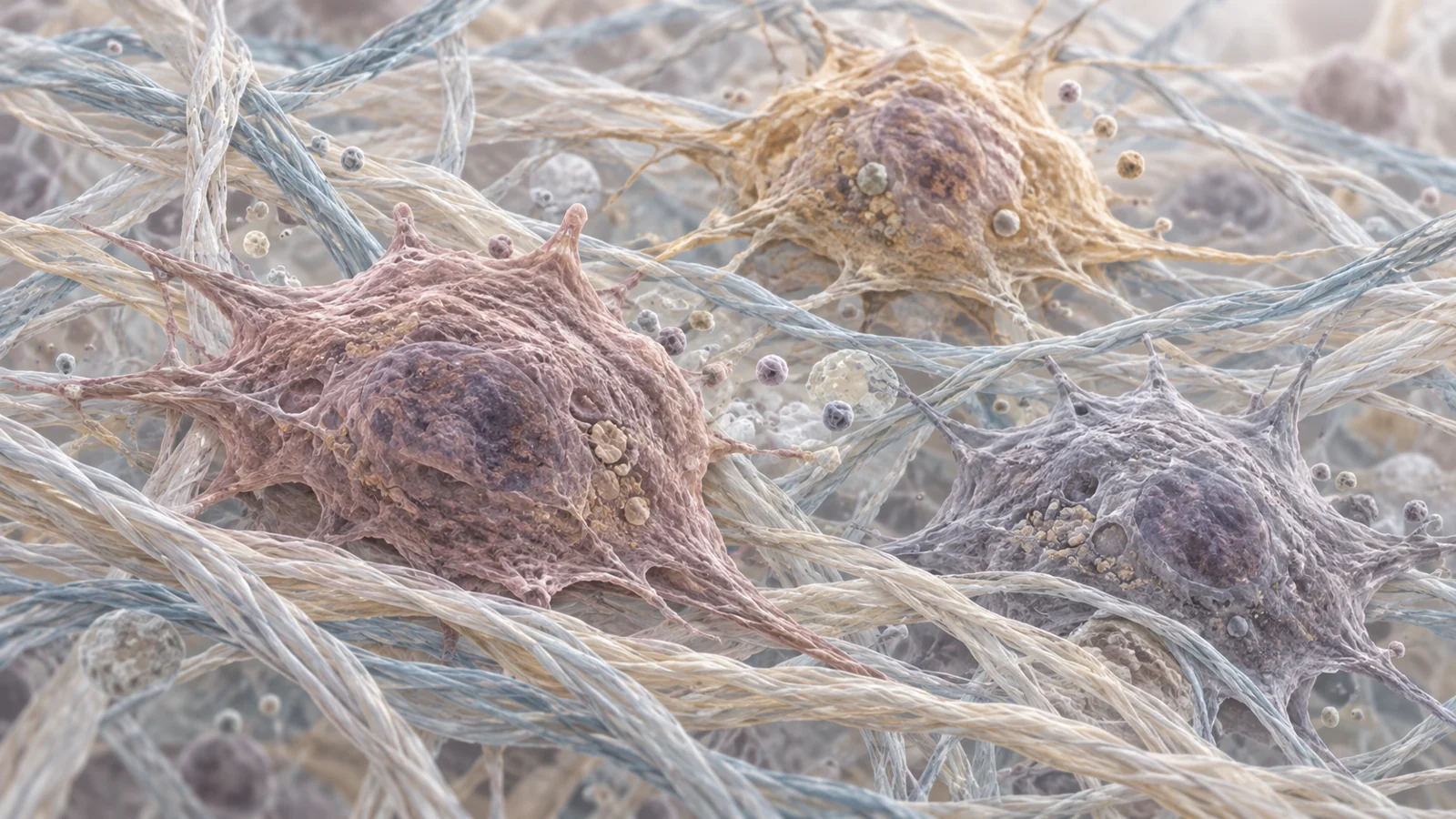
Where it stands now
Main bottleneck
Establishing which senescence-related processes cause fibrosis and whether targeting them reliably reduces tissue scarring.
Watch next
A controlled study showing that altering senescence-associated secretions produces a measurable reduction in fibrosis, with evidence linking the effect to changes in the extracellular matrix.
Progress timeline
How the evidence has changed over time.
2025 · 1 update
- How cells that stop dividing can influence organ scarringResearch note 2 of 2 · Source date 2025-07-18
Since the previous research note · Earlier expectation not tested
Track continuity
Since the previous research note: How aging cells and the lung’s scaffold can prolong repair
Previous expectation: Interrupting persistent senescent-cell signaling and damaging repair feedback might preserve lung function while retaining useful tissue repair.
What this study adds: The July 2025 review broadens the discussion to lung, liver and kidney fibrosis and connects intervention strategies with cellular mapping and tissue-model technologies. It does not itself test the earlier forecast of preserved lung function.
Current research note
2023 · 1 update
- How aging cells and the lung’s scaffold can prolong repairResearch note 1 of 2 · Source date 2023-07-24
How this Track works
This page changes as new evidence arrives. Open any update to see what researchers found at that point in the story.