
Research Signal – Source date 2023-06-08
A registered human trial is designed to test whether treatment built around a person’s own test results can improve memory and thinking more than standard care for people with mild cognitive impairment or early-stage dementia. The ClinicalTrials.gov record for NCT05894954 describes a nine-month randomized comparison between the two approaches.
The randomized design provides a way to ask whether an individualized treatment plan produces a measurable cognitive difference. The trial description provides the question and design—not an observed benefit, its size, or its clinical importance.
The idea starts with a fuller picture of each person
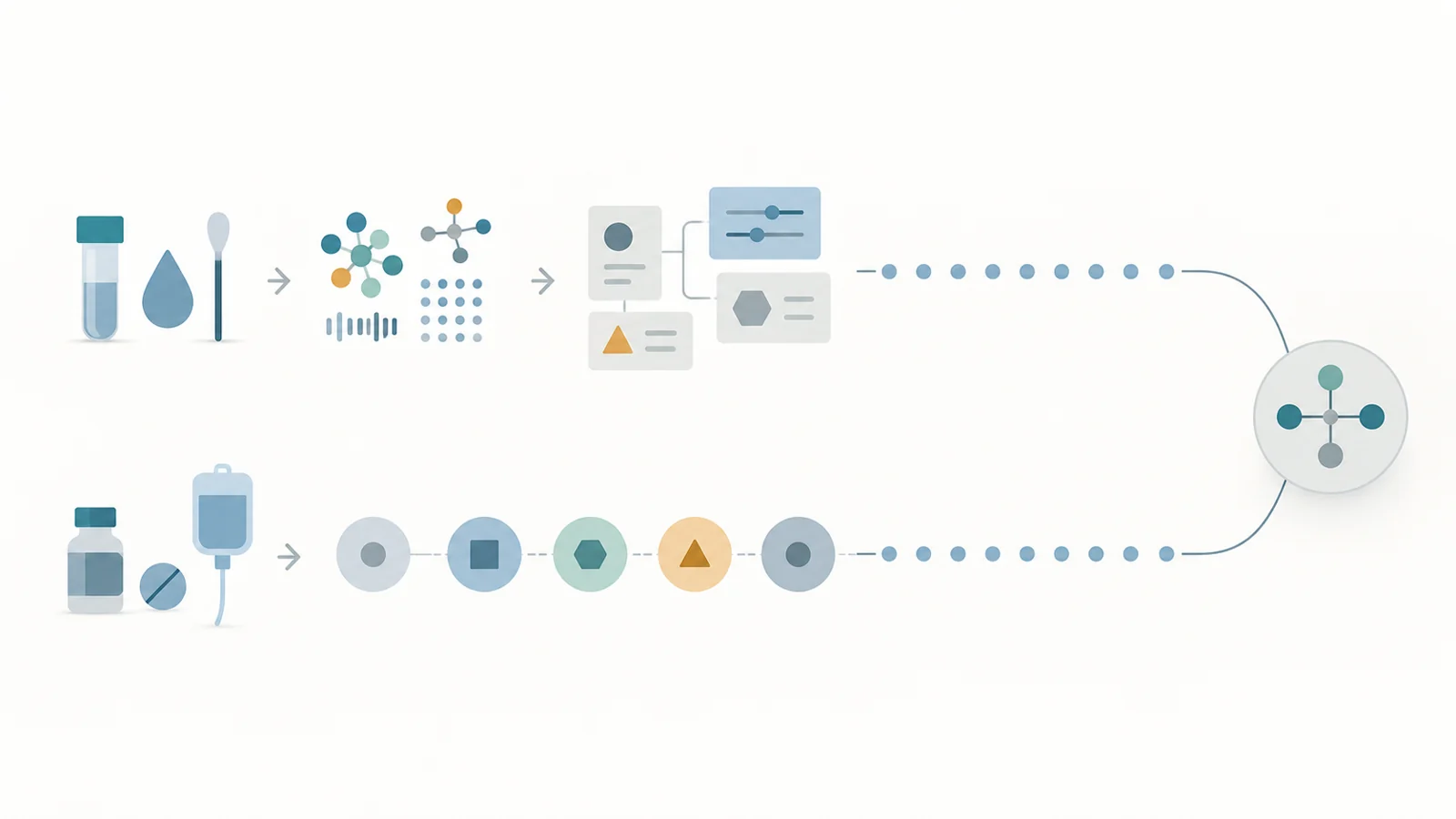
In the approach described by the investigators, precision medicine means tailoring care using an individual’s test results. Participants undergo extensive testing, including blood work and urine and stool sampling. The study doctor then uses those findings, alongside the participant’s clinical information, to prepare a treatment plan intended for that person.
The proposed logic is that cognitive difficulties may involve different contributing factors in different people. The treatment plan is therefore designed to address what the investigators consider possible underlying contributors rather than applying exactly the same program to everyone. That rationale remains a hypothesis about how the approach should work; it does not establish that any particular contributor causes an individual participant’s symptoms.
The core program includes diet, physical exercise, mental exercise, sleep optimization, and stress reduction, alongside interventions tailored to the individual. The planned comparison evaluates that combined care strategy rather than one isolated laboratory measurement or treatment decision.
A nine-month comparison gives the question a test
Eligible participants are described as being assigned by chance to either the individualized approach or standard care. Both groups are followed during the nine-month comparison period, with cognitive assessments used to examine changes in memory and thinking.
Random assignment matters because it gives the study a concurrent reference point. People’s cognitive performance can change during a period of care for many reasons, and a comparison group helps researchers judge whether differences over the same period are associated with the individualized program rather than simply with time or participation in a study.
The registry description also lays out a later option for people initially assigned to standard care: after the nine-month comparison, they may be eligible to receive up to six months of the individualized approach. That is part of the described study sequence, not evidence that participants completed it or that the treatment helped them.
What would count as evidence of benefit
A registered objective and an assigned treatment do not themselves show that cognition improved. The supplied evidence describes what the trial is meant to compare, but it provides no outcome estimates or safety findings for interpretation.
A persuasive result would need to show that the individualized group performed better than the standard-care group on the study’s cognitive measures over the nine-month comparison, with a difference large enough to matter in practice. Even such a result would mainly evaluate the overall care package. It would not, by itself, reveal which test, lifestyle change, supplement, medication, or treatment decision accounted for the difference.
The available material also does not establish safety, tolerability, affordability, or whether this level of testing and follow-up could be delivered routinely. It cannot support claims that the approach reverses or prevents dementia, or that any benefit would persist beyond the described comparison period.
What personalized care could offer people with early memory problems
For people with mild cognitive impairment or early-stage dementia, the potential value is an additional care option that uses individual test findings to guide treatment aimed at improving memory and thinking. That possibility becomes meaningful only if the randomized comparison demonstrates a clinically important benefit beyond standard care and the program proves workable in real clinical settings.
The trial therefore represents a testable proposal for individualized care, not a result showing that personalized treatment already improves early memory problems.
Key Sources
- Primary source: Precision Medicine Approach for Early Dementia & Mild Cognitive Impairment
Government or Regulator · Clinical Trial · 2023-06-08
Keep exploring