
Evidence date · 2021-01-01 · Research note 1 of 3
1 2 3
See current Track status →
A 63-year-old woman being treated for stage IV squamous cell lung cancer developed skin changes three months after starting pembrolizumab with chemotherapy. A skin punch biopsy identified cutaneous sarcoidosis, an inflammatory condition affecting the skin. Her case, published in 2021, describes an unusual reaction during cancer treatment and the course that followed.
The timing makes the case notable, but it does not identify which treatment caused the reaction. Pembrolizumab and chemotherapy were given together, so this single report cannot separate their effects.
Why immune treatment can affect the skin
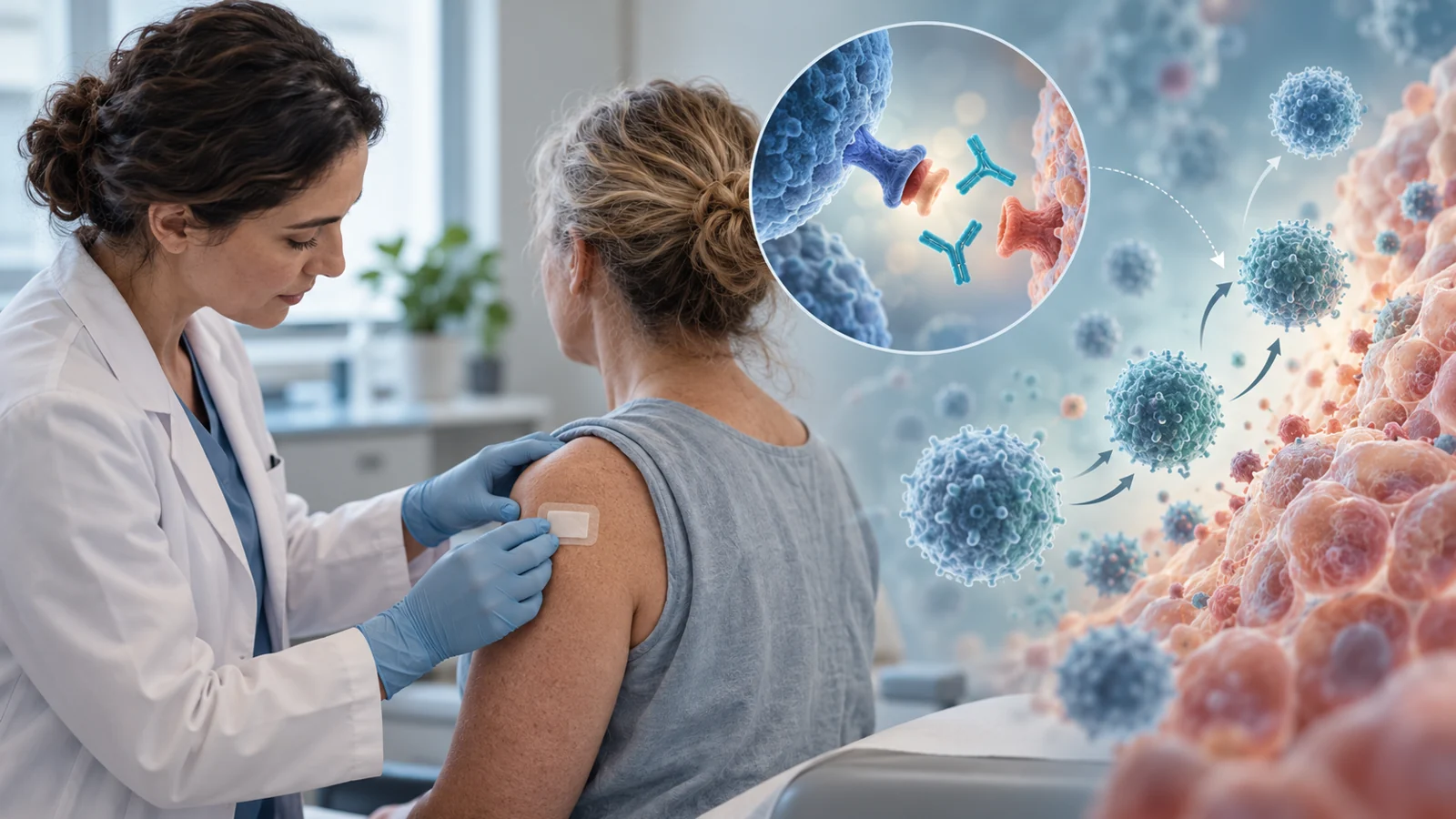
Pembrolizumab is an immune checkpoint inhibitor. These medicines help activate T cells, immune cells that can attack cancer, and limit a tumor’s ability to evade the immune response. That stronger immune activity can also come with immune-related adverse events, in which the immune system affects healthy tissue.
The report connects the skin finding to a broader question about these treatments. The authors describe similar skin lesions associated with one type of immune checkpoint treatment across different cancers, especially melanoma. The biopsy established what this patient’s skin condition was; it did not establish a general explanation for why some patients develop such lesions.
The skin findings resolved while pembrolizumab continued
After the biopsy, the patient received a short course of systemic glucocorticoids, medicines that reduce inflammation. The skin findings resolved, and pembrolizumab continued at a lower frequency. This is the sequence observed in one patient. It does not show which part of the treatment course led to resolution, or establish a general rule for managing similar reactions.
One case leaves susceptibility open
The report’s title refers to a review of seven similar cases, but the available case details here do not support comparisons among those patients. The authors point to reports of sarcoid-like lesions in several malignancies and call for further work to identify people who may be more susceptible.
A reaction confirmed in one person cannot tell us how often it occurs or who is more likely to develop it. The patient’s course is a concrete example for clinicians to recognize and study, rather than evidence that a particular group of patients is likely to develop the condition.
What recognizing this skin reaction could change
Better recognition and characterization of sarcoid-like skin reactions could help clinicians identify them and manage them while making informed decisions about continuing cancer treatment. That benefit depends on stronger evidence about who may be susceptible and how these reactions can be managed safely. This case adds a documented example, but it cannot by itself establish that guidance.
Key Sources
- Primary source: Case Report and Review of 7 Similar Cases in the Literature: Cutaneous Sarcoidosis as Side Effect of Pembrolizumab Plus Chemotherapy in Stage IV Squamous Cell Carcinoma of Lung.
DOI or Journal Page · Review or Meta-Analysis · 2021-01-01