
Research Signal – Source date 2022-06-03
A resident may engage warmly with a companion robot during a group activity. That moment can matter to the person and to the care team, but it does not by itself show that loneliness has eased or that dementia-related behavioral and psychological symptoms have changed over time.
A registry-described study asks that larger question through a 10-week program with PARO, a seal-like personal assistive companion robot, in residential care. The selected publication item is dated June 3, 2022. It provides a historical reference point for this account, while the details below are presented as the study design described in the registry rather than as verified results.
The program adds a robot to a social routine
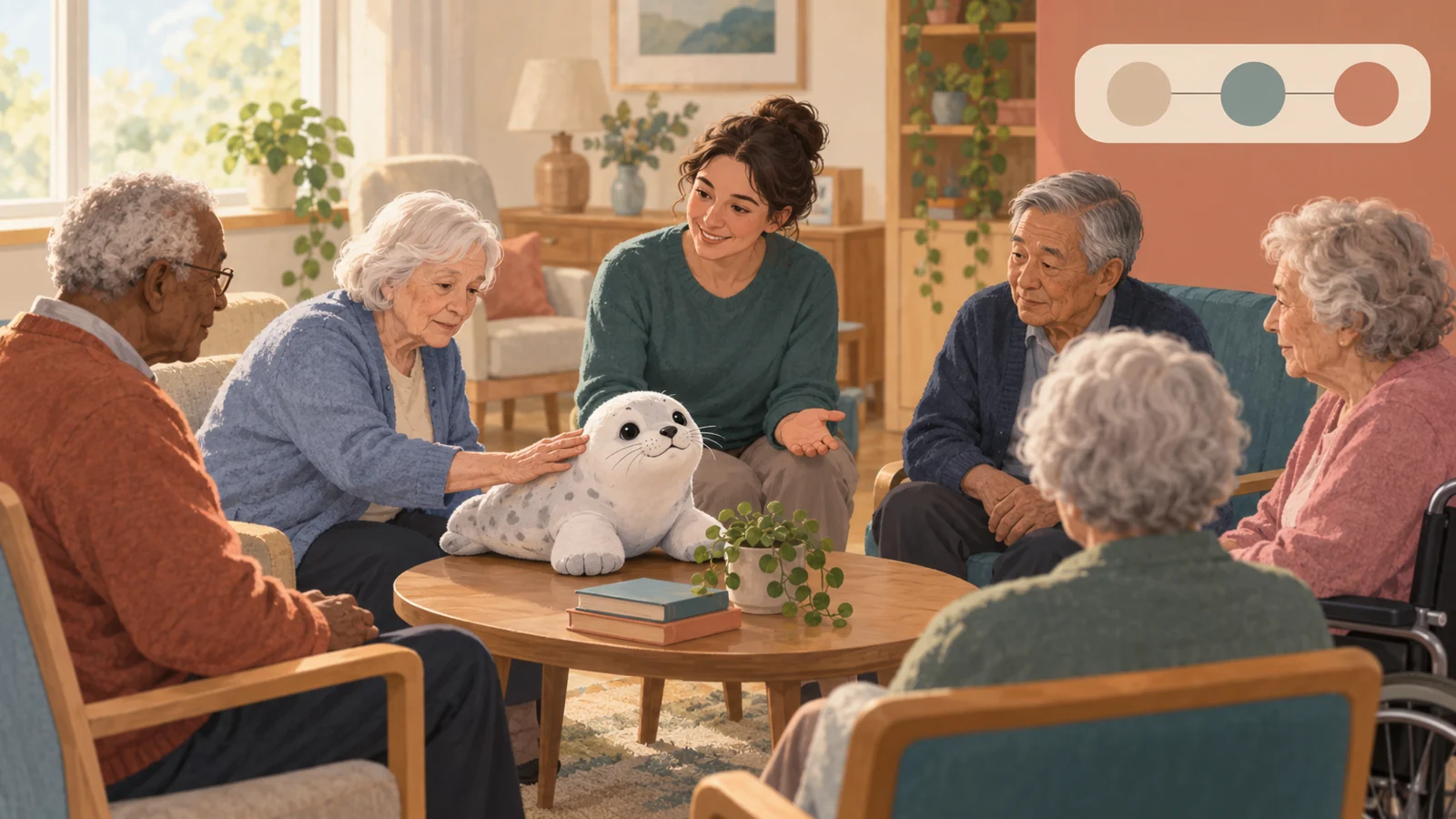
The intervention was designed as a recurring, facilitated activity rather than as time alone with a device. Residents with dementia or mild cognitive impairment were to meet in small groups of four to six people. Sessions were planned for 30 to 45 minutes, twice a week, over 10 weeks.
Facilitators would guide activities such as caring for PARO, feeding it, grooming it, and helping residents become familiar with one another and with the robot. Early sessions were intended to build intimacy within the group and a therapeutic relationship with PARO. The plan also included observations of participants’ emotions and engagement.
That arrangement matters when interpreting the intervention. A resident’s experience would include the robot, a scheduled appointment, a trained nurse, social worker, occupational therapist, health care assistant, or program worker, and contact with other residents. The study therefore concerns a bundled care activity. It is not designed to reveal what the robot contributes when separated from human facilitation, group interaction, or the regular rhythm of attendance.
A floor-based comparison tests the whole package
The main comparison was between residents who joined the PARO program and residents who did not join it during the 10-week intervention period. Allocation was described as being based on the floor of the residential care home, rather than as an individual random assignment. The comparison group was scheduled to receive two PARO training sessions after the assessments were completed.
This arrangement creates a practical comparison for a care home, but it also leaves room for the groups to differ in ways connected with their floors, routines, staff relationships, or resident mix. The planned analysis could show whether participation in the overall program was associated with different changes between groups. It could not cleanly assign any difference to the robot alone.
The important measurements happen across weeks
The primary questions focus on two outcomes at week 10: neuropsychiatric symptoms and loneliness. These are different from asking whether a resident appears interested, calm, or expressive during a particular session. Session engagement and emotional responses can help describe how the activity is experienced, but they are not substitutes for repeated measures of symptoms or loneliness.
The study also planned to examine pulse rate and oxygen saturation during PARO sessions as physiological observations related to stress and anxiety. Quality of life, sleep quality, and cognitive functioning were included among the additional questions. These measures broaden the picture, but they do not turn a single physiological reading or a lively interaction into evidence of lasting therapeutic benefit.
Assessments were planned again at week 14, four weeks beyond the 10-week program. Comparing the week-10 and week-14 results could indicate whether any difference seen after the sessions was still present at the later point. The registry description, however, does not establish outcome estimates, adverse-event findings, or actual participant acceptance for this account.
Who this design is meant to represent
The intended population was residents with dementia or mild cognitive impairment in Haven of Hope Woo Ping Care & Attention Home. Residents from Haven of Hope Hang Hau Care and Attention Home for Severely Disabled were also described as joining the PARO program, with their data analyzed separately.
The record describes an intended sample based on resident counts. An intended sample is a recruitment plan, not a record of how many people enrolled, completed the sessions, or contributed data at follow-up. No independently dated start, completion, results-posting, or status event is established here.
Participation was voluntary, with the option to withdraw without consequences. The design also sought feedback from residents and PARO facilitators about feelings, satisfaction, and acceptance. Those perspectives are important because a program that appears useful on paper would still need to fit the preferences, abilities, staffing patterns, and daily routines of a real care home.
What this could change
For residential-care teams, a positive comparative result could support offering a facilitated companion-robot activity as an additional way to create social contact and potentially reduce loneliness or distressing neuropsychiatric symptoms. The practical benefit would depend on meaningful improvement relative to the comparison group, residents accepting the activity, and care homes being able to run the sessions with the required human support. The study does not establish disease modification, replacement of caregivers, durable benefit beyond the described follow-up, or a case for broad deployment.
Key Sources
- Primary source: Therapeutic Effectiveness of PARO Companion Robot for Elderly With Mild Cognitive Impairment/Dementia in Elderly Residential Setting: A Quasi-experimental Study
Government or Regulator · Clinical Trial · 2022-06-03
Keep exploring