
Research Signal – Source date 2022-01-11
A repeated sound gave researchers a way to measure how the brain handles incoming information. Across five human studies, the systematic review found that ondansetron or tropisetron improved the brain’s measured response to a second click in people with schizophrenia. Whether that change also improved attention is a harder question: the attention findings were narrower, and the tests did not all measure the same ability.
The review, published on January 11, 2022, brought together 11 human studies of ondansetron and other drugs that block serotonin’s 5HT3 receptor. Eight studies involved people with schizophrenia who were stable on antipsychotic medication; three involved healthy participants. The studies varied in participants, drug, dose, duration and outcome measures, so the authors used a narrative synthesis rather than combining results into one estimate.
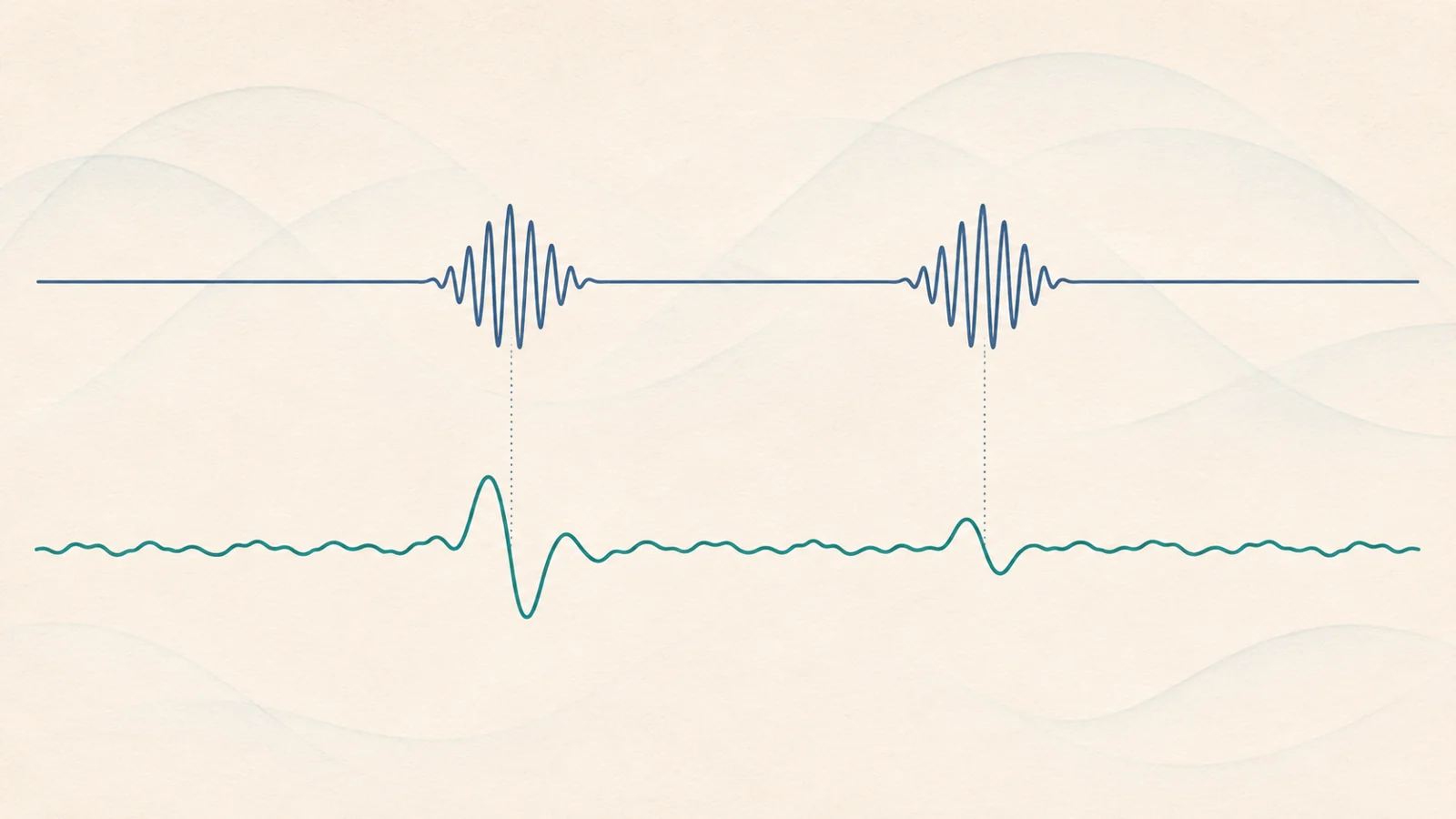
A second click revealed a change in brain response
The main measurement was P50 sensory gating. P50 is an electrical brain response, measured with an electroencephalogram (EEG), that occurs about 50 milliseconds after a sound. In the paired-click test, a person hears one click and then another 500 milliseconds later. Researchers compare the brain’s responses to the first and second clicks. A smaller response to the second is treated as evidence that the brain is filtering repeated input.
In five studies, researchers used this test with people who had schizophrenia. The review found a recurring improvement in sensory gating after ondansetron or tropisetron. This is a change in a measured brain response. It may help researchers study how the brain filters repeated sounds, but the test itself does not tell us whether someone notices less distraction or functions better in daily life.
The two drugs leave different questions
Ondansetron selectively blocks the 5HT3 serotonin receptor. Tropisetron blocks that receptor too, but it also partially activates a different receptor, called α7-nicotinic. Because both drugs were associated with improved gating, the findings are consistent with a role for 5HT3 blockade. They do not isolate how much each receptor action contributed.
Some results also depended on smoking status. In one study, a single dose of tropisetron improved sensory gating in the non-smoking patients, but not across the full patient group. In another study, the benefit was likewise limited to non-smokers. These patterns make it harder to know how broadly the result applies and to separate the effects of tropisetron’s two receptor actions. They also mean that a finding in one subgroup should not be treated as a general effect for everyone with schizophrenia.
Attention and memory did not move in lockstep
The clearest attention result came from an eight-week placebo-controlled study of tropisetron in people with schizophrenia who were taking risperidone. Tropisetron improved accuracy on a test of sustained visual attention, but only among non-smokers. The study did not find a significant relationship between an individual’s change in P50 gating and their performance on that attention test. That study did not establish whether a person’s change in the gating measure predicted a change in attention.
A separate, ten-day tropisetron study reported that a greater reduction in the P50 gating ratio was correlated with improved immediate memory. That is a different result from the attention finding: immediate memory and sustained attention are distinct abilities, and a correlation does not show that one change caused the other. In a single-dose study, the P50 result was no longer statistically significant once the researchers accounted for the extra chance of a false positive from making several comparisons.
Other tests added variety rather than a single clear answer. Two ondansetron trials reported improvements on some visual memory tests and tasks involving visual interpretation, but neither adjusted for the increased chance of a false positive when many outcomes are tested. In a study of patients taking clozapine, visual memory improved on one test while other cognitive measures did not. Among healthy participants, granisetron shortened response time on a sustained-attention test without improving accuracy; ondansetron showed no effect on choice reaction time or simulated car tracking. These tasks measure different things, and results in healthy volunteers cannot settle what a person with schizophrenia might experience.
The patient evidence has a boundary
Most of the patient studies examined people whose schizophrenia was stable while they were already taking antipsychotic medication. That makes it difficult to determine how the setrons would affect people who are not taking those drugs, or who have active symptoms. The review found no placebo-controlled evidence for treating active symptoms such as hallucinations in people who were not already taking antipsychotic medication, limiting what these studies can say about symptom relief.
The authors discussed ondansetron as a possible direction for research on hallucinations in Parkinson’s disease, but the studies reviewed here do not establish that it treats those hallucinations. The central result remains a recurring change in a laboratory measure of auditory filtering, with more variable findings across attention, memory and other sensory tests.
Where this research could lead
If a treatment could reliably improve attention as well as the brain’s response to repeated sounds, a person with schizophrenia might one day find it easier to follow a conversation when background sounds compete for attention. The review offers an early piece of that possibility: the paired-click EEG change appeared across several studies. To reach a useful everyday benefit, future studies would need to confirm the gating effect in the relevant patients and show that it accompanies meaningful improvement in attention or symptoms.
A nearer milestone would be a controlled study in people with milder or untreated symptoms that measures P50 gating and attention together, then tests whether changes in the two measures track one another. That could clarify whether the recurring EEG finding points toward a cognitive benefit, while keeping the test result and a person’s lived experience distinct.
Key Sources
- Primary source: Selective 5HT3 antagonists and sensory processing: a systematic review.
DOI or Journal Page · Review or Meta-Analysis · 2022-01-11
Keep exploring