
Research Signal – Source date 2021-03-01
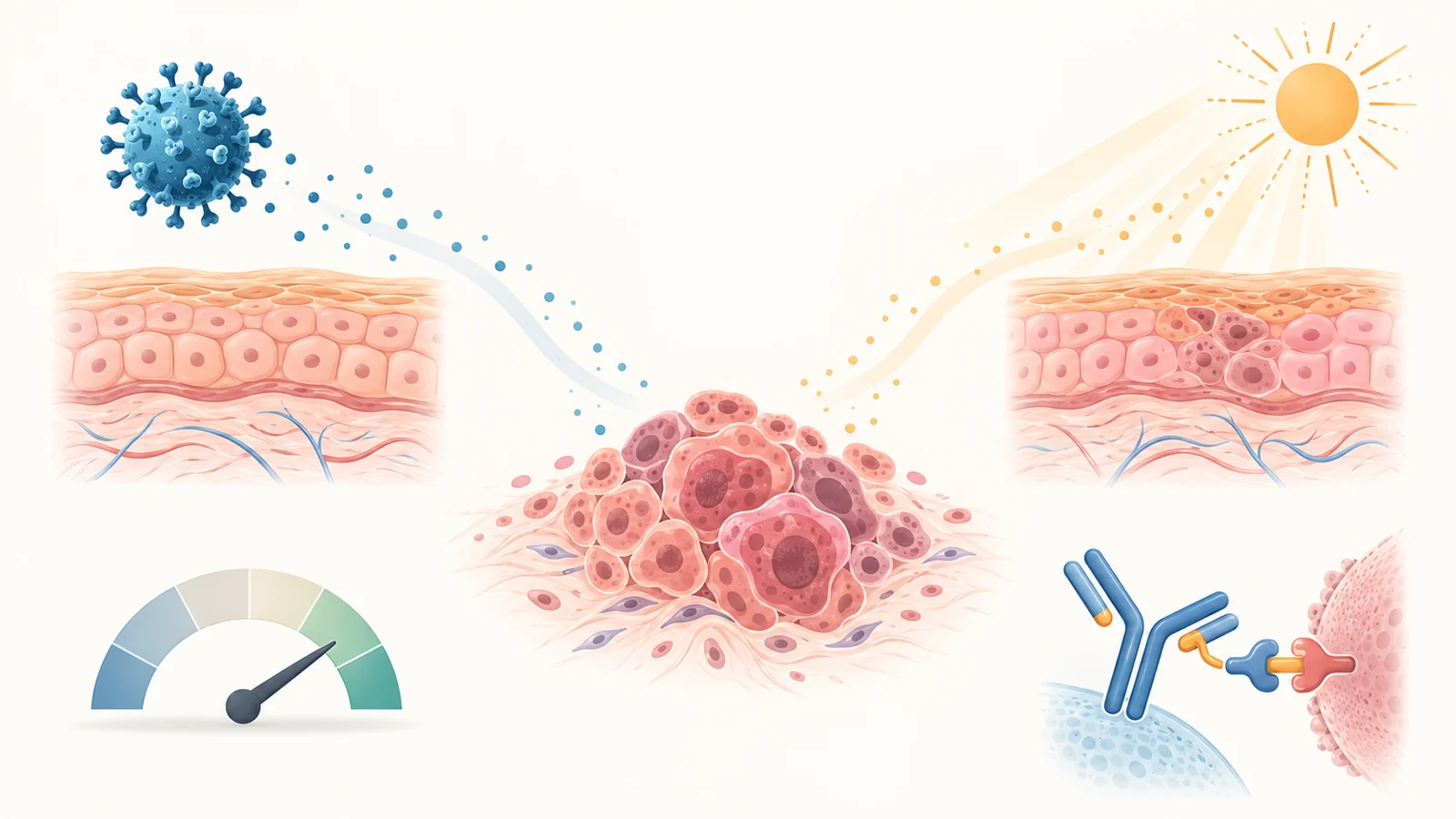
Merkel cell carcinoma is an uncommon skin cancer that often affects older people on the head or neck. The disease is serious overall, but its tumors do not all arise in the same way. A 2021 review describes two broad origins: most cases are linked to Merkel cell polyomavirus, while a smaller group is associated with genetic damage caused by ultraviolet radiation. The review says this difference is also associated with a relative difference in prognosis.
That is a meaningful distinction in a cancer with a poor prognosis overall. It gives researchers and clinicians a way to understand why tumors that share a diagnosis may not share every biological feature or outlook. The comparison remains a broad one, however; it cannot predict what will happen to a particular person.
Two routes to the same diagnosis
Merkel cell polyomavirus is a virus linked to the development of most Merkel cell carcinomas, according to the review. The remaining minority are attributed to genetic damage from ultraviolet radiation, the energy in sunlight that can injure skin cells. These are two different routes associated with the same type of skin cancer.
The broad split helps researchers describe biological variation within Merkel cell carcinoma. It does not provide an exact breakdown of cases or explain every tumor on its own.
The origins are linked to different outlooks
The review reports that the virus-linked subset has a more favorable prognosis than the subset associated with ultraviolet-induced genetic damage. In plain terms, the groups differ in their relative outlook, with the virus-linked group described more favorably. Since the cancer is considered poor-prognosis overall, even a relative difference can matter when clinicians and patients discuss the disease.
No size for that difference is established here, and a group-level pattern cannot serve as a forecast for an individual patient.
Immune treatment marks a separate advance
The review also describes Merkel cell carcinoma as responsive to immune checkpoint inhibition, which it calls a therapeutic milestone. Checkpoint inhibitors are treatments that release some of the brakes on immune activity, helping the body’s defenses act against cancer. The review presents this responsiveness as an important clinical development in a cancer whose behavior is influenced by the immune system.
This treatment advance is separate from the comparison between tumor origins. The treatment finding does not establish whether one subset responds better than the other; no response rates or treatment effects are available here to compare. Nor is the review itself a newly reported clinical trial or a basis for choosing treatment for a particular person.
What could change in Merkel cell care
If the relative prognostic difference proves dependable in clinical use, it could support more tailored discussions of risk for people with Merkel cell carcinoma. That would make the distinction useful as context for care, while leaving an individual’s outlook to a fuller clinical assessment. Separately, if the benefits of immune checkpoint treatment endure, it could offer patients another meaningful treatment option. The review presents that treatment responsiveness as a milestone, without establishing which tumor origin benefits most.
Key Sources
- Primary source: Merkel cell carcinoma: A review.
DOI or Journal Page · Review or Meta-Analysis · 2021-03-01
Keep exploring