
Research Signal – Source date 2026-01-10
A review published January 10, 2026, brings creatine, L-arginine, and exercise into the same conversation about the aging hippocampus. Its central contribution is a biological rationale: these interventions may influence different processes connected with neurogenesis, the formation of new neurons, and with the brain’s ability to adapt.
That rationale is relevant because hippocampal neurogenesis is discussed in relation to memory consolidation, cognitive flexibility, and emotional regulation. As people age, changes in these functions can become part of the wider concern about cognitive and mood-related disorders. The review asks whether energy metabolism, coordination between neural activity and blood supply, and exercise-related signaling could be considered together. It does not establish that combining them improves memory or mood in older adults.
Three biological roles in the proposed connection
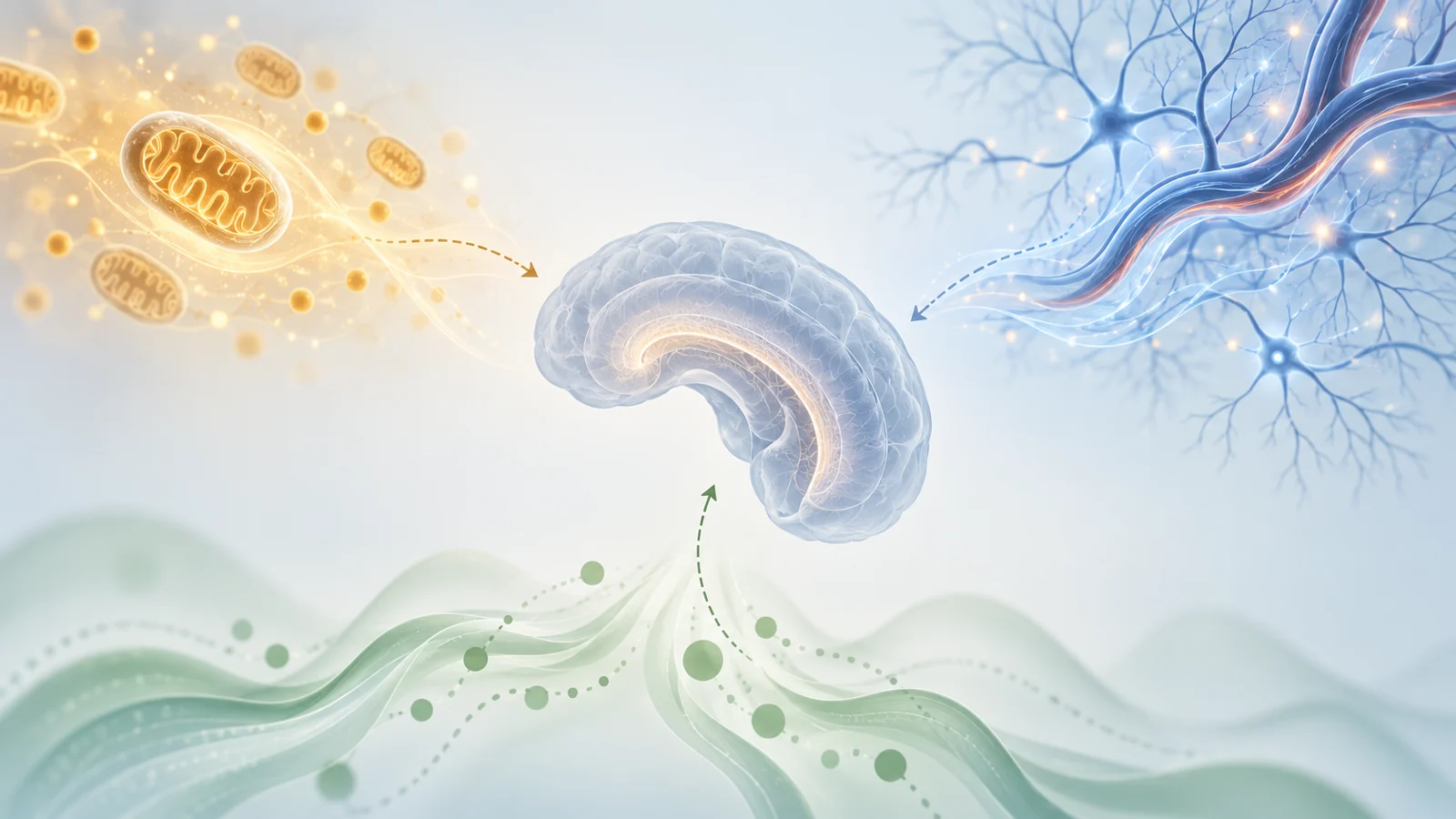
The review assigns each component a different role. Creatine is linked to cellular energy metabolism and to support for neuronal integrity and cognitive performance. In plain terms, the authors place it near the question of how nerve cells manage the energy demands of functioning.
L-arginine is discussed through nitric oxide, a signaling pathway associated with neurovascular coupling. That means coordinating changes in neural activity with blood supply. The review also connects L-arginine with trophic support, or processes that may help sustain a supportive environment for neural function.
Exercise is described as activating pathways associated with neurogenesis and as supporting mood. It therefore enters the discussion through activity-linked biological signaling rather than as a nutritional input. These roles can be examined together because they touch related aspects of hippocampal function, while remaining biologically distinct. Their complementarity is a reason to investigate the combination, not evidence that they form a tested causal sequence.
What the available evidence can and cannot answer
The supplied material supports an explanation of the authors’ proposed connections, but it does not provide enough study-level detail to judge how strong those connections are in practice. Participant characteristics, species, sample sizes, intervention schedules, effect estimates, dosing, and safety findings are not available in the supplied catalog.
This matters when translating a mechanism into a reader-facing claim. A change in neurogenesis or neural adaptability would not automatically amount to better memory, more flexible thinking, or improved mood. Those outcomes would need to be measured directly in people. The available material also does not show whether a combined approach adds value beyond exercise alone, creatine or L-arginine used separately, or another comparison.
The review’s potential-synergy framing should therefore be read as a research direction. It offers a way to connect bioenergetic, vascular, neurotrophic, and exercise-related ideas around the hippocampus, while leaving the practical size, reliability, and safety of any combined effect unresolved. Nothing in the supplied evidence supports prescribing a regimen or presenting the approach as prevention or treatment for a neurodegenerative or mood disorder.
What this could mean for supporting memory in older adults
For older adults, the long-term possibility is a nutritional and exercise approach designed to help preserve memory and adaptable thinking by supporting several parts of hippocampal biology at once. That possibility becomes meaningful only if the proposed biological complementarity produces measurable, safe benefits in people and adds value beyond exercise or either supplement on its own.
From the perspective of January 2026, the review provides a coherent reason to study that question. It does not yet turn the combination into a demonstrated memory-support strategy. The important advance is the connection between the mechanisms researchers may want to test and the human outcomes that would determine whether the idea has practical value.
Key Sources
- Primary source: The Emerging Role of L-Arginine and Creatine Supplementation Combined with Exercise on Hippocampal Neurogenesis, Spatial Learning, and Cognitive Flexibility in Aging and Neurodegenerative Diseases.
DOI or Journal Page · Review or Meta-Analysis · 2026-01-10
Keep exploring