
Research Signal – Source date 2025-07-17
Persistent symptoms after a concussion can affect much more than the original injury. Headaches, dizziness, sleep problems, irritability, difficulty concentrating, memory complaints, and low mood may continue after the acute event has passed. A registered clinical trial is testing whether training people to influence a heart-rate pattern can reduce that longer-lasting burden.
The study, NCT07071350, compares heart rate variability biofeedback with concussion education in adults who have persistent post-concussion symptoms. Its participants may include civilians, combat veterans, and service members with a history of one or more mild traumatic brain injuries. The central question is practical: does the biofeedback program improve how people feel and function beyond what they gain from structured information about concussion recovery?
The registry publication identified for this report is dated July 17, 2025. The supplied current registry snapshot separately records an actual start date of September 2, 2025, a recruiting status, and estimated completion in September 2028. The study is described as randomized and parallel-group, with estimated enrollment of 148 people. No results are posted in the supplied snapshot.
Why heart-rate variability is part of the treatment idea
Heart rate is not perfectly even from one beat to the next. The small changes in timing between beats are called heart rate variability, or HRV. In this trial, HRV is used as a measurable sign of autonomic nervous system activity, the background regulation that helps the body respond to stress and return toward a calmer state.
The investigators propose that persistent post-concussion symptoms may be maintained in part by autonomic dysfunction, including ongoing sympathetic nervous system activation. That is a proposed mechanism for the trial, not a finding from the trial itself. The intervention is designed to make a physiological pattern visible while participants practice changing their breathing.
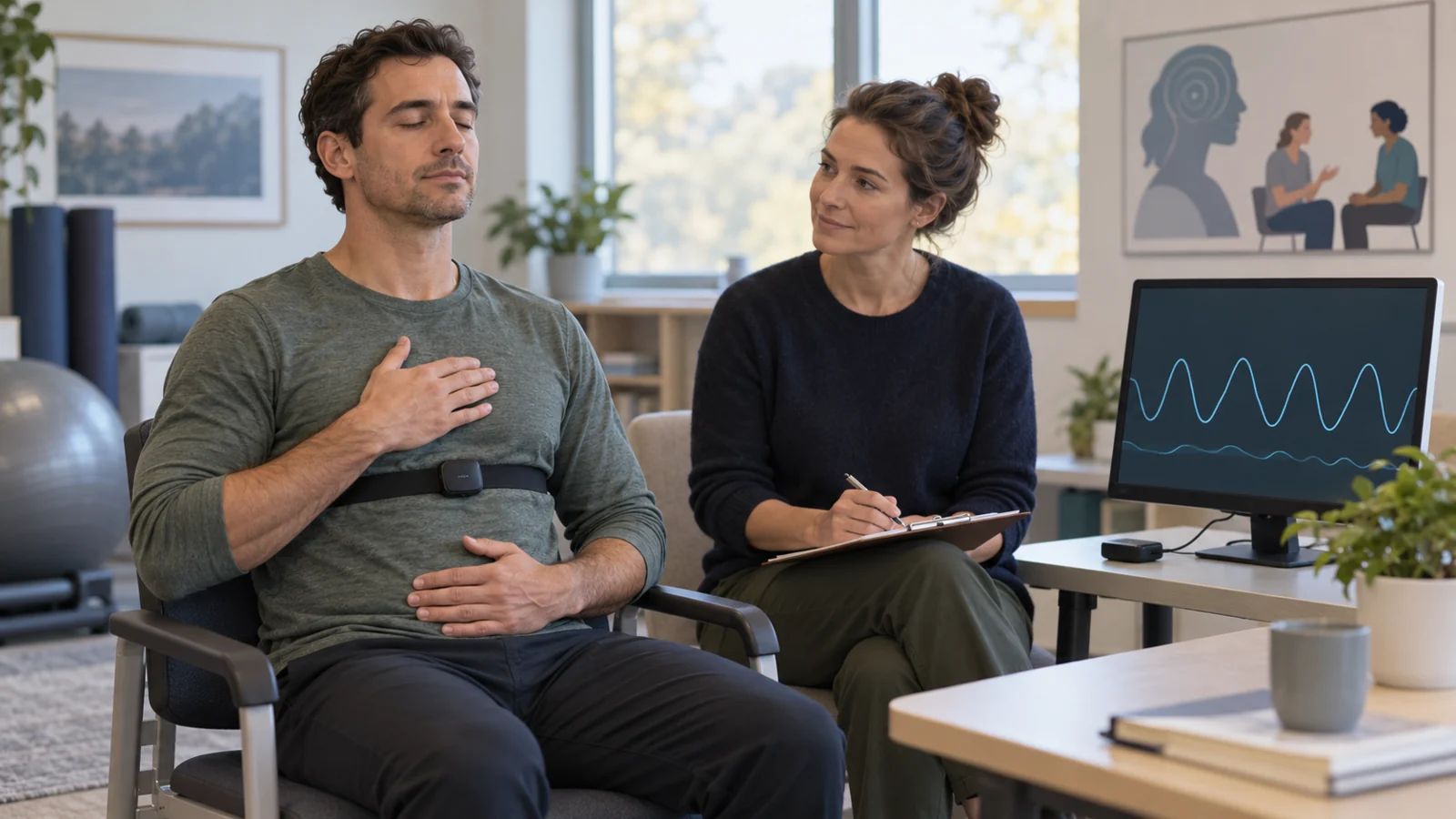
The current record describes six weekly biofeedback sessions lasting approximately 30 to 40 minutes each. Participants use monitoring equipment while they practice slow diaphragmatic breathing, focus on positive emotions, and receive coaching. A computer display shows their HRV pattern in real time, giving them immediate feedback during the exercise. The point is not simply to observe a heart signal. It is to connect a visible body response with a coached self-regulation practice.
The treatment package therefore contains several elements at once: breathing, attention to positive emotions, instruction, monitoring, and feedback. The registry describes the approach as non-invasive and behaviorally based, but the supplied evidence does not establish how well participants will follow the program or how tolerable it will be.
The comparison is more informative than a before-and-after change
A person with persistent symptoms might improve during a study for many reasons. Symptoms can fluctuate, expectations can matter, and regular contact with a treatment team may itself provide support. Random assignment helps address some of those possibilities by placing participants in different study arms rather than allowing treatment choice to determine the comparison.
The comparator in this trial is six weekly educational meetings, also described as lasting 30 to 40 minutes. Those sessions provide standardized information about concussion recovery and do not provide breathing information. This gives the study a structured comparison for the biofeedback program, including the time and attention involved in repeated sessions.
The resulting test is of the overall biofeedback package against education. It is not a separate experiment for each ingredient. If the biofeedback group later shows a greater improvement, the registered comparison alone would not reveal whether the key contribution came from slow breathing, the live signal, coaching, positive-emotion focus, participant expectations, or their combination. That is a useful limit because a treatment can be effective as a package even when its individual components have not been disentangled.
Symptom relief is the trial’s main test
The primary outcome is change in self-reported post-concussion symptom burden from baseline through the end of the study procedures at 11 weeks. This places participants’ lived experience at the center of the trial. The question is not only whether HRV changes during a breathing exercise, but whether the broader burden of post-concussion symptoms changes over the assessment period.
The schedule matters. The intervention is described as six weekly sessions, while the primary assessment window extends to 11 weeks. That allows the investigators to examine symptoms beyond the six treatment meetings, although it remains a relatively short window for judging what happens over the longer course of persistent concussion symptoms.
The study also lists several secondary outcomes. Computer-based cognitive testing is intended to assess areas such as executive function, memory, attention, processing speed, and related abilities. Other measures address how pain interferes with daily life, depressive symptoms, and post-traumatic stress symptoms. These assessments can show whether any change is concentrated in symptom reporting or appears alongside changes in cognitive performance and psychological health measures.
All of these are planned measurements, not findings. The supplied record does not establish that biofeedback improves symptoms, cognition, pain interference, depression, post-traumatic stress symptoms, or safety relative to education. Its estimated enrollment is a target, not a reported count of participants enrolled or analyzed.
A short assessment cannot answer every recovery question
A favorable result on the 11-week symptom outcome would be meaningful, especially if it were larger than the change in the education group. It would suggest that the structured biofeedback program deserves further consideration as a rehabilitation approach. A changed HRV pattern by itself, however, would not be enough. The clinically important question is whether participants experience a meaningful improvement in their symptoms and daily functioning, with an acceptable burden and safety profile.
The listed outcomes also cannot by themselves establish lasting recovery. The 11-week assessment window extends beyond the six-week training program, allowing assessment of short-term persistence, but cannot establish durable recovery or whether a physiological change alters the longer-term course of injury. Nor can this 11-week assessment establish prevention of neurodegeneration. The investigators describe those broader possibilities as aspirations connected to the rationale for the study, while the concrete registered outcomes focus on symptoms, cognition, pain interference, and psychological measures.
The supplied current snapshot records a recruiting study with estimated completion in September 2028 and no posted results. At this stage, the trial supports a clear explanation of what is being compared and what will be measured. It does not support a conclusion that the intervention works.
What this could add to concussion rehabilitation
If the randomized comparison shows a meaningful benefit beyond concussion education, the program could become evidence for a structured, non-invasive training option for adults whose concussion symptoms persist, including veterans and service members. For that possibility to matter in practice, the benefit would also need to be acceptable in safety and remain present beyond the immediate assessment period.
That would not make HRV biofeedback a replacement for other care, and the registry record does not establish how it would be delivered, who would have access to it, or what it would cost. It would instead provide a more specific rehabilitation possibility: a coached method that links breathing practice to a visible physiological response and is judged by whether people actually feel and function better.
Key Sources
- Primary source: Randomized Controlled Trial of Treatment to Optimize Heart Rate Variability for Persistent Post-Concussion Symptoms
Government or Regulator · Clinical Trial · 2025-07-17
Keep exploring