
Research Signal – Source date 2026-03-20
Antiretroviral therapy (ART) has made HIV a chronic, manageable condition and extended the lives of people with HIV (PWH) by decades. Yet some people still face persistent inflammation and conditions such as cardiovascular disease, frailty, diabetes, cancer, and brain-health problems. A review published March 20, 2026, asks whether cytomegalovirus (CMV)—a common virus that remains in the body for life—helps explain why.
CMV often stays quiet after infection, but it can reactivate intermittently, sometimes without symptoms or detectable virus in the blood. The review brings together evidence that these episodes may keep the immune system activated even when HIV is suppressed. It also describes early signs that suppressing CMV could change some immune measures and physical function. Whether that translates into lasting protection from illness remains an open question.
A recurring immune response has costs and benefits
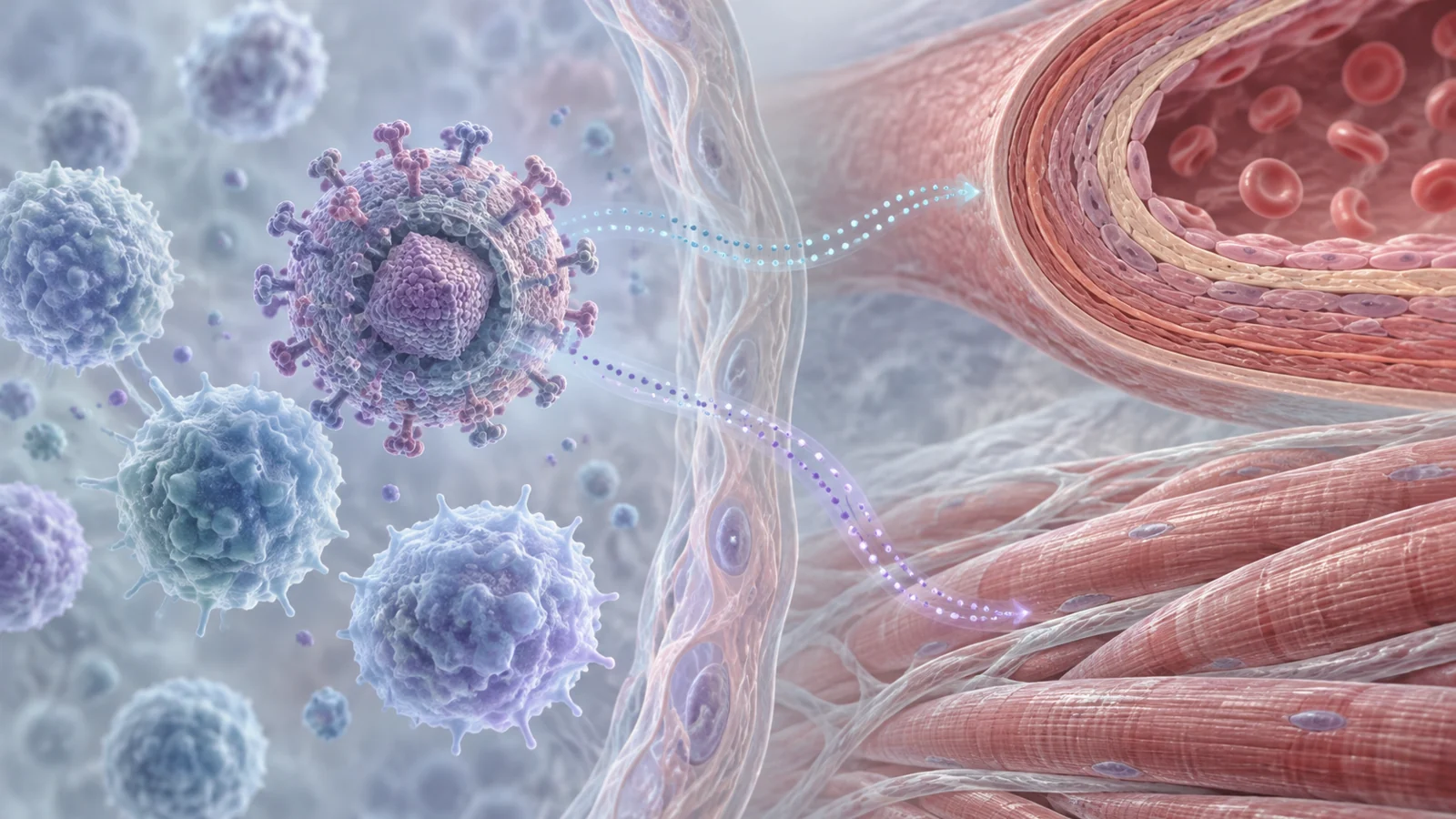
CMV is present in nearly all people with HIV. HIV-related immune disruption can make CMV reactivation more likely, while immune stimulation from CMV may help maintain the reservoir of HIV-infected cells. Both viruses can persist in tissues, including the gut and genital tract. Local CMV activity may disturb epithelial barriers and increase immune activation; asymptomatic shedding has also been linked to more T-cell activation and proliferation.
Repeated exposure to CMV antigens expands specialized T cells. In some people, a large share of circulating CD4 and CD8 T cells can recognize CMV. These cells can produce inflammatory signals and kill infected cells, but many are highly differentiated and less able to respond to new threats. Their expansion can come at the expense of less specialized immune-cell populations. Some CMV-specific CD4 T cells can also carry latent HIV, connecting recurrent immune stimulation with HIV persistence.
This response is not simply harmful. CMV-specific cells can help keep the virus in check and prevent symptomatic disease; animal studies also suggest CMV-related immune activation can improve responses to some infections or vaccines in certain settings. In people aging with HIV, however, long-running stimulation may narrow immune diversity and add to inflammation. The balance may differ across people and tissues.
From immune activation to arteries and physical function
The review describes several possible routes from CMV-related immune activity to vascular disease. CMV may infect cells in blood-vessel walls, activate the endothelium, and increase signals that attract immune cells. It may also promote clotting-related activity. CMV-specific T cells with traits associated with vascular homing have been found in atherosclerotic plaques and can release inflammatory molecules such as IL-6 and TNF-alpha. These mechanisms offer a biological explanation for a possible contribution to plaque inflammation, but they do not show that CMV causes cardiovascular events in people with treated HIV.
Frailty is a separate route, involving vulnerability and loss of physical function. Studies in older adults, including people with HIV, have linked CMV antibodies or stronger CMV-specific T-cell responses with frailty or poorer physical function. Inflammation may contribute to muscle loss, while oxidative stress and disrupted energy production in cells may impair muscle performance. Results are not consistent across studies, so CMV markers cannot yet be treated as a reliable forecast of who will become frail.
Tissue findings do not point to one uniform effect
Adipose tissue offers a closer look at how CMV-related immune activity might affect metabolism. Studies in people with HIV have found expanded inflammatory, cytotoxic T cells in fat, particularly in people with diabetes. Analyses of cells and their receptors have identified CMV-specific populations in visceral fat, where persistent CMV has been associated with inflammatory activity and metabolic changes such as high blood sugar. Animal and laboratory studies add evidence that CMV can disrupt fat-tissue function and insulin sensitivity.
Brain-health findings are less settled. Some studies associate CMV antibodies or immune responses with cognitive decline, slower processing, or memory difficulties, including among people with HIV whose treatment suppresses HIV. Other studies have not found the same relationships. Differences across outcomes and populations matter: lifelong CMV infection does not appear to act as a single switch that uniformly accelerates aging.
Early treatment findings are a reason to test, not a prevention claim
Older CMV antivirals can treat clinical disease, but toxicity and resistance concerns limit their use for long-term prevention in otherwise healthy people with HIV. Letermovir, a newer antiviral used for CMV prophylaxis in transplant recipients, has a more favorable safety profile in the reviewed evidence, though it can interact with other medicines through CYP3A4. It targets CMV rather than other herpesviruses.
The review reports preliminary findings from ACTG A5383, a randomized, open-label phase II trial of letermovir in people with HIV taking ART. The findings include reductions in some inflammatory signals, an increase in the CD4/CD8 ratio, and improvements in physical function. Effects were especially noted among participants with lower CD4 counts and among women. These early results make CMV suppression a promising research question, but they do not establish durable reductions in cardiovascular events, new frailty, or other clinical illness. CMV suppression is not an approved preventive treatment for asymptomatic people with treated HIV.
Vaccines are another approach under study. No CMV vaccine has been licensed, although several platforms have shown immune responses and partial efficacy in clinical trials. A vaccine could potentially reduce reactivation and inflammation, but protection and performance in people with HIV remain uncertain. Host-directed approaches are also being explored, but their safety and effects on health outcomes need careful evaluation.
Testing whether CMV is a driver
Most of the evidence connecting CMV with aging-related illness is observational. People with more CMV activity may also differ in immune history, age, treatment adherence, or other infections. An association alone cannot determine whether CMV contributes to illness, reflects broader immune dysfunction, or does both.
Intervention trials can test the question more directly: if CMV activity is reduced, do meaningful outcomes improve over time? Studies need to look beyond viral suppression and immune markers to outcomes such as physical function, frailty, and cardiovascular illness, while tracking safety and durability. Measuring CMV burden also needs improvement. Antibody levels are an imperfect proxy; tissue measures, patterns of CMV-specific T cells, and validated molecular markers could help identify who has active or consequential CMV and whether an intervention changes it.
What controlling CMV could change for people aging with HIV
For people whose HIV is already controlled, safe and durable CMV suppression could eventually offer another way to prevent or delay frailty and vascular illness. The practical benefit would be more years with strength, mobility, and cardiovascular health—not simply a shift in laboratory measurements. That possibility depends on trials showing that changing CMV activity improves clinical outcomes, with acceptable risks over time. The early findings give researchers a reason to test that path; they do not yet show that it works as prevention.
Key Sources
- Primary source: Cytomegalovirus in HIV: A Modifiable Driver of Inflammation, Frailty, and Aging.
DOI or Journal Page · Review or Meta-Analysis · 2026-03-20
Keep exploring