
Research Signal – Source date 2021-01-01
BRCA1 and BRCA2 appear in breast-cancer research both as genes linked to risk and as part of research into treating BRCA-associated disease. A 2021 literature survey connects those topics, while emphasizing a complication: breast cancers are not all alike. A genetic finding can help frame research questions, but it cannot by itself explain every tumor or identify a best treatment.
BRCA1 affects the cell cycle and responds to DNA damage
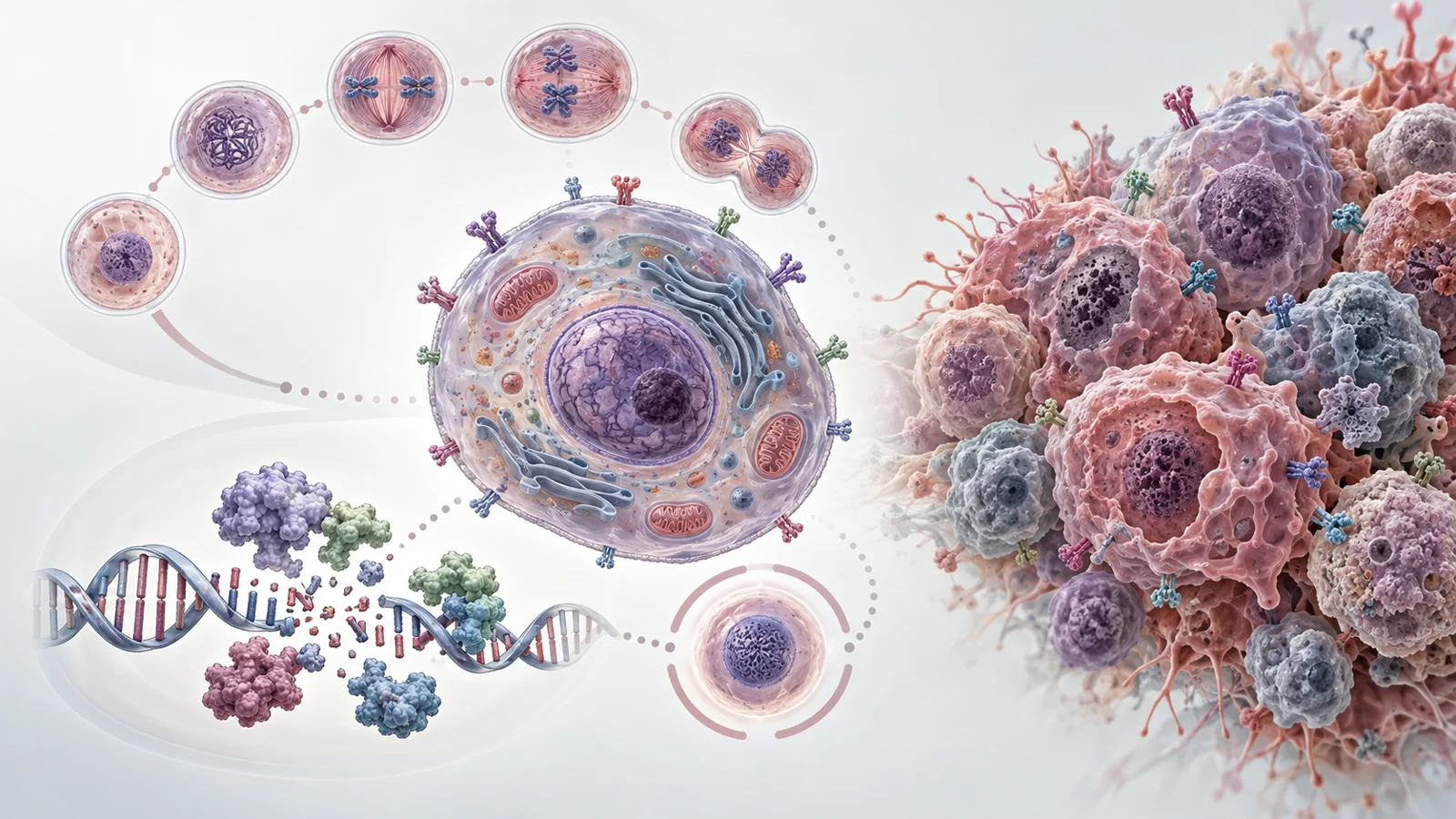
The survey describes BRCA1 as influencing cell-cycle progression—the steps a cell moves through as it grows and divides—and responding to DNA damage. Those roles put the gene at the intersection of two processes relevant to cancer research: controlling cell behavior and responding when genetic material is damaged.
That connection helps explain why researchers study BRCA genes in both risk and treatment contexts. The survey covers the genetic background of breast cancer, particularly BRCA1 and BRCA2, and includes preclinical and clinical research on treatment of BRCA-associated breast cancer. It does not describe every detail of how the genes relate to each treatment avenue, but it shows why their biology is part of the broader research conversation.
One genetic account cannot cover every tumor
Breast-cancer heterogeneity means that tumors can differ from one another. The survey identifies this variation as a challenge for diagnosis and treatment. If cancers vary, a shared label such as “breast cancer” or a focus on one genetic feature cannot describe all the biology clinicians and researchers may encounter.
This matters when connecting a gene to care. BRCA-related research concerns a subset of the broader breast-cancer landscape; the survey’s abstract does not give a numerical risk estimate or show that a particular BRCA variant predicts an individual’s cancer or treatment response. The genetic account is a starting point for questions about disease, not a complete explanation of every case.
A broad treatment landscape, with several avenues highlighted
The survey names chemotherapy, endocrine therapy, radiation therapy and immunotherapy as major treatment categories. It also highlights three areas of interest: Ral binding protein 1 as a potential treatment target, platinum-based chemotherapy, and anti-PD-1 immunotherapy. Anti-PD-1 antibodies are described as a class intended to interfere with signals that inhibit immune activity, potentially expanding existing anticancer responses.
These topics sit at different points in the treatment landscape: one concerns a possible target, another a chemotherapy approach, and another immune-based treatment. The abstract does not compare their effectiveness or identify which patients benefit. Its discussion of research, including preclinical and clinical work, should be read as a survey of avenues under study rather than proof of a new clinical outcome.
Where genetic insights could change breast cancer care
If research can show which genetic features predict benefit across the varied biology of breast cancers, those features could help guide treatment choices toward options better matched to a tumor. The potential practical gain is more tailored care; establishing that link between a genetic finding and patient benefit remains the key step.
Key Sources
- Primary source: An overview on breast cancer genetics and recent innovations: Literature survey.
DOI or Journal Page · Review or Meta-Analysis · 2021-01-01
Keep exploring