
Research Signal – Source date 2026-04-28
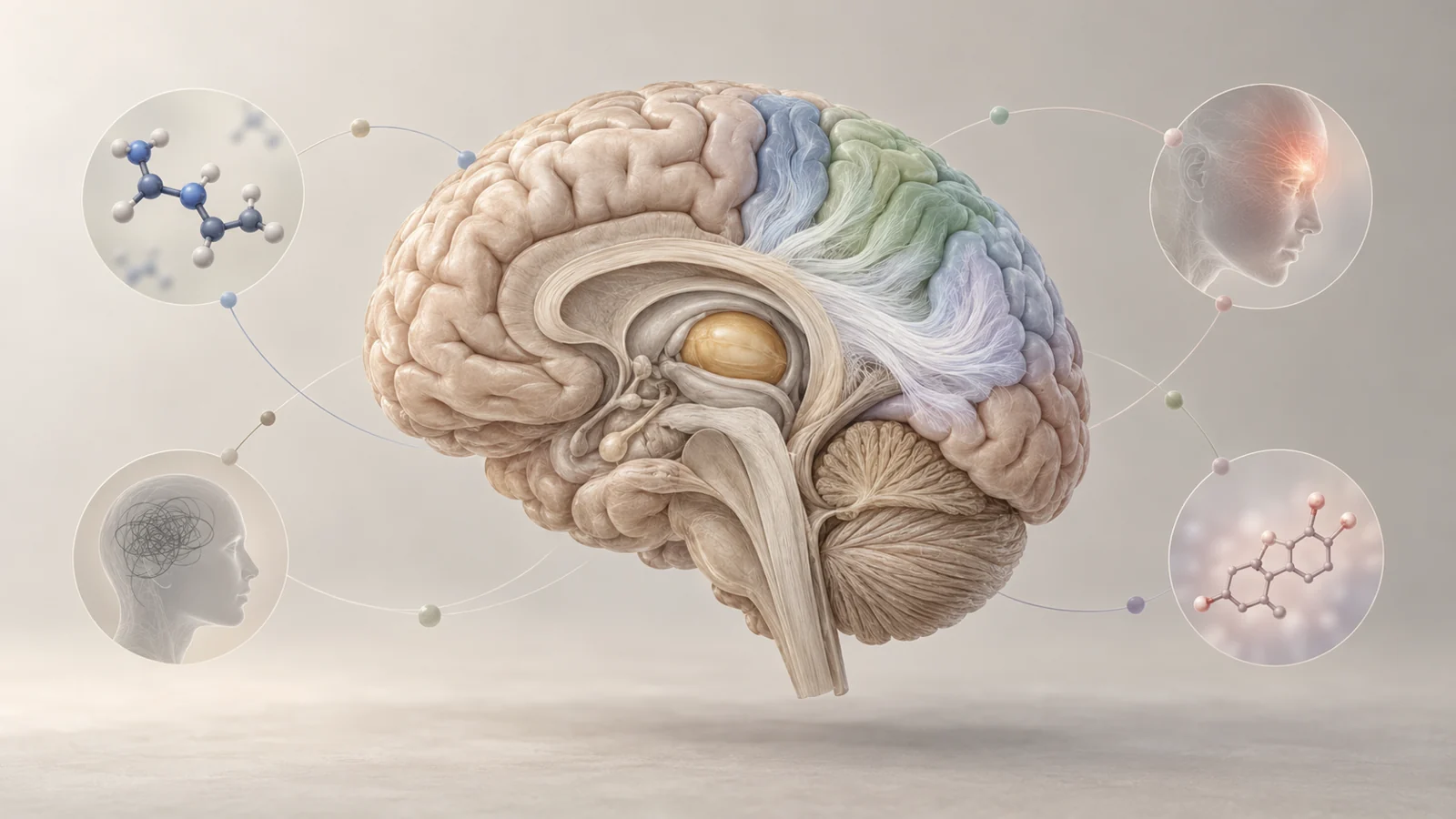
Concentration problems are often described as “brain fog,” but the phrase does not point to one known cause. A small exploratory study asked whether creatine, a molecule that helps buffer energy inside cells, might be related to these complaints during perimenopause.
The researchers measured brain creatine, blood estradiol and symptom ratings in 12 women with irregular menstrual cycles and at least one perimenopausal symptom. Their results offer a specific lead about brain chemistry and concentration. They do not yet show that a change in creatine causes the complaints.
A brain measurement, not an energy meter
The team used proton magnetic resonance spectroscopy, a scanning technique that estimates the concentration of certain chemicals in tissue. They sampled gray and white matter in both frontal, precentral and parietal regions, as well as the thalamus. Creatine helps buffer cellular energy, but its measured concentration is not a direct reading of how much energy the brain is producing or using.
Across the brain, the women’s mean creatine concentration was 6.31 millimoles per liter, with a standard deviation of 0.98. The researchers reported this as lower than reference values for younger adults, with a borderline statistical result (P = 0.049). This was a comparison with younger-adult reference values, not a measurement of how creatine changed in these same women over time.
Concentration ratings tracked with three regions
Within the perimenopausal group, lower creatine measurements in the thalamus, right precentral region and right parietal white matter were associated with greater reported difficulty concentrating. These are regional correlations: they describe how two measurements varied together across participants. They are separate from the whole-brain comparison with younger-adult references.
The pattern is worth following because it connects a subjective complaint to measurements from particular parts of the brain. But the study cannot tell whether lower creatine contributed to concentration difficulty, whether symptoms or another factor influenced the measurements, or whether both reflected some other process. With only 12 participants, the observed relationships also need replication before their size and reliability are clear.
Estradiol and symptoms did not share one pattern
The other associations point in different directions and locations. Higher symptom ratings for headaches were associated with higher creatine in right frontal white matter. Serum estradiol, meanwhile, was inversely associated with creatine in right parietal gray matter. Neither relationship is the same as the links between concentration difficulty and creatine in three other regions.
These differences make a single explanation difficult to draw from the results. The study measured estradiol in blood and creatine in brain regions, then assessed whether values were statistically related. It did not establish that estradiol drove a brain creatine change, or that either measurement produced a particular symptom.
A snapshot leaves the timeline open
All 12 participants were assessed in an exploratory cross-sectional study: the measurements and symptom ratings describe one observational snapshot. Statistical associations can identify patterns for further study, but they do not establish which factor came first. The results also cannot show how brain creatine or concentration complaints change within an individual through the menopausal transition.
The findings therefore do not test whether creatine supplements or hormone treatment improve symptoms. Nor can a comparison with younger-adult reference values stand in for following the same women across time. A larger study with repeated measurements would be needed to see whether the regional relationships persist and whether changes in creatine track changes in concentration.
What brain creatine could clarify about menopausal brain fog
If follow-up studies reproduce the regional pattern and establish that creatine-related chemistry contributes to concentration problems, women with this kind of brain fog could eventually get a more specific explanation and care aimed at that mechanism. Clinical use would still require a reliable measure for individuals and trials showing that an intervention safely improves symptoms.
Key Sources
- Primary source: Brain creatine, estradiol and neurocognitive complaints in perimenopausal women: an exploratory cross-sectional study.
DOI or Journal Page · Peer-Reviewed Paper · 2026-04-28
Keep exploring