
Research Signal – Source date 2023-03-03
A systematic review published on March 3, 2023, asked whether changing the body’s endocannabinoid system could influence glial cells and cognitive performance in animal models of Alzheimer’s disease. The endocannabinoid system is the body’s cannabinoid signaling network. It includes signaling molecules, receptors and enzymes that help regulate activity in the nervous and immune systems.
The review combined 26 preclinical articles involving 1,050 rodents. Its central question was practical but difficult: when cannabinoid signaling changes, do the brain’s immune and support cells also change in ways associated with better memory-task performance?
The answer was encouraging at the level of the animal experiments, but uneven at the level of biology. The pooled results favored cannabinoid agonists on two behavioral measures, while receptor manipulation, inflammatory markers, plaque measures and individual memory tasks did not all move together.
The main result came from animal memory tasks
The review reported lower escape latency in treated rodents. In a maze, escape latency means the time an animal takes to reach the location it has learned to use as an escape route. The pooled standardized mean difference was −1.26, with a 95% confidence interval from −1.77 to −0.76.
The analysis also found better performance on novel-object discrimination, a task that tests whether an animal distinguishes a new object from one it has already encountered. The standardized mean difference was 1.40, with a 95% confidence interval from 1.04 to 1.76.
These are standardized comparisons between treated and control animals. They are not percentage improvements, estimates of human benefit or evidence that a particular cannabis product would preserve memory. They show that, across the included experiments, cannabinoid agonist treatment was associated with better performance on these selected tasks.
The studies were chosen using criteria that required an Alzheimer’s animal model, some form of endocannabinoid-system modulation, an assessment involving glial cells and a cognitive outcome such as a maze or object-recognition task. The review searched six databases, assessed study quality with the SYRCLE risk-of-bias tool and used a random-effects model to combine results.
Why glial cells are part of the question
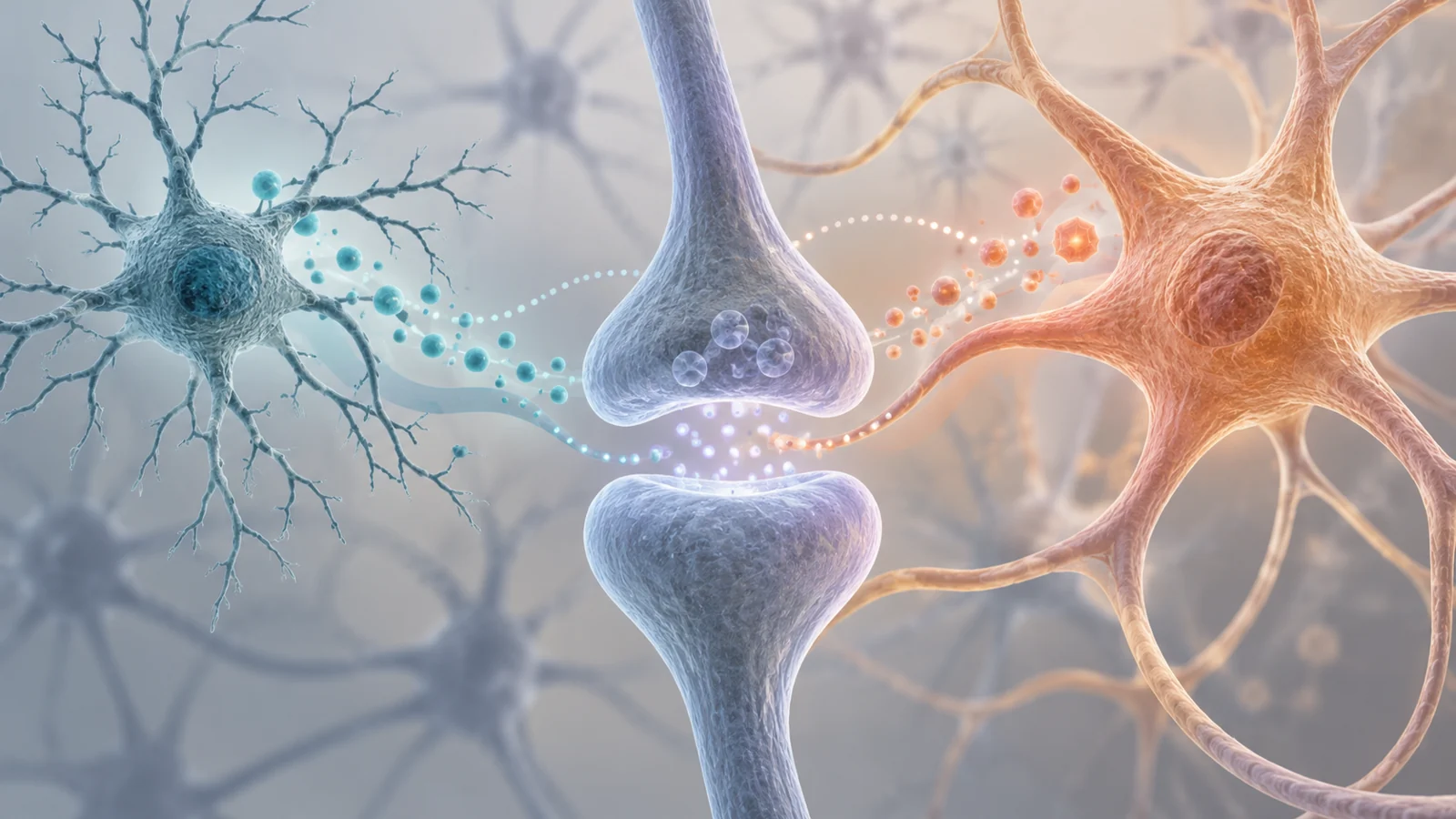
Microglia are immune cells in the brain. They monitor changes in their surroundings and participate in responses to injury, damaged neurons and other disturbances. Astrocytes are support cells that help maintain the environment around neurons and communicate with microglia. Both cell types can influence the conditions in which neuronal connections operate.
The endocannabinoid system is relevant because cannabinoid signaling can interact with these cells. The review describes evidence that activated microglia may increase cannabinoid-receptor signaling and that this may be associated with a more protective cellular state, including less production of inflammatory components. It also discusses cannabinoid signaling in astrocytes and the reciprocal communication between astrocytes and microglia.
The review’s measured outcomes included GFAP and Iba1, two glial markers used across the included studies. Many individual experiments reported lower expression after cannabinoid treatment. Across the pooled analyses, GFAP was lower in treated animals, with a standardized mean difference of −1.47, and Iba1 was also lower, with a standardized mean difference of −1.67.
Those findings help connect the behavioral results to a possible biological pathway, but they do not by themselves show that a change in either marker caused an improvement in memory. A marker can change alongside a cognitive task without being the step that produced the behavioral result.
The authors propose a broader sequence for future investigation: cannabinoid signaling might influence glial-cell state, inflammatory signaling, protein-clearance processes, oxidative stress and the maintenance of synaptic plasticity. In the review, this is a proposed chain of mechanisms rather than a single pathway demonstrated in every experiment.
The signaling system did not behave like a single switch
The included studies do not point to one uniformly beneficial direction for manipulating cannabinoid receptors. Some experiments activated a receptor with a cannabinoid agonist. Others examined what happened when a receptor was genetically deleted. Favorable outcomes appeared in both kinds of experiment under different conditions, which makes the target more complicated than an on-or-off treatment switch.
One study reported by the review used a CB2 receptor agonist in transgenic APP/PS1 mice. The animals showed improved novel-object recognition, but the same experiment did not improve spatial memory and did not produce a difference in plaque number. The result is useful precisely because the measures separated: recognition memory, spatial memory and plaque burden did not form one uniformly improving package.
Another included experiment examined mice lacking the CB2 receptor. The review reported lower escape latency and favorable changes in some plaque-related and cellular measures in that model. A receptor agonist and receptor deletion can therefore each accompany favorable findings, depending on the model, intervention and outcome being measured. That pattern does not identify a single receptor action as the answer for Alzheimer’s disease.
The inflammatory results add another layer. In transgenic mice, the pooled estimate for inflammatory markers was −0.47, with a 95% confidence interval from −1.03 to 0.08. Because the interval crossed zero, the review described this decrease as non-significant. In wild-type mice, the pooled estimate was −2.28, with a 95% confidence interval from −3.15 to −1.41.
The difference between those groups shows why model context matters. An intervention that changes inflammatory markers in one kind of mouse cannot automatically be expected to produce the same result in a transgenic Alzheimer’s model, much less in a person with Alzheimer’s disease.
What the pooled measures can and cannot tell us
Meta-analysis is useful here because it brings scattered animal experiments into one comparison. It also makes the variation among those experiments visible. Different studies used different animal models, interventions, measurements and experimental conditions. Different subsets of the 26 articles contributed to different outcomes, so the total group of 1,050 rodents should not be read as one identical experiment.
The pooled glial results themselves showed substantial variation. For GFAP, heterogeneity was high, with I² at 82%. For Iba1, heterogeneity was moderate, with I² at 70%. The inflammatory analysis in transgenic mice also showed substantial heterogeneity, while the wild-type analysis was less variable by that measure.
The review also found that individual results were not perfectly consistent. Of 11 studies examining Iba1, nine reported reduced expression after cannabinoid treatment and two reported non-significant changes. Of 14 studies examining GFAP, 11 reported reductions, two reported non-significant results and one reported an increase.
Incomplete reporting further limited how confidently the review could assess safeguards against bias. The authors describe a high proportion of unclear risk-of-bias judgments because primary studies did not always provide enough information about how particular safeguards had been handled. That uncertainty does not prove that the underlying studies omitted those safeguards. It means the published descriptions did not always allow a clear assessment.
A pooled reduction in a marker or plaque measure also does not mean that every intervention improved it, or that the measure reliably predicts cognitive benefit. The strongest conclusion available from this synthesis is narrower: across the included rodent experiments, certain cannabinoid interventions were associated with better performance on selected cognitive tasks and with changes in several glial or inflammatory measures. The causal links among those observations remain an open research question.
Rodent memory is not the same as human treatment evidence
A maze escape task and a novel-object test are experimental measures of cognition in animals. They can help researchers study learning and memory under controlled conditions, but they do not reproduce the full experience of Alzheimer’s disease in a person. Human outcomes would also involve questions about everyday function, tolerability, interactions with other treatments and whether any benefit persists.
The review discusses human research as a separate evidence problem. Studies of dementia-related behavioral and psychological symptoms would not answer the same question as whether a treatment preserves memory in Alzheimer’s disease. Human researchers also cannot routinely sample living brain tissue to measure the same glial changes examined in animal experiments.
For that reason, this review does not establish that cannabis products or cannabinoid medicines preserve cognition in people with Alzheimer’s disease. It does not identify a suitable human dose, a safest product or a treatment choice. The authors instead call for population-based studies and well-designed clinical trials to examine acceptability and real-world effectiveness.
The useful biological possibility is therefore more specific than “cannabis helps Alzheimer’s.” The findings suggest that glial cells and cannabinoid signaling may be connected to inflammation and cognitive performance in Alzheimer’s-like rodent models. Whether that connection can be turned into a safe, effective way to preserve human memory was unresolved from the March 2023 perspective.
What targeting brain support cells could change
If researchers can identify an intervention that regulates the inflammatory and supportive functions of glial cells without producing unacceptable effects elsewhere, it could open a route toward treatments designed to help people with Alzheimer’s preserve memory and day-to-day cognitive function. The potential benefit would come from maintaining the brain environment that supports neuronal connections, not simply from making one laboratory marker look better.
That possibility depends on several links holding up in people: the right part of the endocannabinoid system would need to be targeted, the cellular changes would need to translate into meaningful cognitive benefit, and the intervention would need acceptable safety. The animal synthesis makes glial regulation a research possibility worth testing; it does not yet make it a treatment.
Key Sources
- Primary source: Regulatory role of the endocannabinoid system on glial cells toward cognitive function in Alzheimer's disease: A systematic review and meta-analysis of animal studies.
DOI or Journal Page · Review or Meta-Analysis · 2023-03-03
Keep exploring