
Research Signal – Source date 2024-02-09
Magnesium is involved in far more than one bodily function. It helps cells handle energy, supports DNA stability and participates in processes linked with inflammation. That breadth raises an appealing question: could maintaining enough magnesium help people remain healthier as they grow older?
Published on February 9, 2024, in Nutrients, the review Magnesium and the Hallmarks of Aging examines that possibility. The authors connect magnesium with the recurring biological processes implicated in aging, including changes in DNA maintenance, mitochondrial function, cellular senescence, nutrient sensing and inflammation. Their argument is not that magnesium has been shown to extend human life. It is that magnesium inadequacy could sit at the intersection of several processes that influence health over time.
That distinction matters because evidence from cells, animals and people answers different questions. The review makes a case for studying magnesium balance as part of healthy aging, while leaving the size, durability and real-world meaning of any benefit for future human research.
Why magnesium status can become difficult to read
Older adults may become magnesium-inadequate through several routes. A diet with little magnesium can reduce intake. Changes in the intestine or medical and treatment-related conditions can reduce absorption. Urinary losses can also increase. These pathways may overlap, so a low magnesium status does not necessarily have one simple explanation.
The body’s measurements are not perfectly interchangeable either. The review notes that low intracellular magnesium has been observed even when total serum magnesium was not altered. In other words, the amount measured in blood does not always capture what is available inside cells. Mild deficits may also produce no obvious symptoms, or symptoms that are nonspecific and easily confused with ordinary features of aging.
This makes magnesium status more complicated than asking whether someone consumes a particular food or has a single reassuring laboratory result. It also helps explain why the review focuses on balance across the life course rather than presenting one universal target for everyone.
A mineral with important cellular jobs
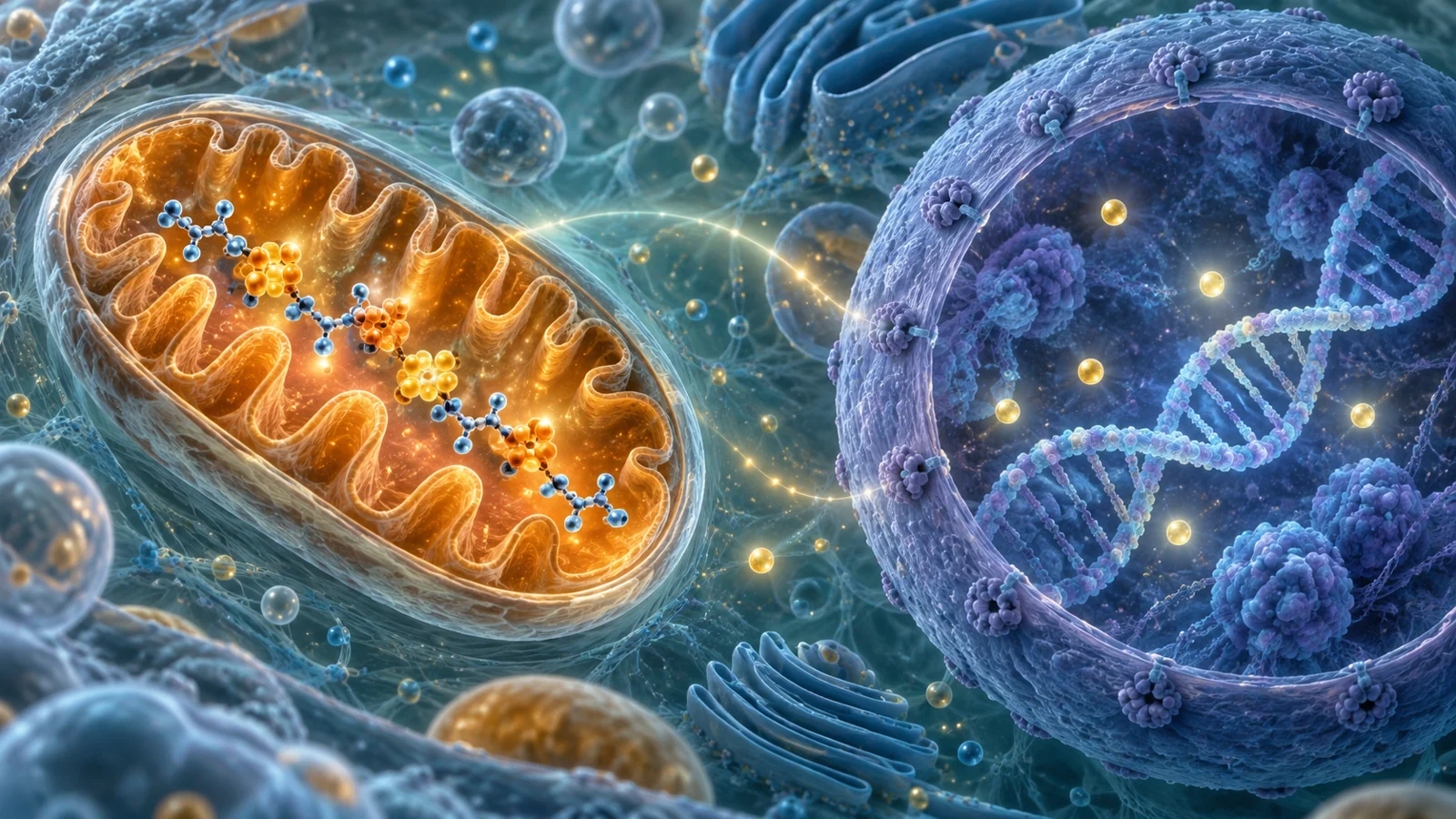
One of magnesium’s central roles is its association with ATP, the molecule cells use to transfer energy. Magnesium forms the Mg–ATP complex, and the review describes substantial magnesium presence in mitochondria, where cells manage much of their energy production. Several enzymes involved in the tricarboxylic acid cycle and the electron transport chain depend on magnesium or are activated by it.
When mitochondrial magnesium homeostasis is disturbed in experimental systems, ATP production, membrane potential and oxidative balance can change. The review also describes magnesium transport through proteins associated with the mitochondrial membrane. Those findings provide a biological route linking magnesium availability with cellular energy and vulnerability to oxidative stress.
Magnesium also participates in the physical and chemical stability of DNA. It helps stabilize DNA structure, supports chromatin organization and is needed for the activity of enzymes involved in several DNA repair pathways. Inadequate concentrations are therefore discussed as a possible contributor to DNA damage and oxidative stress, rather than as a single cause of genomic instability.
Energy production, DNA maintenance and inflammation are not isolated subjects inside a cell. The review describes how altered mitochondrial function can increase oxidative stress, while low magnesium concentrations can stimulate inflammatory signaling, including pathways associated with inflammatory markers such as IL-1β and TNF-α. Human observational studies summarized in the review likewise found inverse associations between magnesium intake or serum magnesium and measures such as C-reactive protein.
These connections explain why the authors can relate magnesium to many hallmarks of aging. They also show why the subject is biologically plausible without making the larger conclusion automatic: a nutrient can participate in a process without becoming a proven way to control the entire aging process.
What the experiments and human studies actually show
The review brings together results from research settings that should not be treated as equivalent.
In cultured human fibroblasts depleted of magnesium, the review reports lower replication capacity, more senescence-associated markers and greater telomere attrition. A separate endothelial-cell experiment found enlarged, elongated and vacuolated cells, along with markers associated with cellular senescence and increased expression of an inflammatory marker. These experiments show how magnesium depletion can alter cell behavior under controlled conditions. They do not show that restoring magnesium in a person clears senescent cells or reverses ordinary aging.
Animal evidence addresses a different question. In a mouse model of premature aging, the review reports that magnesium supplementation improved mitochondrial measures, reduced tissue oxidative stress and extended lifespan. That is a noteworthy model result, but a disease or premature-aging model is not the same as ordinary aging in humans. It cannot by itself establish that magnesium supplementation extends human lifespan or healthspan.
The human observational evidence is broader but less decisive about cause. Across several datasets, lower magnesium intake or lower serum magnesium was associated with higher levels of inflammatory markers. Such associations are useful for identifying relationships worth testing, yet they cannot show whether magnesium itself caused the difference. Diet, health status and other factors may accompany magnesium status in ways that observational research cannot fully separate.
The review also reports a twelve-week magnesium supplementation intervention in women over 65 in which physical-performance scores improved compared with placebo. This is the most direct human-facing result in the supplied evidence because it concerns physical function rather than only a laboratory marker. Even so, a short intervention result does not establish durable preservation of independence, prevention of age-related disease or longer life. It shows that a functional outcome changed in that study population over that period.
Taken as a group, these findings support a chain of questions rather than a finished longevity claim. Cell studies help show possible mechanisms. The mouse study shows what may happen in a particular aging model. Observational human data show relationships with inflammation. The reported intervention provides evidence about physical performance in older women. Each result adds a different piece, and none can simply substitute for the others.
Where the picture is still uneven
The hallmarks of aging are interconnected, which makes magnesium an interesting candidate for study and a difficult one to evaluate. Mitochondrial dysfunction, oxidative stress, inflammation and cellular senescence can influence one another. A factor that touches several of these processes could have effects that reinforce each other, but it could also be difficult to identify which pathway matters most in people.
Coverage across the aging biology is not equally deep. The review notes that the influence of altered magnesium balance on hematopoietic tissue, the tissue involved in blood formation, has not been extensively studied. Magnesium has roles in cell replication and DNA and RNA synthesis, and bone marrow-related biology is connected with the balance between different kinds of stem and supporting cells. Yet the available discussion in this area is more limited than the biochemical account of energy metabolism or inflammation.
The authors therefore present adequate magnesium as a sensible nutritional goal, with magnesium-rich foods and supplements when indicated, while cautioning against treating one correction as a complete solution. Aging involves many determinants, and changing one of them may have no lasting effect on the whole process. The supplied evidence also does not establish a universal anti-aging dose, a preferred supplement formulation or an assurance that supplementation is appropriate for every reader.
The most accurate reading of the review is consequently conditional. Magnesium may be one modifiable part of the environment in which aging biology unfolds. Whether improving magnesium status changes meaningful outcomes for particular people remains a question for well-designed human studies that can follow both biological measures and function over time.
What magnesium balance could mean for healthy aging
The authors’ healthspan hypothesis is ultimately about more than laboratory pathways. If future human research shows that maintaining adequate magnesium produces durable improvements in physical function, and clarifies which older adults benefit, magnesium balance could become an accessible part of preserving years lived in good health.
The reported physical-performance finding gives that possibility a concrete human dimension, while the cellular and animal work explains why researchers are continuing to investigate it. The practical promise is not a shortcut to longer life. It is the possibility that a basic nutritional factor, when adequately understood and appropriately maintained, could help support older adults’ physical function and healthy years. Establishing that benefit will require evidence that lasts longer, applies beyond selected study settings and separates magnesium’s contribution from the many other forces shaping aging.
Key Sources
- Primary source: Magnesium and the Hallmarks of Aging.
DOI or Journal Page · Review or Meta-Analysis · 2024-02-09
Keep exploring