
Evidence date · 2025-01-03 · Research note 3 of 3
1 2 3
See current Track status →
Since the previous research note · Earlier expectation not tested
Track continuity
Since the previous research note: How a nighttime hormone might affect Alzheimer’s brain changes
Previous expectation: A tolerable melatonin regimen might help preserve everyday cognitive abilities if human research established meaningful sustained benefits and a suitable regimen.
What this study adds: NCT06756828 supplies a registered comparison of a specified melatonin regimen with sleep-hygiene education, using blood, cognitive, physical and sleep measures. The supplied record has no posted results, so it does not test the earlier forecast through reported outcomes.
What changed in this study
The ClinicalTrials.gov entry NCT06756828 describes a randomized study of melatonin in people with Alzheimer’s-type mild cognitive impairment accompanied by insomnia.
The current registry record describes an estimated 40-person, parallel comparison. It lists the study as not yet recruiting, with estimated start and completion dates, and says that results have not been posted. Those details describe the current record; the supplied January 3, 2025 publication date does not verify the exact wording or recruitment status of that earlier version.
What the registration is designed to measure
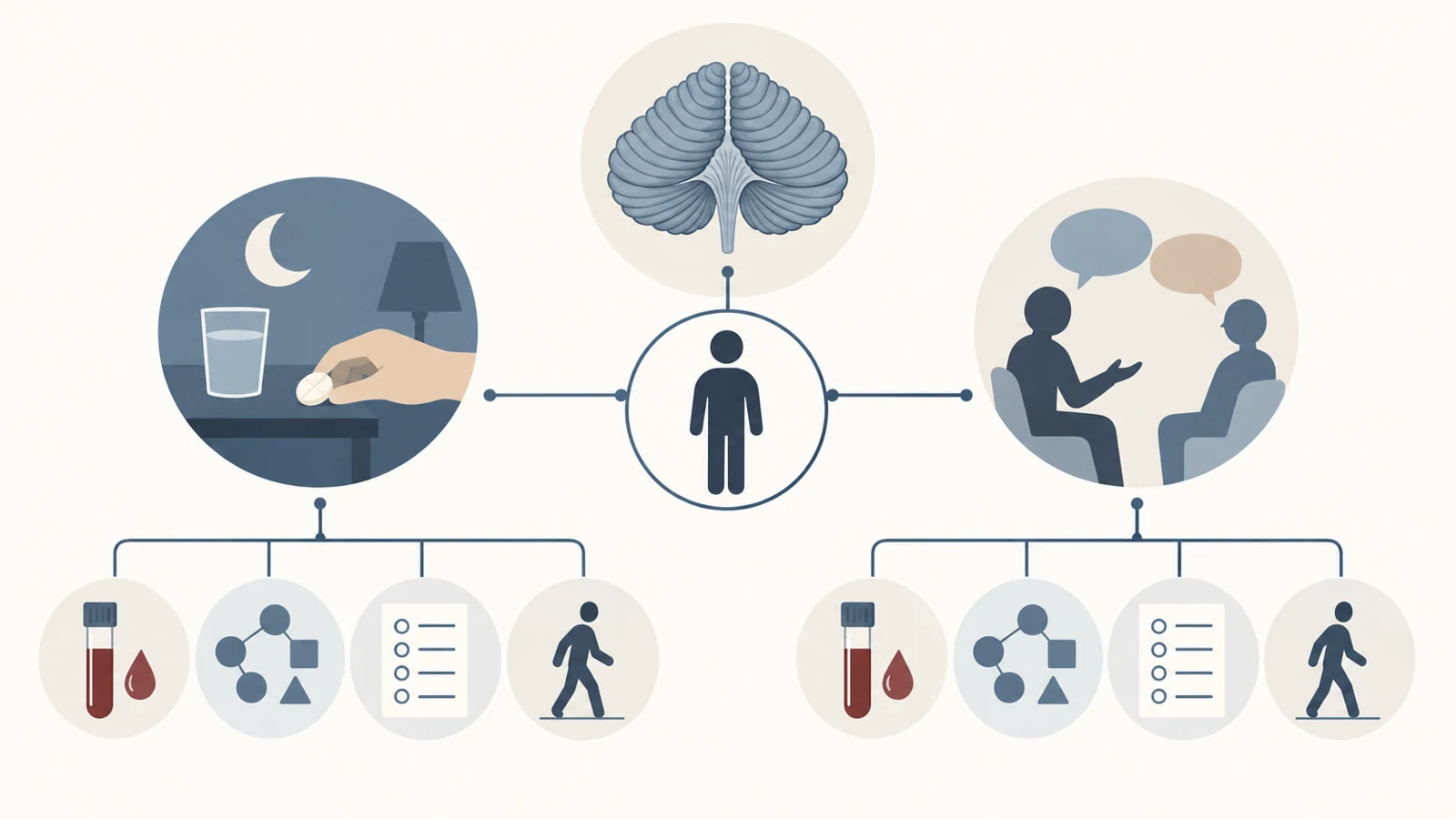
The study asks whether three months of melatonin treatment are accompanied by changes across several connected but different areas: blood markers associated with neurodegeneration, sleep complaints, physical performance, cognitive test scores and cerebellar measurements.
Participants are listed as adults aged 60 to 90 of any sex. The registration focuses on people who have both insomnia and Alzheimer’s-type mild cognitive impairment, rather than presenting the study as a test for every person with poor sleep or every stage of Alzheimer’s disease.
The design compares measurements taken at baseline with measurements taken after 12 weeks. That timing makes the study useful for examining short-term change during a defined treatment period. It also creates an important interpretive limit: a change over three months is not the same as evidence that cognitive decline has been slowed over sustained use.
Two groups with different sleep interventions
The melatonin group is scheduled to take 2 milligrams two hours before bedtime for 12 weeks. The comparison group is described in the registry as a cognitive behavioral therapy group, but the concrete activity specified is a 15-minute sleep-hygiene education session during the first hospital visit. The record therefore supports describing the comparator by that brief educational activity, not as a full course of cognitive behavioral therapy for insomnia.
This comparison gives investigators a way to examine what changes are seen after the melatonin regimen relative to the other group’s starting education session. The most informative result would not simply be that participants in one group looked different at week 12 than they did at baseline. It would be whether the groups changed differently over the same period.
That distinction matters because sleep, cognition, physical performance and blood markers can move on different timescales. A sleep questionnaire could change without a corresponding cognitive change. A blood measurement could shift without demonstrating better memory or daily function. The registration sets up a comparison across these domains, but it supplies no observed treatment effects.
Four kinds of measurements, not one answer
The primary outcomes include changes in serum p-Tau 217, glial fibrillary acidic protein, or GFAP, neurofilament light chain, or NfL, and physical performance measured with the Short Physical Performance Battery. In plain terms, the trial is looking at several blood measurements alongside balance, gait speed and lower-body strength.
Cognitive outcomes are secondary. They include broader ratings of deterioration and dementia severity as well as tests of verbal fluency, mental status, naming and word-list recall. Sleep-related outcomes are also secondary, using questionnaires about sleep quality, insomnia severity and daytime sleepiness.
Keeping these categories separate helps prevent an appealing but unsupported shortcut. Better sleep reports would not automatically show protection against Alzheimer’s-related decline. A difference in a blood marker would not by itself establish a clinical benefit. Likewise, a change in a physical-performance score would describe function during the study period, not necessarily a lasting effect on independence.
Why the cerebellar question needs careful reading
The study’s broad summary refers to cerebellar volume change, but the detailed cerebellar outcome is more specific. It describes assessing cerebellum volume at enrollment and examining its relationships with blood-marker levels, physical-performance measures, cognitive tests and sleep-questionnaire responses. The planned relationships are to be reported using Spearman correlation coefficients.
That is an association question at enrollment. It asks whether people with different cerebellar measurements also show related differences in the other recorded measures. It is not, as specified in that detailed outcome, a direct demonstration that 12 weeks of melatonin changed cerebellar structure.
The supplied evidence therefore supports a careful reading of the structural component. It does not establish treatment-related cerebellar volume change, while the detailed endpoint also does not prove that a complete protocol contains no repeat structural assessment. The distinction is between what the listed outcome explicitly measures and what the broader summary might lead a reader to expect.
What 12 weeks can and cannot tell us
A randomized comparison with an estimated 40 participants can organize a focused test of short-term changes in a defined population. It can place sleep questionnaires beside cognitive assessments, physical testing and blood measurements collected at two time points. That combination may help show whether several domains move together or diverge during the treatment window.
It cannot, from the registration alone, answer whether melatonin preserves cognition over years, prevents Alzheimer’s disease or maintains everyday abilities with continued use. Those conclusions would require reported results and an interpretation of how the groups changed relative to one another, along with evidence that any difference was meaningful for people’s lives rather than only detectable on a laboratory or questionnaire scale.
The current record also lists estimated dates rather than verified treatment milestones. Actual recruitment, treatment initiation and completion are not established by those estimates. For now, NCT06756828 is best understood as a registered plan for testing a specific regimen and a broad set of outcomes, not as evidence that the regimen has already improved sleep, memory, movement or blood markers.
What this could mean for preserving everyday abilities
If future human evidence shows that a tolerable melatonin regimen produces sustained, clinically meaningful benefits with acceptable safety, research of this kind could help connect treatment for insomnia with the abilities people use every day. The practical promise would be more than a better questionnaire score: it could mean preserving memory, balance, strength and other cognitive and physical capacities for people experiencing both insomnia and early cognitive difficulties.
That possibility remains conditional. This registration supplies the planned comparison and its measurement structure, but it does not deliver the benefit itself.
Key Sources
- Primary source: Effects of 3-Month Melatonin Treatment on Regional Cerebellar Structure and Blood Biomarkers in Alzheimer's Disease Spectrum
Government or Regulator · Clinical Trial · 2025-01-03