
Research Signal – Source date 2021-09-30
What can researchers learn from the way someone walks, sleeps and moves through an ordinary week? The HANDDS-ONT study in Ontario was designed to investigate that question at home, without clinic visits. Its registry description, dated September 30, 2021, says the observational study is recruiting people living with a neurodegenerative disease or the effects of stroke, alongside healthy aging participants.
The aim is not to test a treatment. Researchers want to bring several kinds of information together: data gathered during daily life, answers about mood and quality of life, and biological information from blood samples. The combination is intended to help them understand aging with and without neurodegenerative conditions and explore whether certain patterns could eventually become useful for earlier recognition or daily care.
A study built around ordinary days
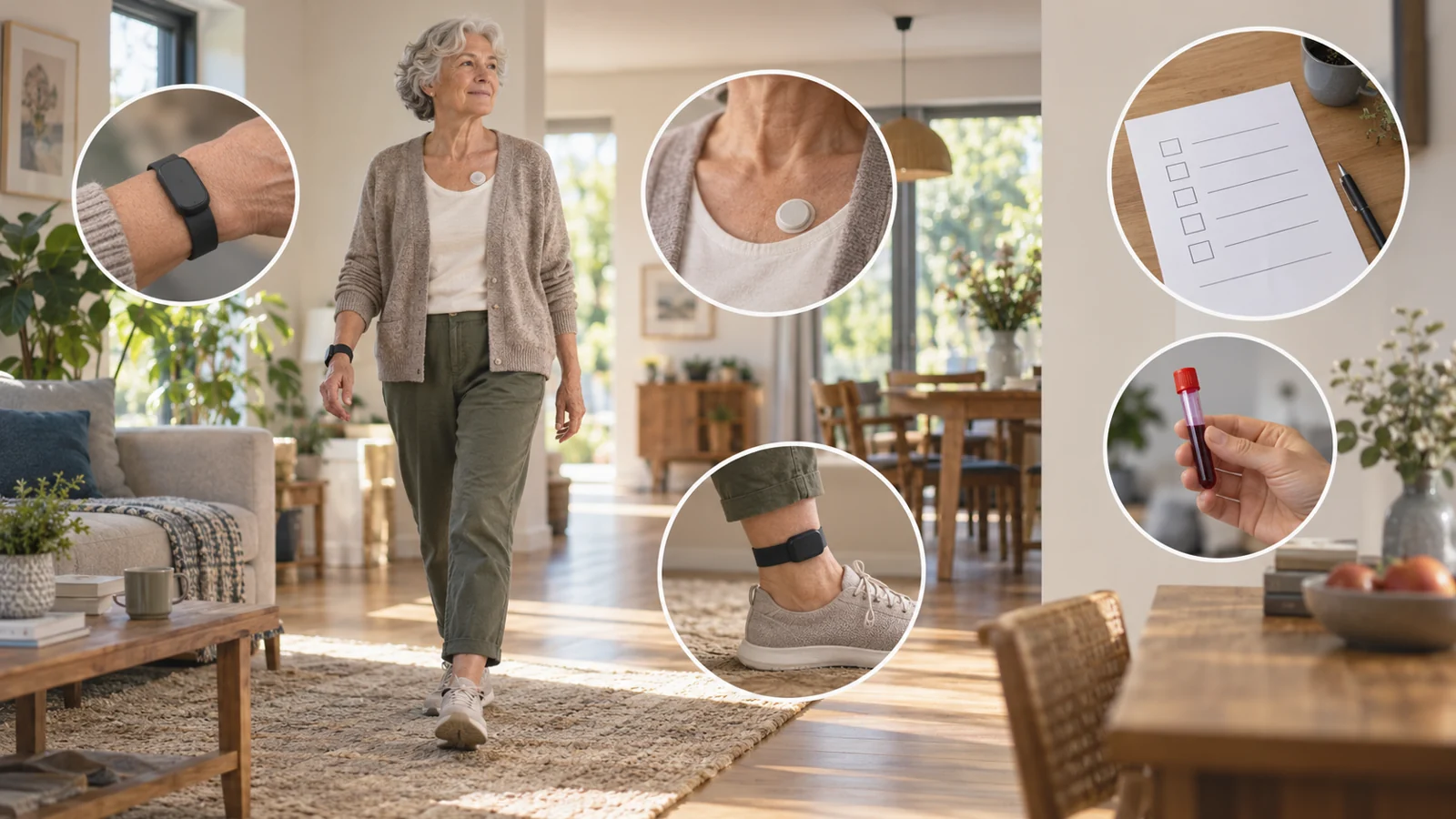
Participants are asked to wear small sensors on the wrist, ankle and chest for 7–10 days while carrying on with their usual activities. The registry describes measurements such as walking patterns, sleep and heart rate or rhythm. Instead of asking people to reproduce behavior in a clinic, the study observes what happens during the routines that make up everyday life.
That setting matters because neurological conditions can affect daily function in ways that are not captured by a single appointment. A person’s movement, sleep and other activity patterns may vary across the day. The study is intended to collect those patterns in a participant’s own environment, where ordinary behavior can be observed over more than one brief encounter.
The sensor period is only one part of the design. The study’s broader interest is aging over time, including how biological and behavioral information might relate to later health outcomes. Wearing sensors for a week or so should therefore be understood as a defined measurement window, not as the total duration of follow-up.
The measurements tell different parts of the story
A wearable sensor can record aspects of movement, sleep and heart activity, but it cannot by itself explain what those patterns mean to the person wearing it. Questionnaires add a different perspective by asking about mood and quality of life. These responses describe lived experience rather than simply recording physical activity.
Blood samples provide another layer. The study plans to examine genetic information and certain risk factors in relation to possible earlier detection of some conditions. The purpose is not to treat a blood result as a standalone answer. Researchers intend to consider genetic and protein-related information alongside clinical data and free-living behavior.
Using several streams also creates a more demanding scientific question. A recurring sleep or walking pattern might be associated with a condition, reflect another aspect of health, or vary for reasons unrelated to neurodegeneration. The study is built to examine these relationships rather than assuming that one measurement has a single explanation.
Why include people aging without these conditions
Healthy aging participants give researchers a way to study aging beyond the experience of disease. Alongside people living with neurodegenerative disease or stroke effects, they can help researchers examine how biological information, reported experience and daily behavior appear across different participant groups.
The comparison is not presented as a finished diagnostic test, and the registry description does not establish that the groups will produce a simple dividing line. Its value is in creating a broader picture of aging, with and without the conditions under investigation. Researchers can then ask whether particular combinations of findings are informative enough to deserve closer study.
This is also why the study needs more than sensors. A movement pattern has one meaning as a recorded behavior, another as part of a person’s reported quality of life, and still another if it appears alongside genetic or protein-related information. The planned analysis connects these perspectives without claiming that the connection has already produced a validated clinical measure.
From a pattern to a useful answer
There are several steps between measuring daily life and using information in care. First, researchers must determine whether the combined data reveal stable and meaningful groups or relationships. Next, those patterns would need to show useful connections with important clinical outcomes. Finally, information would have to be understandable and useful to the people receiving it and to their circle of care.
HANDDS-ONT includes a participant-facing report describing sleep and activity during the sensor-wearing period. Such a report may help someone understand what happened during those days, but it should not be confused with a diagnosis. The study description supports the plan to provide feedback; it does not establish that the feedback changes behavior, improves health or detects dementia earlier.
That boundary is important. An observational study can identify relationships and test whether a measurement appears useful, but its design alone cannot show that changing sleep or activity prevents dementia or alters disease progression. At the September 2021 point of view, the study represents an effort to build and evaluate a combined measurement approach, not a demonstrated clinical solution.
What this could change
If the combined information proves capable of identifying clinically useful patterns, ordinary activities at home could become a richer part of how researchers recognize and understand neurological disease. Earlier clues might help distinguish different experiences of aging and focus later assessment on people who need it, provided those clues are confirmed against meaningful health outcomes.
For people already living with a neurodegenerative condition, useful feedback could make parts of daily life easier to understand. A clear account of sleep and activity might support conversations with a circle of care or help someone notice changes worth discussing. That practical benefit would depend on the reports being accurate, understandable and genuinely useful in daily decision-making—questions the study is designed to investigate rather than questions it has already answered.
Key Sources
- Primary source: Health in Aging, Neurodegenerative Diseases and Dementias In Ontario
Government or Regulator · Clinical Trial · 2021-09-30
Keep exploring