
Evidence date · 2024-04-25 · Research note 2 of 4
1 2 3 4
See current Track status →
Since the previous research note · Earlier expectation not tested
Track continuity
Since the previous research note: How magnetic pulses probe brain function and test possible memory treatments
Previous expectation: Validated stimulation targets and lasting cognitive gains could provide an additional treatment for people with illness-related memory and thinking difficulties.
What this study adds: The April 25, 2024 registry description specifies an Alzheimer's study combining a sham comparison with sleep and cognition assessments, exploratory glymphatic imaging, and follow-up at one and three months. The supplied evidence describes the proposed investigation without outcome evidence adjudicating the earlier forecast.
What changed in this study
A ClinicalTrials.gov study description dated April 25, 2024, asks whether a short course of magnetic brain stimulation could affect both sleep and thinking in people with mild-to-moderate Alzheimer’s disease. The investigators plan to measure the two separately and explore a possible biological connection between them. The entry sets out a planned investigation, with its clinical questions still open.
The registry authors point to earlier reports of cognitive benefits from stimulation, while describing research on sleep disorders in Alzheimer’s as limited. That is their rationale for giving sleep a central place in this study.
A short course with a sham comparison
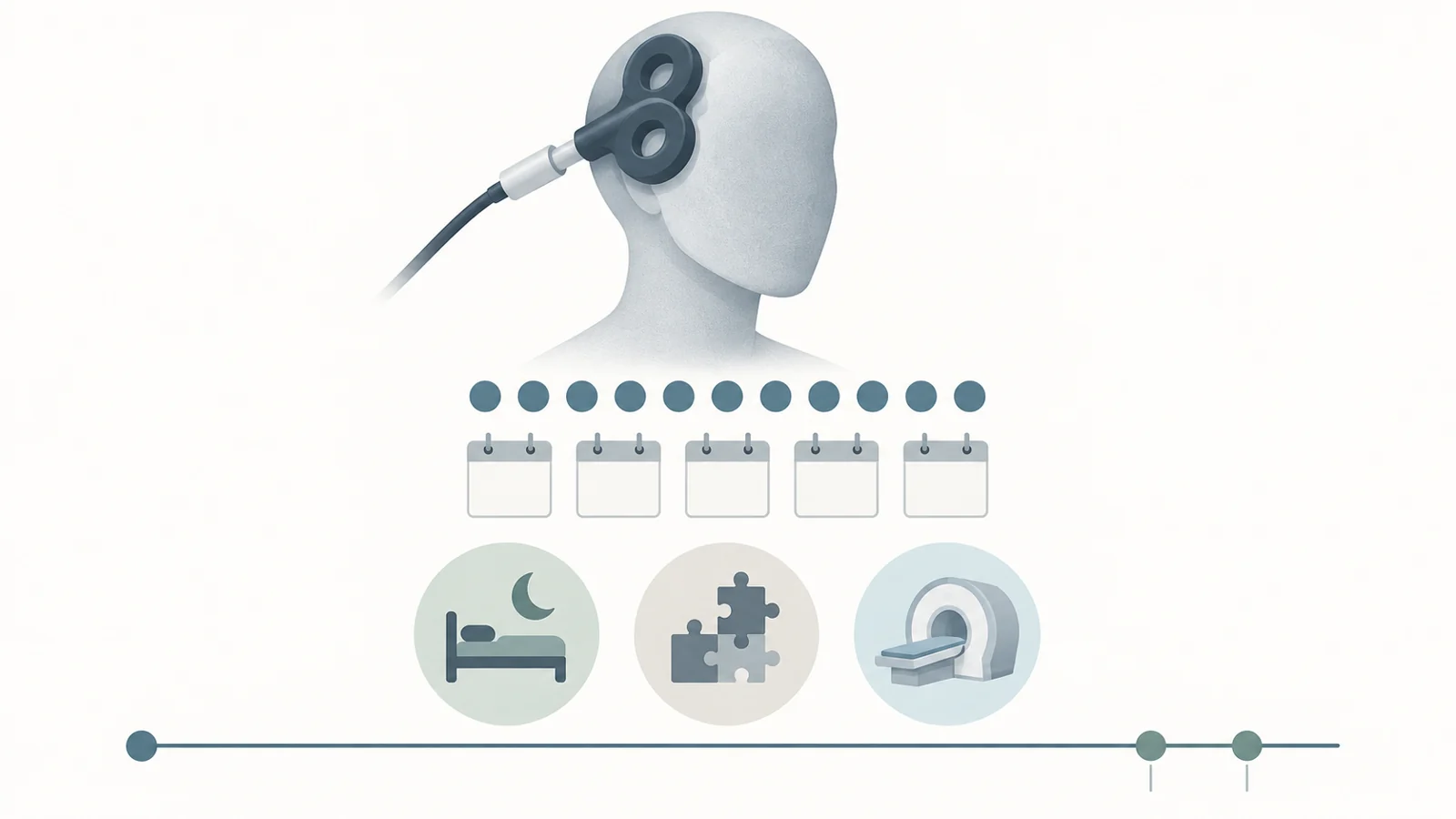
Participants are scheduled to receive ten sessions of high-frequency repetitive transcranial magnetic stimulation, or rTMS, over five days, or sham stimulation. The active procedure delivers repeated magnetic pulses from outside the head. Its target is the dorsolateral prefrontal cortex, a region toward the front and side of the brain. High frequency refers to the rapid repetition of those pulses.
The sham procedure provides a comparison condition. Comparing changes between the groups is intended to help researchers distinguish effects associated with active stimulation from changes that also occur in the comparison group. That makes the comparison more informative than simply asking whether participants score differently after receiving treatment.
Separate measurements and a possible connection
Polysomnography records physiological signals during sleep, allowing researchers to characterize sleep itself. Neuropsychological testing assesses cognitive performance through structured tasks. The registry identifies these as the primary assessment methods, giving sleep and thinking their own measurements.
That separation matters because the two outcomes need not move together. Someone could show a change in recorded sleep without a corresponding change in cognitive performance, or the reverse. Measuring each lets the investigators ask whether changes occur in one domain, both or neither, rather than treating one as a substitute for the other.
Magnetic resonance imaging adds an exploratory component. The researchers plan to examine glymphatic function, which concerns fluid movement and waste clearance in the brain. They are interested in its possible mediating role between sleep and cognition. Here, mediation means asking whether this process could help explain a relationship between how someone sleeps and how they perform on cognitive tests. The imaging therefore addresses a proposed explanation for a connection, while the sleep recordings and cognitive tests assess the two functions directly.
Five days of treatment, months of observation
The stimulation course lasts five days, but planned follow-up assessments extend to one and three months. Those visits address a different timescale from the treatment itself. They give researchers an opportunity to examine whether any observed changes remain detectable after the course has ended and whether the pattern differs between the earlier and later follow-up.
The April 2024 description supports an account of these planned assessments; it does not establish improved sleep or cognition or provide a basis here for estimating benefits and harms. An imaging change alongside a sleep or cognitive change would not, by itself, demonstrate improved clearance or establish a causal connection between the two. Likewise, the follow-up schedule alone cannot establish durable benefit, slower Alzheimer’s progression or better everyday functioning.
What this could change
If the approach produces reproducible, meaningful improvements in both sleep and cognition, with acceptable safety and sufficient persistence, it could give people with mild-to-moderate Alzheimer’s disease an additional non-invasive treatment option addressing both symptom domains. Benefits that outlast a brief treatment course could extend its practical value beyond the stimulation visits themselves.
Key Sources
- Primary source: Effects of Repetitive Transcranial Magnetic Stimulation in Patients With Alzheimer's Disease
Government or Regulator · Clinical Trial · 2024-04-25