
Evidence date · 2026-04-23 · Research note 4 of 4
1 2 3 4
See current Track status →
Since the previous research note · Earlier expectation not tested
Track continuity
Since the previous research note: What researchers could learn from three brain stimulation coils
Previous expectation: A tolerable stimulation approach with lasting cognitive benefits confirmed in sham-controlled research could give older adults another treatment option for thinking difficulties.
What this study adds: This registry entry specifies a six-session course over approximately three weeks and planned assessment of global and domain-specific cognition through three months. It adds a distinct delivery-and-assessment question, while the supplied evidence does not test the earlier conditional forecast.
What changed in this study
A registered pilot plans to investigate whether six sessions of magnetic brain stimulation could improve thinking, and whether any changes persist through three months of follow-up. The April 23, 2026 ClinicalTrials.gov entry describes a prospective study aiming to enroll 80 adults aged 50–90 with cognitive impairment. It sets out a research question and a planned course of treatment; registration itself does not establish that the course works.
Six sessions spread across three weeks
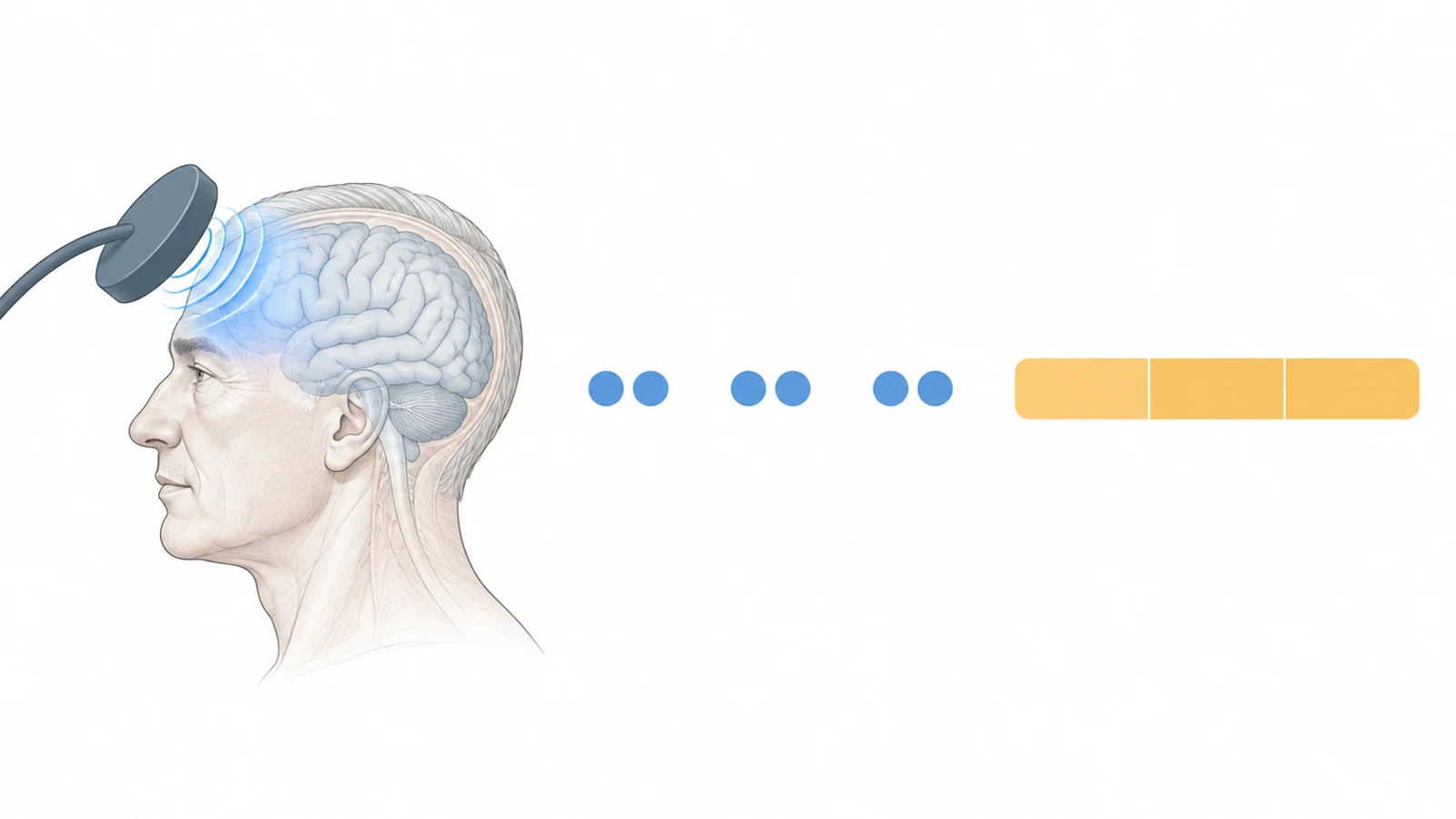
Repetitive transcranial magnetic stimulation, or rTMS, delivers repeated magnetic pulses to the brain using an external coil. This study plans to use the EXOMIND device to target the left dorsolateral prefrontal cortex, a region toward the front left of the brain. Treatment appointments are scheduled twice weekly over approximately three weeks.
Each session is planned to deliver 6,300 pulses at alternating frequencies of 12, 15 and 18 hertz—rates of magnetic pulses per second. These frequencies describe delivery within a session, while twice weekly describes how often someone attends treatment. Although the registry title calls the approach “accelerated,” the practical schedule is six sessions distributed across weeks.
An overall score and the abilities behind it
Eligibility includes documented cognitive decline and scores of 10–25 on the Montreal Cognitive Assessment, a screening measure of overall cognitive function. The planned study concerns mild to moderate impairment, with a broad range of ages and cognitive performance at entry. That description should not be taken to mean all participants would have the same diagnosis or the same difficulties.
The assessment plan combines overall cognitive screening with tests of particular mental abilities. An overall score summarizes performance, but a change in that total does not by itself explain which abilities changed. Separate measures of memory, attention and reasoning can help distinguish a concentrated change from a broader pattern. For example, better memory performance with little change in attention would carry a different interpretation from gains across several abilities. These are possible patterns the assessments could distinguish.
The primary outcome is the change from baseline in Montreal Cognitive Assessment score at the one-month follow-up. Changes in that score at the post-treatment and three-month assessments are secondary outcomes. Overall cognition and specific abilities are assessed before treatment, after treatment, at one month and at three months. This separates the main planned readout from the longer-term question of whether any change persists.
Interpreting changes in an open-label pilot
The study is open-label, so participants know they are receiving stimulation. That awareness matters when interpreting future changes in performance, as does familiarity with repeated testing. Even if scores rise, attributing the change to stimulation would require evidence separating its effects from other influences. Confirmation against sham stimulation would be needed to support a claim of benefit beyond the treatment experience itself; improvement over time alone would not settle that question.
The pilot is also planned at a single center. Who actually enrolls, completes treatment and returns for assessment would shape how any findings should be read. An average change in this selected group would not automatically show that the same effect applies across its age and severity range, or to people with different causes of cognitive impairment. A change on a thinking test would also need separate evidence before it could be taken to mean greater independence in everyday life.
The researchers also intend to assess tolerability, including how participants manage the regimen and any unwanted effects. “Non-invasive” describes delivery from outside the head; it does not guarantee an absence of harm. Whether people tolerate this particular schedule remains a question to investigate alongside its cognitive effects.
What this could change
If six sessions eventually produce meaningful cognitive benefits that persist, with acceptable tolerability confirmed in controlled research, selected adults with thinking difficulties could gain another treatment option. The practical payoff would be a benefit that outlasts a limited course of appointments. Twice-weekly visits over three weeks could be easier to organize around transportation and help from others than a regimen requiring more frequent attendance. Participation would still involve follow-up testing, so the full commitment would include assessments as well as the six treatment visits.
Key Sources
- Primary source: Effects of Accelerated rTMS on Cognitive Function
Government or Regulator · Clinical Trial · 2026-04-23