
Research Signal – Source date 2022-03-24
A chemical tag on RNA can change how long a message lasts inside a cell. In gastric cancer, the pattern of these tags and the proteins that handle them has attracted interest as a possible clue to disease and a possible route toward immunotherapy. But the picture described in a 2022 review is complicated: the same regulatory system is linked to cancer-related changes, while its role in the disease remains contentious.
A reversible mark on messages cells already use
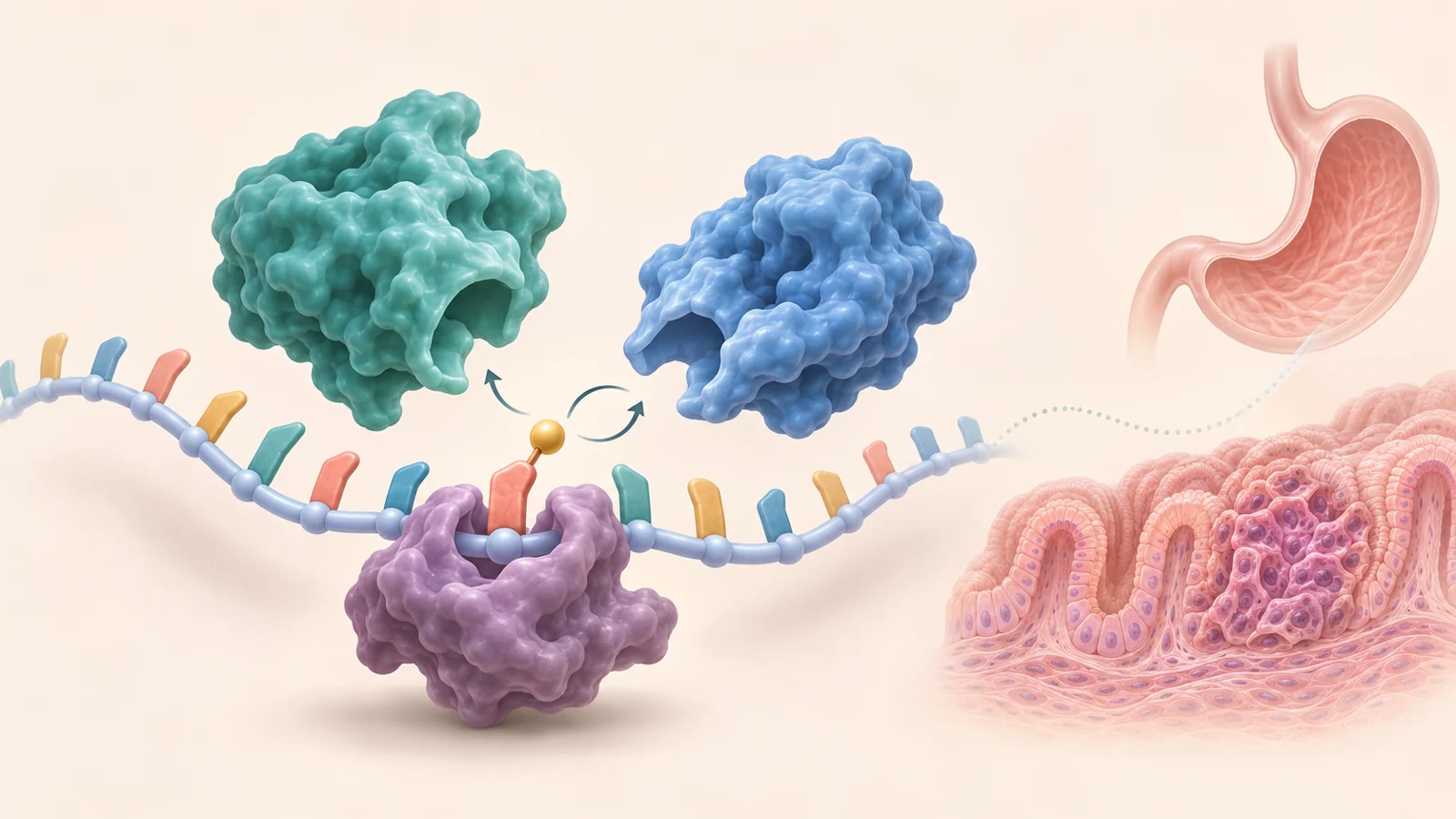
RNA carries messages that cells use to make proteins and manage other activities. N6-methyladenosine, usually shortened to m6A, is a chemical modification on RNA. It acts after a message has been made, so it is a layer of regulation distinct from changing DNA.
Three groups of proteins manage the mark. “Writers” add it, “erasers” remove it, and “readers” recognize it. Through those actions, the system can affect the methylation level and stability of target RNA messages—whether particular messages persist or are altered in how they function. The review focuses on what happens when the expression of proteins related to this system is abnormal in gastric cancer.
Cancer pathways do not follow a single switch
The review links abnormal expression of m6A-related molecules in gastric cancer to changes in the marking and stability of target RNAs, and then to related metabolic pathways. Those connections offer researchers a way to investigate how post-transcriptional regulation may participate in cancer’s development and progression.
They do not make m6A a simple cancer switch. The review describes its role in gastric cancer as complex and contentious. A change in one part of this regulatory system can be meaningful without telling the whole story of a tumor, and the summary does not supply a single, settled direction for m6A’s effects. The useful research question is how the interacting changes relate to disease—not whether the mark is simply “good” or “bad.”
A clue and a treatment target ask different questions
For early diagnosis, the key question is whether a defined m6A-related feature can reliably help distinguish gastric cancer from appropriate comparison groups. Finding abnormal expression in cancer research makes such a marker worth investigating, but it does not by itself show that a test based on it would identify disease accurately in clinical use.
Immunotherapy raises a separate question. A diagnostic marker would help classify or detect disease; a treatment target would need to alter biology relevant to treatment. The review discusses m6A-related proteins as possible targets for gastric-cancer immunotherapy, but the supplied evidence does not establish that targeting them improves treatment response or patient outcomes. Moving from a biological association to either clinical use requires evidence specific to that use.
How this could shape the future
Alongside existing clinical assessment, a validated m6A-related readout could give a person being evaluated for stomach cancer and their clinician an additional, dependable clue. The proposed path runs from the way m6A regulation relates to RNA stability and abnormal expression in gastric cancer to the development of a reproducible diagnostic marker. That would require showing that a specified marker distinguishes cancer from appropriate comparison groups in independent patient cohorts. The 2022 review raises the possibility; it does not establish that performance.
Key Sources
- Primary source: The N6-methyladenosine:mechanisms, diagnostic value, immunotherapy prospec-ts and challenges in gastric cancer.
DOI or Journal Page · Review or Meta-Analysis · 2022-03-24
Keep exploring