
Self-Healing Electrolytes for Lithium-Metal Batteries
Can self-healing polymer electrolytes sustain stable lithium-metal battery operation at high voltages and in anode-free designs?
This track follows whether electrolyte self-repair can help control lithium dendrites and preserve electrode interfaces. It connects high-voltage battery research with computational proposals for anode-free designs.
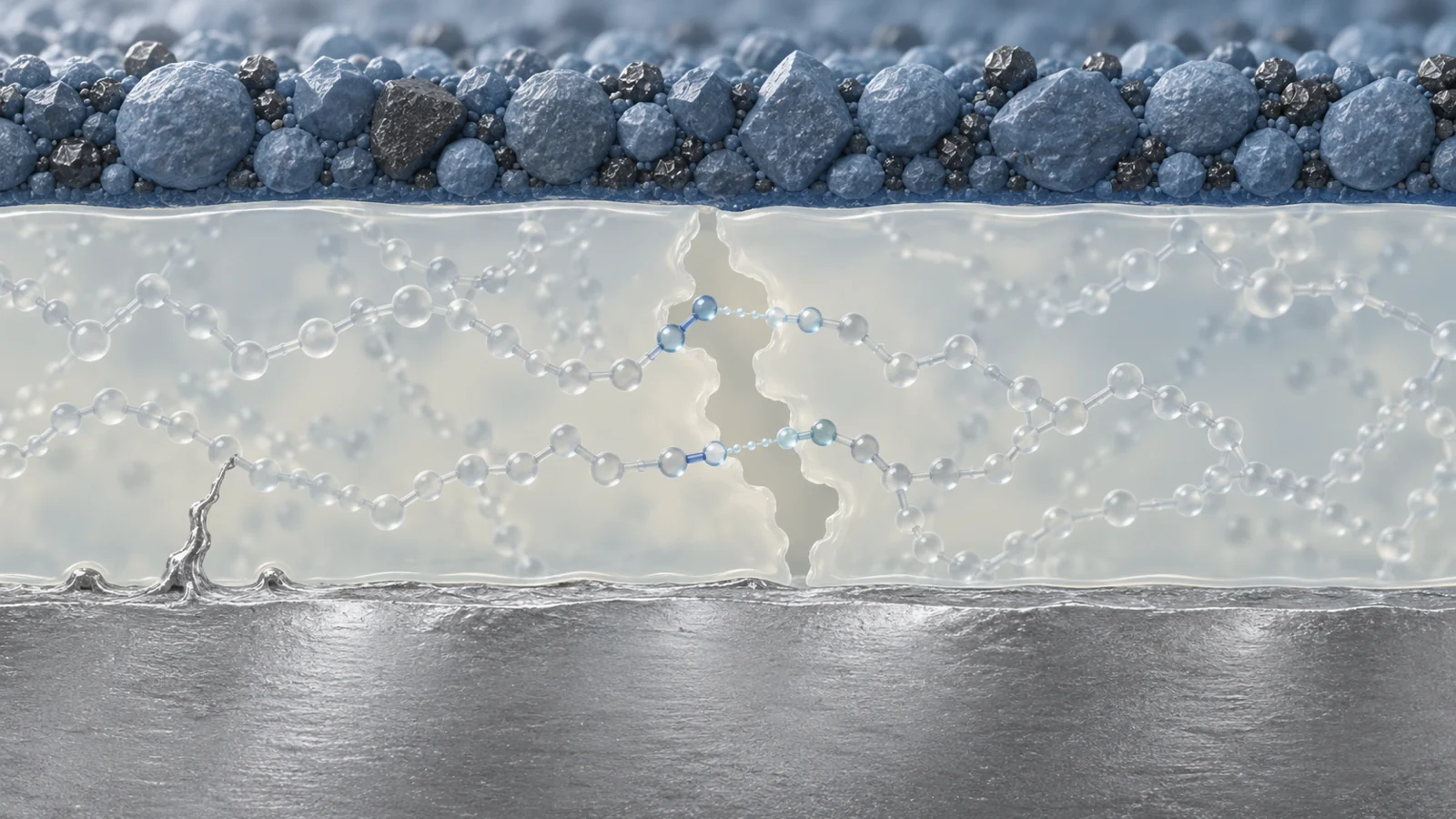
Where it stands now
Main bottleneck
The unresolved question is whether self-healing remains effective during repeated battery cycling while supporting high-voltage operation, particularly as the approach extends to anode-free designs.
Watch next
Experimental cycling evidence linking measured electrolyte or interface repair to sustained battery performance, with validation of the computationally proposed anode-free approach as a concrete next step.
Progress timeline
How the evidence has changed over time.
2026 · 1 update
- How reversible bonds help a self-healing electrolyte maintain electrode contactPartly supportedResearch note 3 of 3 · Source date 2026-07-14
Since the previous research note · Partly supported
Track continuity
Since the previous research note: How charged groups could help a simulated battery electrolyte heal and carry lithium
Previous expectation: Combining interfacial repair, lithium-ion transport and stable surface layers could help anode-free batteries retain useful performance through repeated charging.
What this study adds: A different polymer design now combines experimental high-voltage cycling with lithium-metal and silicon–carbon pouch demonstrations and measurements consistent with preserved electrode contact. These results support the broader combined-design direction but do not test the earlier charged polymer or its anode-free configuration.
Current research note
2025 · 1 update
- How charged groups could help a simulated battery electrolyte heal and carry lithiumResearch note 2 of 3 · Source date 2025-05-27
Since the previous research note · Earlier expectation not tested
Track continuity
Since the previous research note: How a self-healing electrolyte performed with a high-voltage cathode
Previous expectation: Self-healing interface protection and high-voltage compatibility might enable lithium-metal batteries with a nickel-rich cathode to retain useful capacity through repeated charging.
What this study adds: The May 2025 study proposes a zwitterionic electrolyte for anode-free batteries and computationally examines charged-group functions and degradation against copper and lithium surfaces. This provides a distinct molecular-design contribution without testing the earlier forecast's practical high-voltage configuration.
Current research note
2022 · 1 update
- How a self-healing electrolyte performed with a high-voltage cathodeResearch note 1 of 3 · Source date 2022-03-19
How this Track works
This page changes as new evidence arrives. Open any update to see what researchers found at that point in the story.