
Microglial Senescence and Age-Related Neuroinflammation
Does microglial senescence drive age-related brain inflammation differently in females and males?
It could clarify how aging brain immune cells contribute to inflammation and whether they offer a useful target for Alzheimer’s disease research.
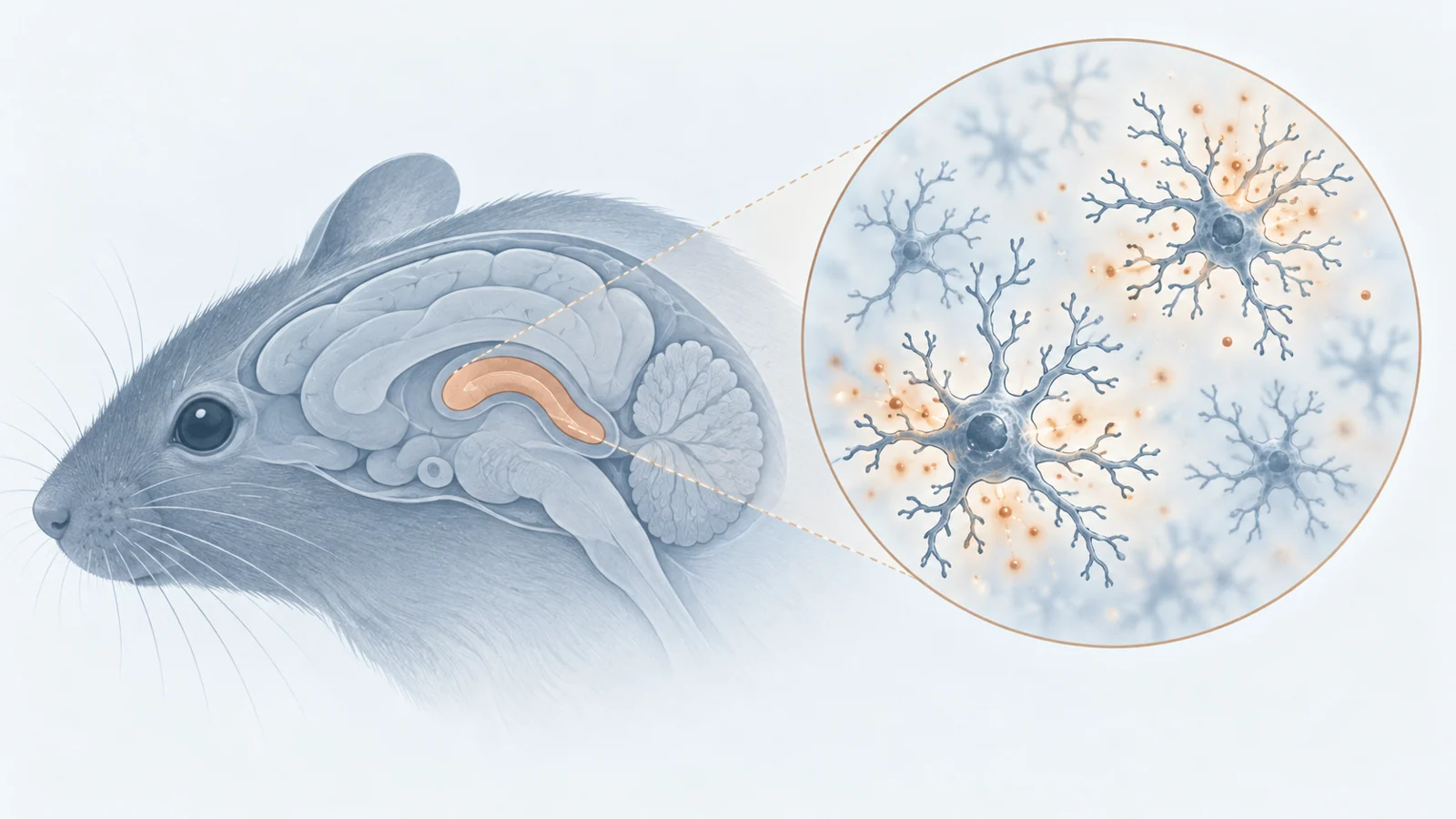
Where it stands now
Main bottleneck
The bounded evidence does not establish whether the contribution described in the aging mouse hippocampus extends to humans or whether targeting microglial senescence can safely reduce neurodegeneration.
Watch next
A controlled study testing whether selectively reducing microglial senescence reduces brain inflammation and preserves neuronal function, with results compared between females and males.
Progress timeline
How the evidence has changed over time.
2024 · 1 update
- When brain immune cells age, could iron and cell removal matter?Research note 2 of 2 · Source date 2024-09-15
Since the previous research note · Earlier expectation not tested
Track continuity
Since the previous research note: How aging changes brain immune cells in female and male mice
Previous expectation: Treatments tailored to age- and sex-related brain immune changes might reduce damaging inflammation while preserving useful microglial functions.
What this study adds: The September 2024 review brings together senescence identification, iron handling and experimental glial-targeting treatments across neurodegenerative diseases. It supplies a broader treatment rationale without testing the earlier age-by-sex therapeutic forecast in the authorized evidence.
Current research note
2023 · 1 update
- How aging changes brain immune cells in female and male miceResearch note 1 of 2 · Source date 2023-08-16
How this Track works
This page changes as new evidence arrives. Open any update to see what researchers found at that point in the story.