
Research Signal – Source date 2021-04-01
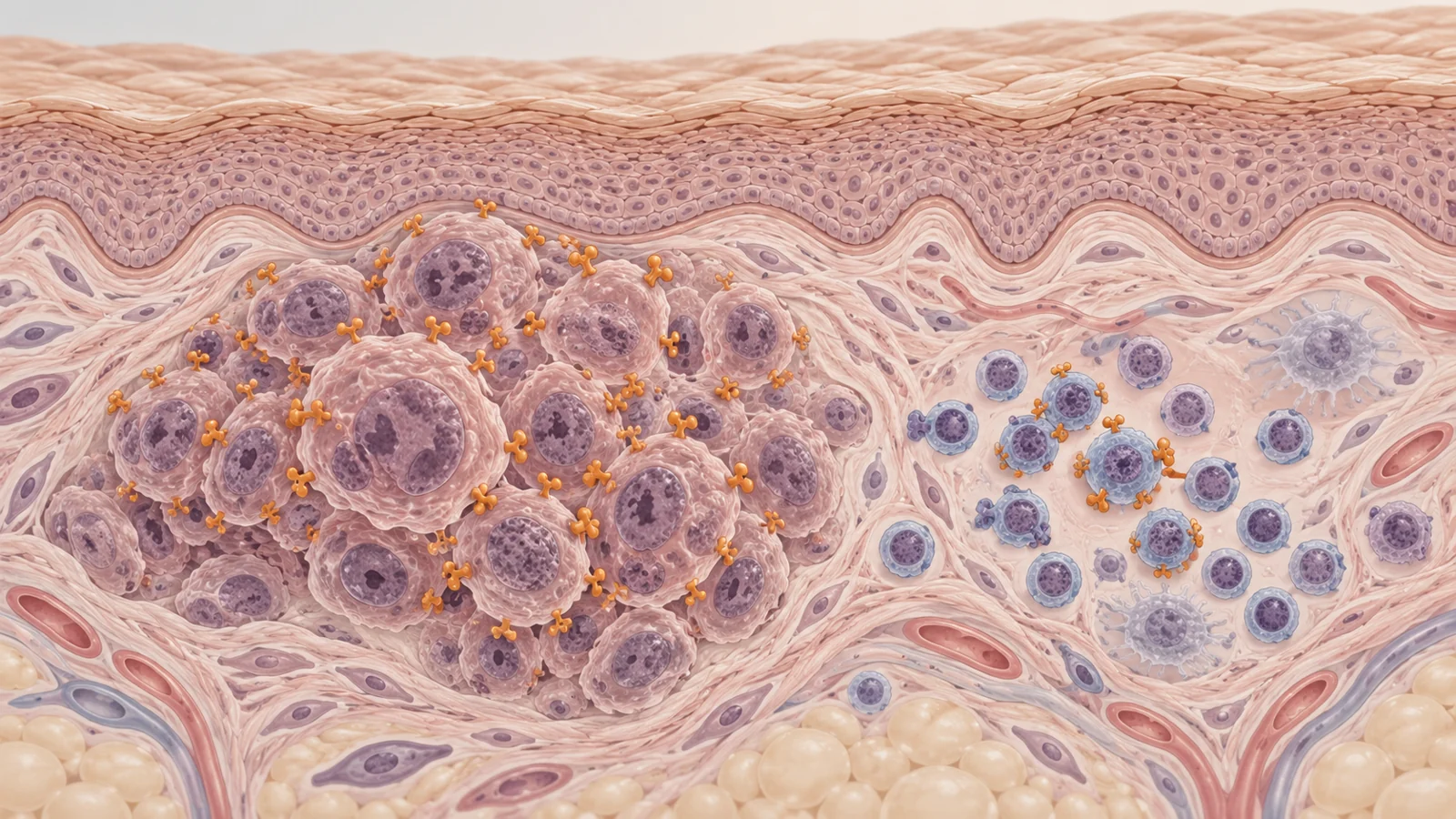
CD30 is a surface protein that antibody drugs can target. Finding it in a skin sample may sound like a clear sign that such a treatment could apply. But the finding can refer to different diseases—and to different cells. A review published in 2021 surveyed reports of CD30 across cutaneous neoplasms, or skin growths, and found that its presence varied by disease and by where it appeared in the tissue.
A broad search with a defined scope
The authors searched PubMed for reports published from 1982 through April 2019, then added articles found through reference lists. Of 1,125 articles identified, 91 met the review’s criteria. It considered accessible articles in English or German about cutaneous lymphomas, mastocytosis, epithelial tumors and sarcomas. Conditions already expected to express CD30, including CD30-positive lymphoproliferative disorders, were excluded.
Those choices define what the reported figures describe: findings in the included reports, not a uniform survey of every skin neoplasm. The abstract does not provide study-level denominators or staining methods needed to compare rates across diseases as if they came from one standardized test.
Mycosis fungoides showed different reported rates by category
The best-studied group outside CD30-positive lymphoproliferative disorders was mycosis fungoides, a type of cutaneous lymphoma. The review reported CD30 positivity in 32% of classical cases, defined here as patch and plaque stage, and 59.4% of transformed cases.
These are percentages reported for two categories of cases. They do not follow individual people over time or show that a particular patient’s disease will transform or acquire CD30. The difference tells readers that CD30 was reported more often in the transformed group in the studies reviewed; it does not, by itself, explain why or predict what will happen to an individual.
The review also reported frequent CD30 expression in cutaneous mastocytosis, at 96.5%. That high figure is a finding for a different disorder, not another stage of mycosis fungoides. The percentages describe separate groups and should not be read as a direct comparison of disease severity or treatment response.
In solid tumors, the positive cells may be nearby
Reports on solid skin tumors described a different pattern. Some individual reports found CD30 on tumor cells, while CD30-reactive lymphocytes—immune cells—were frequently seen in tissue around the tumor, especially in keratoacanthoma, a type of skin growth.
The location changes the meaning of a positive stain. CD30 on a tumor cell identifies the tumor cell as carrying the marker. CD30 on a nearby lymphocyte describes a cell in the surrounding tissue. The latter observation does not establish that the solid-tumor cells themselves carry CD30 or are suitable targets for an antibody drug.
Expression is a starting point for interpretation
A report of CD30 expression answers a narrow question: which cells showed the marker in the examined material? It does not alone show whether CD30 predicts prognosis or whether a CD30-targeted treatment would work in that disease. The supplied abstract reports expression patterns, but does not provide a pooled treatment-effect or prognostic estimate across these groups.
That separation matters because the same marker can appear in distinct diseases and cell populations. The review’s percentages are useful for describing where CD30 had been reported under its search criteria; they are not evidence that every CD30-positive finding has the same clinical meaning.
Could CD30 mapping widen skin-tumor treatment options?
If further studies confirm CD30 on tumor cells in a defined type of skin tumor and clinical trials show benefit, people with that disease could gain a CD30-targeted treatment option. The review points to where that possibility might be tested; its expression findings do not show a treatment benefit.
Key Sources
- Primary source: A review of CD30 expression in cutaneous neoplasms.
DOI or Journal Page · Review or Meta-Analysis · 2021-04-01
Keep exploring