
Hydrogel-enabled self-healing in cementitious materials
Can hydrogels help cement-based materials heal damage while maintaining the mechanical performance needed for applications such as mine backfill?
Following this research could clarify whether improved self-healing can coexist with useful mechanical performance. Current evidence connects cementitious hydrogel systems with research aimed at mine backfill.
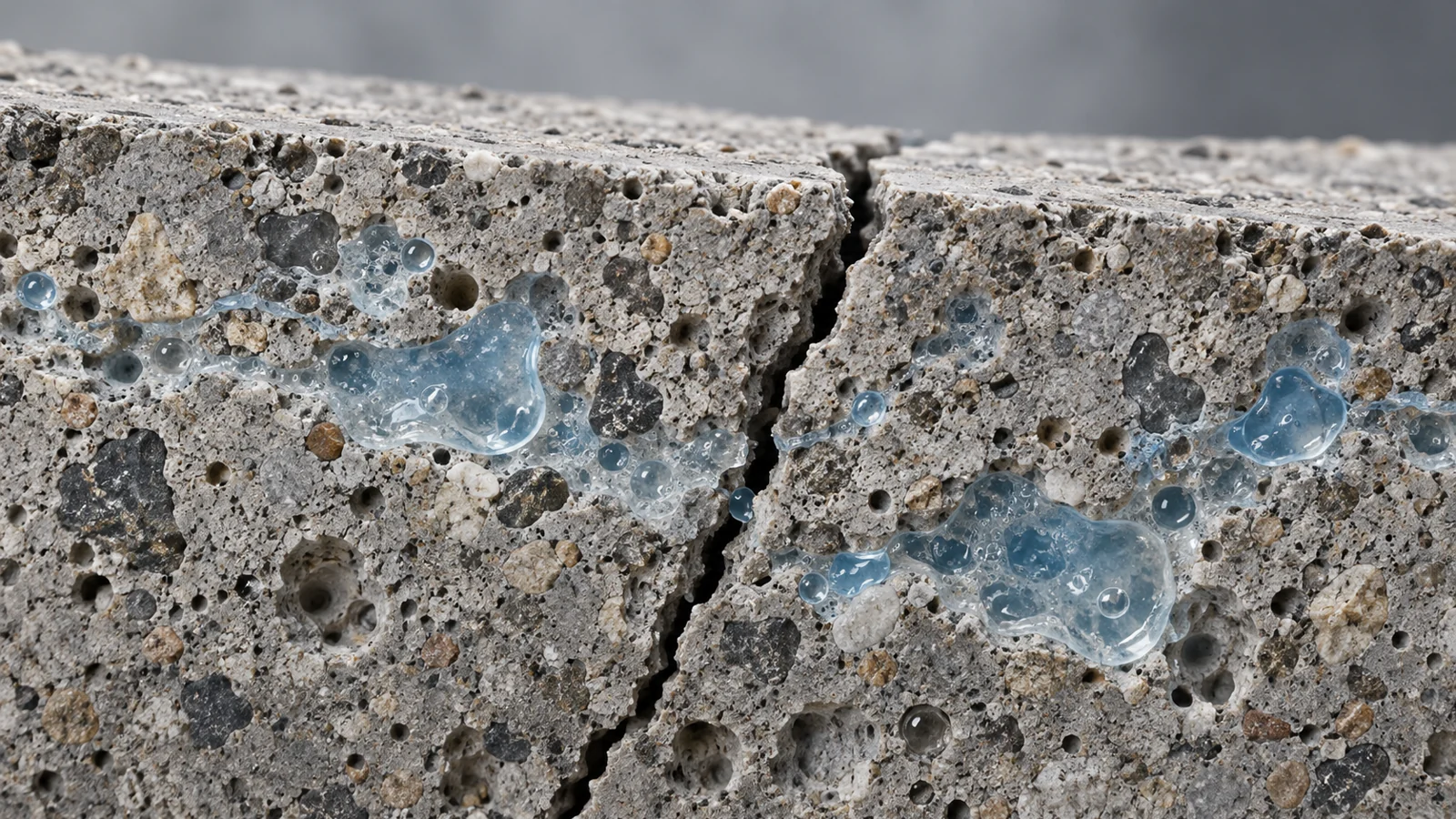
Where it stands now
Main bottleneck
The supplied records do not establish whether healing and adequate mechanical performance occur together under conditions relevant to the intended application.
Watch next
Comparative measurements showing both damage healing and retained mechanical performance in the same hydrogel-containing cementitious material under defined application-relevant conditions.
Progress timeline
How the evidence has changed over time.
2022 · 2 updates
- How water-storing gels change cement as it hardensResearch note 1 of 2 · Source date 2022-04-29
- How water-storing gels behave inside cement used for mine backfillPartly supportedResearch note 2 of 2 · Source date 2022-07-21
Since the previous research note · Partly supported
Track continuity
Since the previous research note: How water-storing gels change cement as it hardens
Previous expectation: Water-storing gels might help produce longer-lasting concrete if their behavior can be controlled without unacceptable mechanical weakness.
What this study adds: The July 2022 study reports reduced shrinkage alongside reduced compressive strength, describes cement-particle interactions that can restrict gel absorption, and reports different healing rates in sand and water. These observations support parts of the material-design premise but do not establish durable performance beyond laboratory materials.
Current research note
How this Track works
This page changes as new evidence arrives. Open any update to see what researchers found at that point in the story.