
Evidence date · 2022-06-30 · Research note 2 of 3
1 2 3
See current Track status →
Since the previous research note · Earlier expectation not tested
Track continuity
Since the previous research note: How lung inflammation rates varied in stage III lung cancer studies
Previous expectation: A treatment choice with less serious lung inflammation could make combined therapy safer if cancer control were maintained.
What this study adds: The 2022 review centers EA5181’s test of adding durvalumab during chemoradiation while both groups receive it afterward. It flags late heart and lung toxicity but supplies no result testing the earlier safety expectation.
What changed in this study
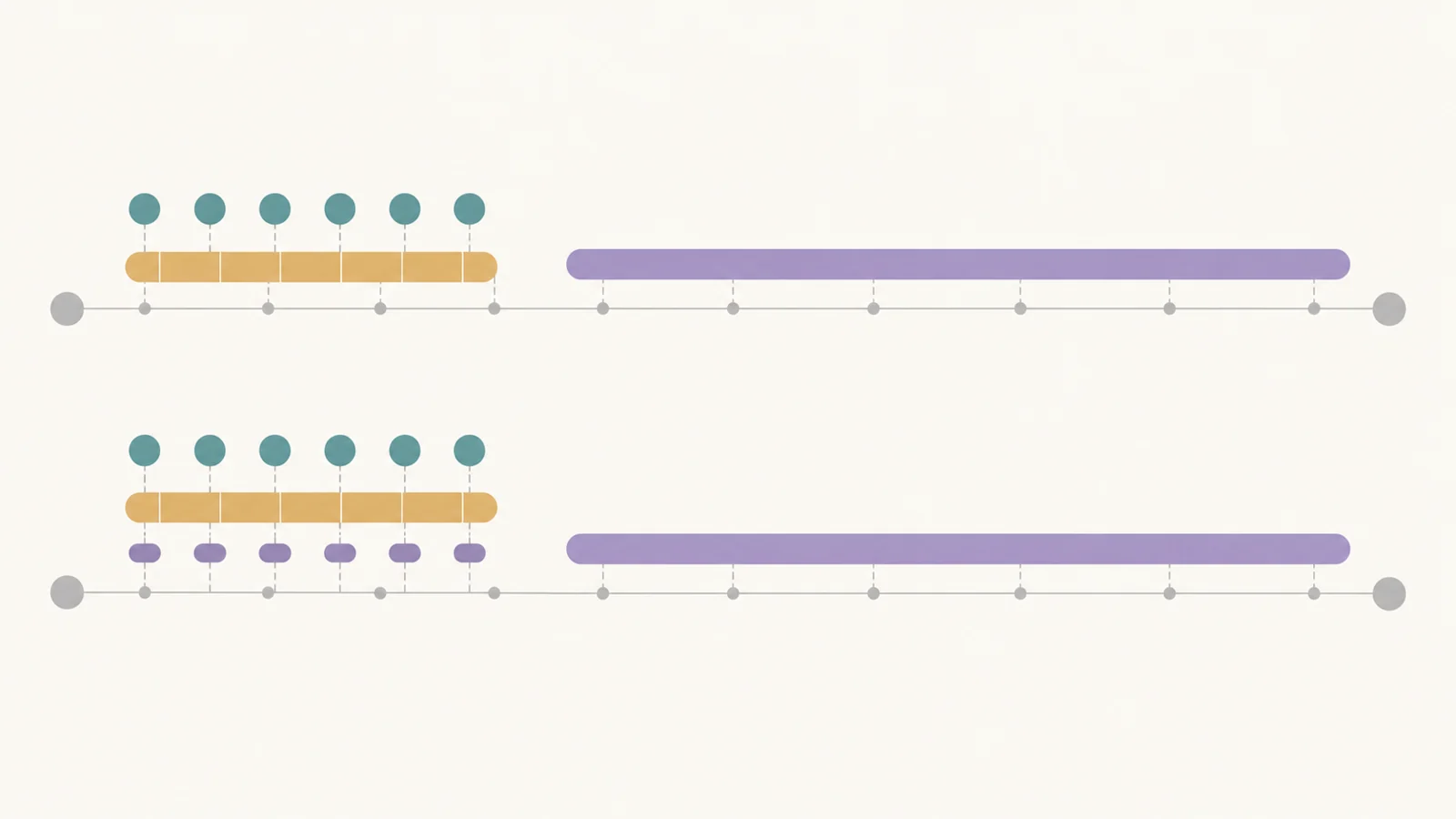
EA5181 asks whether the timing of an immune therapy drug could matter when people with locally advanced, inoperable non-small cell lung cancer already receive that drug after chemotherapy and radiation. In one study group, durvalumab is added during chemoradiation. In the other, patients receive standard chemoradiation without durvalumab at the same time. Both groups then receive a year of durvalumab afterward.
The comparison focuses on whether starting durvalumab sooner improves overall survival. The review also explains why researchers hoped the earlier start might help control cancer in the treated area, and why adding treatment raises questions about lasting effects on the heart and lungs.
Two schedules, one shared year afterward
Chemoradiation combines chemotherapy with radiation treatment. EA5181 compares that standard combination alone with the same combination plus durvalumab given concurrently—that is, during the chemoradiation period. Afterward, both groups receive one year of durvalumab as consolidation treatment, intended to follow the initial treatment phase.
Because the later durvalumab is shared, the trial is testing the added value of giving it during chemoradiation as well. The design isolates a timing question: does adding the immune therapy drug earlier, on top of the shared treatment afterward, change how long patients live?
Why add treatment during chemoradiation
The review cites local failure rates of 38% to 46% in earlier prospective randomized trials of standard chemoradiation. Local failure means the cancer is not controlled in the area targeted by treatment. Those figures help explain the interest in improving treatment’s effect where the cancer is being treated.
The authors describe two reasons to test concurrent durvalumab. Earlier phase I and II studies had shown relative safety for combining immunotherapy with chemoradiation, and chemotherapy and immunotherapy were thought to work in synergy. Together, those points supported testing the combination in a randomized trial. They provided a rationale for the study, rather than evidence that the EA5181 schedule would reduce local failure.
The survival question and the cost of intensifying treatment
EA5181’s stated comparison is overall survival: whether adding durvalumab during chemoradiation, followed by the year of durvalumab both groups receive, improves survival over the shared later treatment alone. The hoped-for reduction in local failure is part of the rationale for trying the schedule; it is distinct from the survival question described in the review.
More treatment during chemoradiation also makes late toxicity important. The review raises concerns about cardiac and pulmonary effects—harm involving the heart or lungs—that can emerge after treatment. The supplied account does not give a comparison of late toxicity between EA5181’s groups. Any potential gain therefore has to be understood alongside the possibility of lasting harm from the more intensive schedule.
Biomarkers could help explain differences
The review discusses several possible sources of information about response or patient selection: next-generation sequencing, which examines tumor genetic material; PD-L1, a tumor-related marker; circulating tumor DNA (ctDNA), tumor-derived DNA detectable in blood; and tumor mutation burden, an estimate of how many mutations a tumor carries.
These markers could help researchers explore why patients respond differently or whether particular features matter when considering concurrent treatment. The review raises their possible role in EA5181’s development; it does not validate any of them as a way to select patients for durvalumab during chemoradiation.
What earlier immunotherapy could mean for lung cancer care
If randomized results show that starting durvalumab during chemoradiation helps eligible patients live longer, and that benefit comes without unacceptable late heart or lung harm, clinicians could have evidence to offer the drug earlier in this treatment sequence. That could give patients another option for improving outcomes while preserving the shared year of durvalumab afterward. The 2022 review describes the question EA5181 was designed to test; it provides no EA5181 outcome result.
Key Sources
- Primary source: A Review of Concurrent Chemo/Radiation, Immunotherapy, Radiation Planning, and Biomarkers for Locally Advanced Non-small Cell Lung Cancer and Their Role in the Development of ECOG-ACRIN EA5181.
DOI or Journal Page · Review or Meta-Analysis · 2022-06-30