
Research Signal – Source date 2021-01-01
Multiple myeloma treatment has improved, yet resistance to existing therapies remains a problem for many patients. One approach described in a 2021 paper pairs antibodies that target myeloma cells with drugs that stimulate anti-tumor immunity. The proposed logic is that these treatments may reinforce different parts of the immune response. The source presents that as a prospect, not as a measured benefit for patients receiving the combination.
Antibodies enlist immune cells
The paper describes two antibody treatments already introduced in clinical care: daratumumab, which targets CD38, and elotuzumab, which targets SLAMF7. These names identify proteins the antibodies recognize on myeloma cells; the paper’s central point is what can happen after an antibody targets a cell.
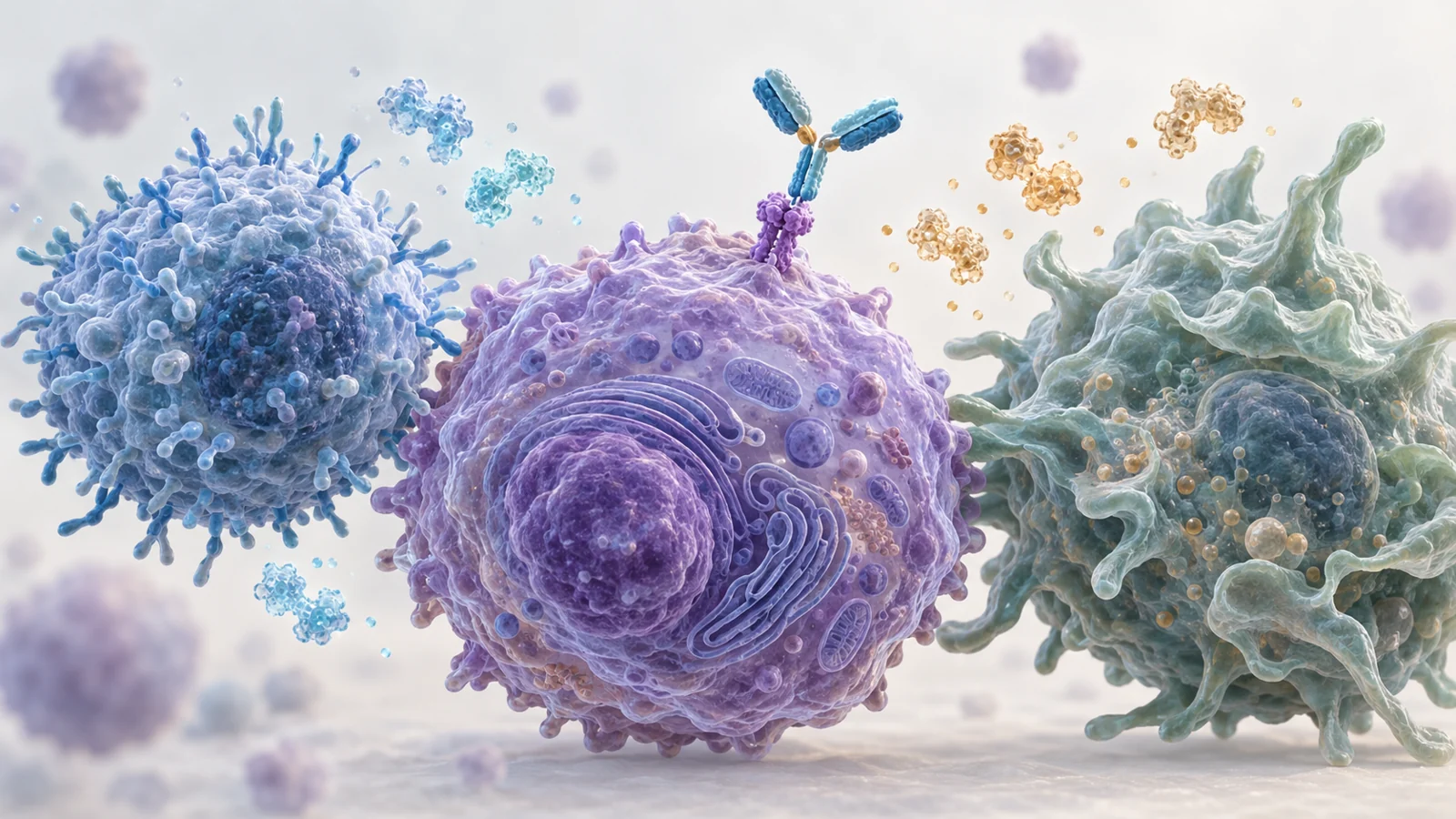
Natural killer cells can help kill the antibody-marked myeloma cells. Macrophages contribute in a different way: they engulf cells through a process called phagocytosis. The antibody is therefore not acting alone. It can direct immune cells toward the cancer and support more than one way of attacking it.
The paper also connects the effect of antibodies that target CD38, including daratumumab and isatuximab, with stimulation of anti-tumor immunity. That observation helps explain why the immune response around antibody treatment matters to the combination question.
Why add an immunomodulatory drug?
Lenalidomide and pomalidomide belong to a class called immunomodulatory drugs, or IMiDs. The paper reports that these drugs can stimulate anti-tumor immunity and enhance the effects of therapeutic antibodies. In its account, an antibody can recruit immune cells, while an IMiD may strengthen the broader immune response that supports the antibody’s effect.
The authors therefore expected that combining an IMiD with an antibody against CD38 could enhance anti-tumor immunity. The rationale is a possible reinforcement of immune activity, not evidence that every patient needs both treatments. The paper also notes that suppressed anti-tumor immunity may be related to myeloma’s acquisition of drug resistance. That proposed relationship gives the immune strategy added relevance, but it does not establish that reduced immune activity causes resistance.
The evidence summarized here does not give a quantified patient benefit for the proposed pairing. It supports a biological and treatment rationale: immune stimulation is associated with IMiDs and anti-CD38 antibodies, and the combination might build on both. How much that translates into clinical benefit cannot be determined from this account alone.
Other immune treatments were entering care
The 2021 paper places antibody treatment alongside several newer approaches being introduced to the clinic. Chimeric antigen receptor T-cell therapy, often shortened to CAR T-cell therapy, uses engineered immune cells. Antibody-drug conjugates link an antibody to a drug. Bispecific antibodies are another distinct antibody approach. The paper names these as emerging immunotherapies, without establishing that they had the same clinical status, availability, or outcomes as the antibodies it describes as already introduced.
Together, these approaches reflect a broader effort to bring immune activity to bear on myeloma. The proposed pairing of anti-CD38 antibodies with IMiDs is one part of that landscape, grounded in reported immune effects but still presented as a clinical prospect in this source.
What immune combinations could mean for resistant myeloma
If the expected immune reinforcement produces meaningful clinical benefit, combining antibodies with immunomodulatory drugs could broaden treatment options for people whose myeloma resists existing therapies. The possibility depends on that immune rationale translating into better outcomes for patients; the 2021 account does not quantify such a benefit.
Key Sources
- Primary source: [Current status and future prospects of immunotherapy for multiple myeloma].
DOI or Journal Page · Peer-Reviewed Paper · 2021-01-01
Keep exploring