
Research Signal – Source date 2022-10-15
A cancer cell can keep the surface marker that engineered immune cells are designed to recognize and still survive their attack. That possibility helps explain why relapse after CAR-T therapy is not always a case of the cancer simply becoming invisible.
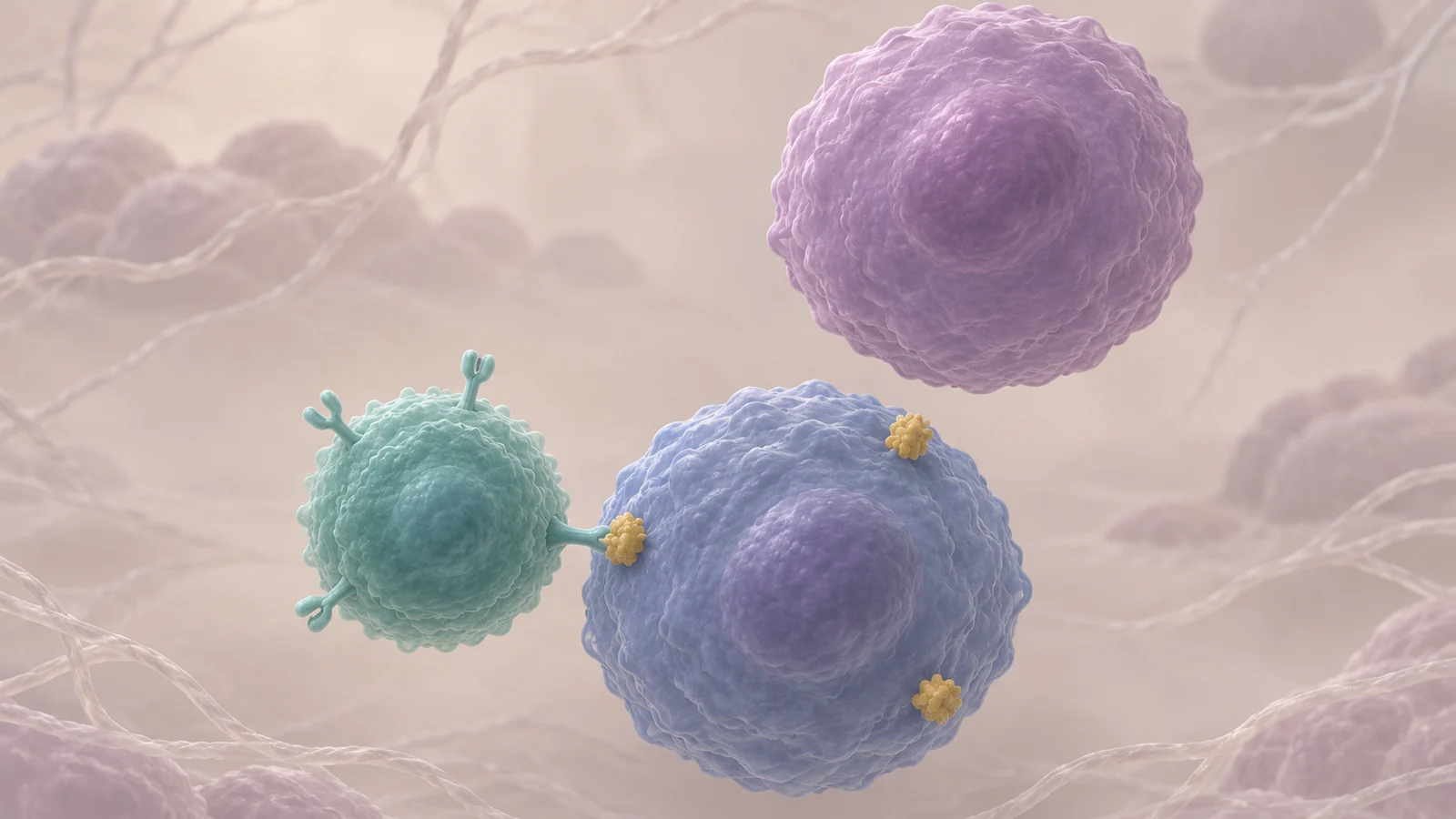
CAR-T therapy uses T cells, a type of immune cell, modified to carry a receptor that recognizes a chosen marker on cancer cells. In B-cell cancers, examples of these markers include CD19, CD20 and CD22. The receptor can guide a T cell to a marked cell, but recognition is only one part of the chain that must work for treatment to keep cancer under control.
A 2022 review in the Journal of Zhejiang University-SCIENCE B brings together research on relapse in B-cell malignancies. It describes two different problems at the cancer-cell level: some cancer cells reduce or lose the marker, while others retain it but resist being killed. The review also considers the condition and persistence of the engineered cells, and the surroundings in which they must act.
Recognition does not guarantee a kill
When a cancer cell has little or none of the marker a CAR-T cell is built to detect, the engineered cell may no longer recognize it effectively. A tumor can contain cells with different amounts of a marker, so cells that were already hard to detect may survive while more visible cells are attacked. Those surviving cells can then contribute to a relapse.
The review describes an additional route that poses a different challenge. In research discussed by the authors, cancer cells could resist CAR-T cell killing even while still expressing the target marker. The problem in those cases was impaired cell-death signaling: the target could be found, yet the cell did not respond to the signals that should help bring about its death. The review also cites work linking loss of the cell-death regulator NOXA to resistance, and findings in which drugs called HDAC inhibitors increased NOXA expression and made cancer cells more susceptible to CAR-T killing.
These examples separate two questions that can otherwise be conflated. Is the marker available for recognition? And, after recognition, can the cancer cell be killed? A strategy that improves recognition might help when the marker has disappeared. It would not, by itself, resolve resistance inside a cell that remains recognizable.
The engineered cells and their surroundings matter too
CAR-T cells have to do more than reach a marked cancer cell once. Their activity and ability to persist in the body are also relevant. The review describes follow-up findings in which higher peak levels of CAR-T cells in blood were associated with longer-lasting responses. It also discusses two people with chronic lymphocytic leukemia who remained in complete remission while CAR-T cells could still be detected a decade after infusion. These cases point to the possible importance of long-lived, functional engineered cells, but they do not establish how often persistence explains relapse across B-cell cancers.
The place where cancer cells are located can add another obstacle. The tumor microenvironment means the local conditions around cancer cells, including the tissue setting and the resources available there. In the review, this includes questions of whether CAR-T cells can reach affected sites and continue to function once there. Bone marrow and the central nervous system can present demanding environments. The review discusses limited oxygen and nutrients as conditions that can hinder CAR-T cell activity, while cancer cells may adapt to those same conditions. It also describes the importance of cell trafficking, or movement into tissues where cancer is present.
These factors can overlap. A relapse may involve cancer-cell resistance, weakened or short-lived CAR-T cells, difficult access to a tissue, or local conditions that undermine their activity. The review organizes evidence around these interacting possibilities; it does not determine which route is most common across different B-cell malignancies.
More targets could close one escape route
One approach discussed in the review is to recognize a different marker when cancer returns after treatment directed at a single marker. The authors describe earlier clinical reports in which CD22-directed CAR-T therapy was used in people whose large B-cell lymphoma had relapsed after CD19-directed therapy. They also discuss research into additional targets, including CD37 and CD70. These examples are part of a wider search for markers that could make cancer cells reachable by engineered T cells.
Another idea is to build recognition of two or more markers into treatment. A dual-target CAR-T cell could, for example, recognize CD19 or CD20, giving it another route to detect a cancer cell if one marker is lost. The review describes several designs for combining targets and cites earlier studies of dual-target approaches in leukemia and lymphoma. The basic rationale is to make it harder for cancer cells to escape by losing the single marker the engineered cells recognize.
That rationale addresses marker escape, not every cause of relapse. A second target cannot guarantee that a cancer cell will respond to a killing signal, or that CAR-T cells will remain functional and reach the relevant tissue. The review presents alternative and multiple-target strategies as research directions supported by earlier studies, not as a general treatment recommendation or proof that one design is best.
Profiling could help separate failure routes
Working out why a particular treatment failed requires information about both sides of the interaction. The review discusses examining the infused CAR-T cells for features that might be linked to their activity, exhaustion or persistence, and studying cancer cells for changes relevant to recognition and survival. It describes methods including RNA sequencing, which measures patterns of gene activity, and assays that examine how accessible parts of DNA are to the cell’s gene-control machinery. Some approaches can combine information about cell identity and behavior.
These measurements could help researchers compare CAR-T cell products and investigate why some responses last longer than others. They could also shed light on changes in cancer cells during treatment. But the review’s discussion of cell profiling is exploratory: it does not establish a validated clinical test that can select a next treatment for an individual patient. A measurement becomes useful for that decision only if it reliably distinguishes the relevant relapse routes and helps guide choices that improve outcomes.
What the 2022 review can tell us
The review’s contribution is to bring together several plausible explanations for relapse: a target can become scarce or disappear; a cancer cell can remain marked but resist cell death; engineered T cells can lose function or fail to persist; and the local tissue environment can limit access or activity. These mechanisms suggest why the same broad outcome—cancer returning—may call for different questions about what failed.
The evidence it synthesizes comes from mechanistic work and cited clinical reports across different B-cell malignancies. The review does not provide a head-to-head test that establishes which proposed strategy prevents relapse most effectively, or which route predominates across these cancers. Its value is in clarifying the distinct problems researchers may need to measure and address, rather than settling how they should be ranked in clinical practice.
Where this research could lead
If the proposed routes can be measured reliably and tested in clinical studies, a future patient whose B-cell cancer returns after CAR-T therapy could receive a more specific explanation of what happened: whether the target has been lost, whether marked cancer cells resist killing, or whether the engineered cells have faded or failed to function. That distinction could support a response matched to the problem, instead of relying on recognition of a target as the only guide.
The review’s mechanisms provide a scientific reason to pursue that capability, but making it dependable would require better tests and comparative clinical evidence. Testing for markers and exploring alternative targets were already part of the research discussed in 2022. The farther-reaching advance would be a validated, integrated way to combine information about the cancer cells and the infused T cells, then show that choices guided by those results lead to more durable outcomes.
A meaningful milestone would be a clinical study that identifies likely causes of relapse, then tests whether choosing treatment based on those findings helps responses last longer than an appropriate alternative. Until such evidence is available, the review helps explain why relapse can happen through more than one route, while leaving open which response works best for which patient.
Key Sources
- Primary source: Relapse after CAR-T cell therapy in B-cell malignancies: challenges and future approaches.
DOI or Journal Page · Review or Meta-Analysis · 2022-10-15
Keep exploring