
Research Signal – Source date 2022-04-29
A 2022 article describes tumor oxygenation as a way to inhibit growth and strengthen chemotherapy and radiation effects, citing observations from animal experiments and clinical settings. Its suggestion to combine oxygen therapy with immunotherapy is a different kind of claim: an expert proposal grounded in how oxygen-related chemistry can affect immune responses, not a reported immunotherapy outcome.
The distinction matters because a low-oxygen tumor environment may help cancer progress, while changing that environment could also alter how treatments work. But the evidence described for chemotherapy and radiation does not, by itself, show that oxygenation improves immunotherapy.
Why low oxygen matters in tumors
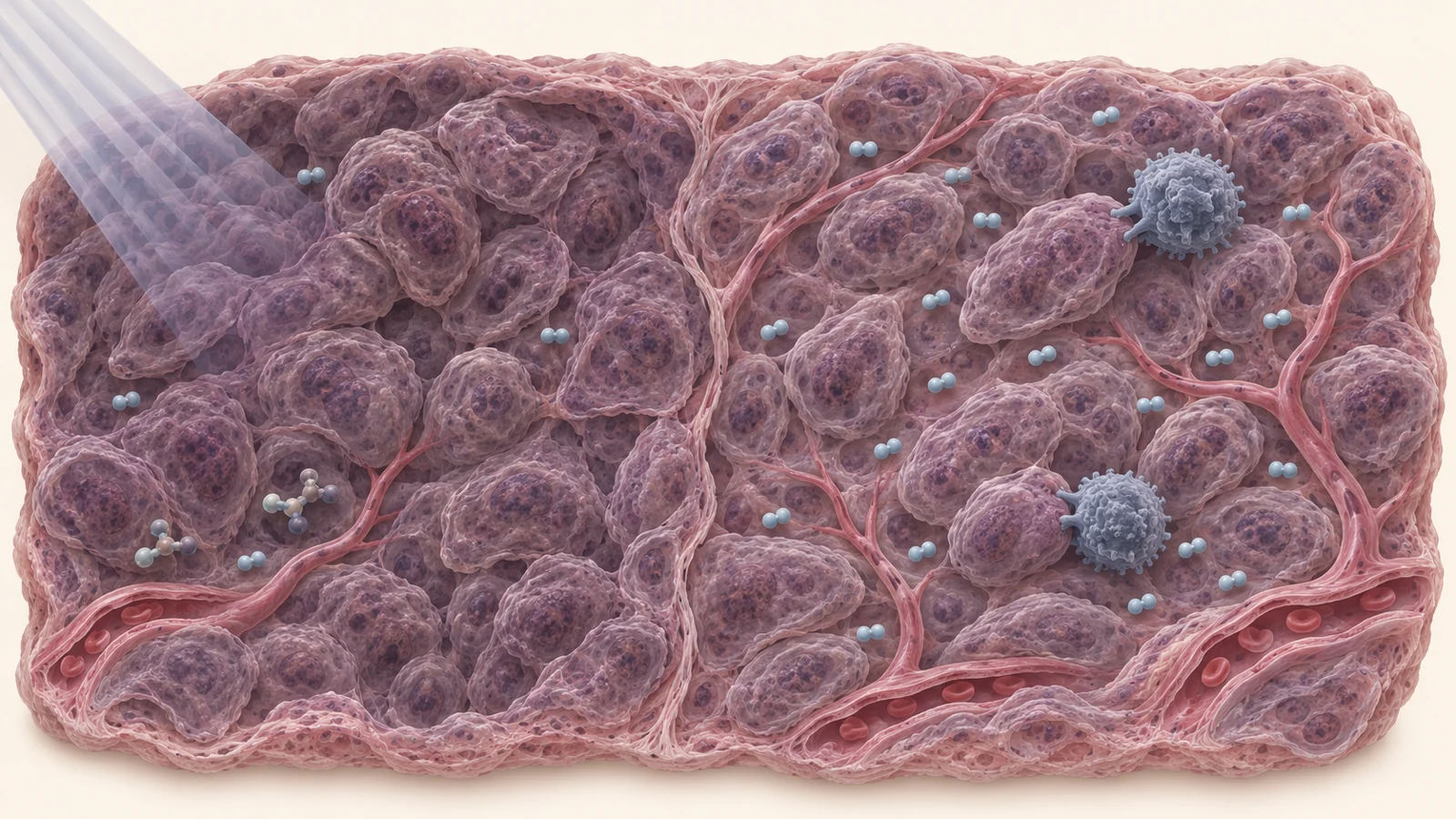
Hypoxia means that tissue has less oxygen than it needs. The article links hypoxic and ischemic tumors—areas with inadequate blood flow or oxygen—to conditions associated with cancer progression. It also describes metabolic changes in malignant cells that may weaken antioxidant defenses.
In this account, cancer cells show increased glycolysis, a process for breaking down glucose, alongside a hampered Krebs cycle, a set of reactions cells use to process fuel. The authors suggest these changes may reduce antioxidant-dependent defense. Antioxidants help limit damage from reactive oxygen species, or ROS: chemically reactive molecules that can affect cells and their surroundings.
That proposed relationship helps explain the interest in adding oxygen. The authors discuss water-soluble ozone and hyperbaric oxygen therapy as approaches used to oxygenate tumors. The abstract does not provide enough detail to compare their methods or specify a regimen.
What the article reports about chemotherapy and radiation
The authors say tumor oxygenation has been shown to inhibit tumor growth and to potentiate the anti-tumor effects of chemoradiotherapy—chemotherapy and radiation used as cancer treatments—in animal experiments and clinical settings. This is the article’s reported evidence for oxygenation alongside those treatments.
The abstract supplies no effect estimates, patient numbers, or study designs, so it cannot show how large or dependable those effects were, or how they compare across treatments. The supported point is narrower: the authors cite animal and clinical-setting observations in which oxygenation was associated with inhibited growth and stronger chemoradiotherapy effects. They also suggest it could enhance effects from blocking tumor blood vessels or using angiostatic therapy, which aims to limit blood-vessel growth.
The immune connection is a proposed next step
The authors turn to immunotherapy because ROS can influence both innate and adaptive immunity. Innate immunity is the body’s rapid, broad defense; adaptive immunity includes more targeted responses, including those involving immune cells that recognize particular threats. If oxygenation changes the ROS environment, it could plausibly affect immune activity as well as tumor metabolism.
On that basis, the article proposes combining oxygen therapy with several interventions: checkpoint inhibitors, drugs intended to stimulate immune responses, adoptive cell therapy, and heat treatment (hyperthermia). Checkpoint inhibitors affect signals that can restrain immune responses; adoptive cell therapy uses immune cells prepared for treatment. The authors also raise the possibility of giving oxygen therapy and those interventions at the same time or in sequence.
These are proposed combinations, not reported immunotherapy results in the supplied abstract. It does not establish that oxygenation improves outcomes with checkpoint inhibitors or adoptive cell therapy, identify a preferred sequence, or define a patient group for such treatment. The biological rationale is a reason to investigate the combination, not evidence that it is already a clinical protocol.
How this could shape the future
If controlled clinical trials show that a defined oxygenation method safely improves outcomes with a specific immunotherapy, adding oxygenation could give patients with poorly oxygenated tumors a better chance of benefiting from that treatment. The article does not show this benefit; its proposed immune link is a reason to test the combination.
A useful milestone would be a controlled clinical comparison of a specified immunotherapy combination that measures both tumor oxygenation and patient outcomes. Such a study could test whether the proposed biological connection translates into a dependable clinical effect. The article supplies the tumor-environment rationale and the proposed immune link, while its reported observations with chemoradiotherapy remain distinct from this still-unproven combination.
Key Sources
- Primary source: Oxygen therapy in traditional and immunotherapeutic treatment protocols of cancer patients: current reality and future prospects.
DOI or Journal Page · Peer-Reviewed Paper · 2022-04-29
Keep exploring