
Research Signal – Source date 2022-01-01
A cancer that stops responding to treatment creates a difficult problem: the same approaches that once slowed it may no longer produce the needed response. A 2022 article considers whether radionuclide therapy could offer another route. In this approach, a radioactive payload is carried by a molecule designed to bind a tumor target. The idea is to direct radiation toward cancer cells, but the article presents a possibility to investigate, not evidence that resistant tumors have been made responsive.
Resistance creates a reason to look for another route
Tumors can acquire resistance after chemotherapy, ionizing radiation or immunotherapy. The article describes that resistance as a major challenge because it can contribute to recurrence and treatment failure. It also describes disappointing outcomes from attempts to address resistance with chemotherapy regimens or immunotherapy.
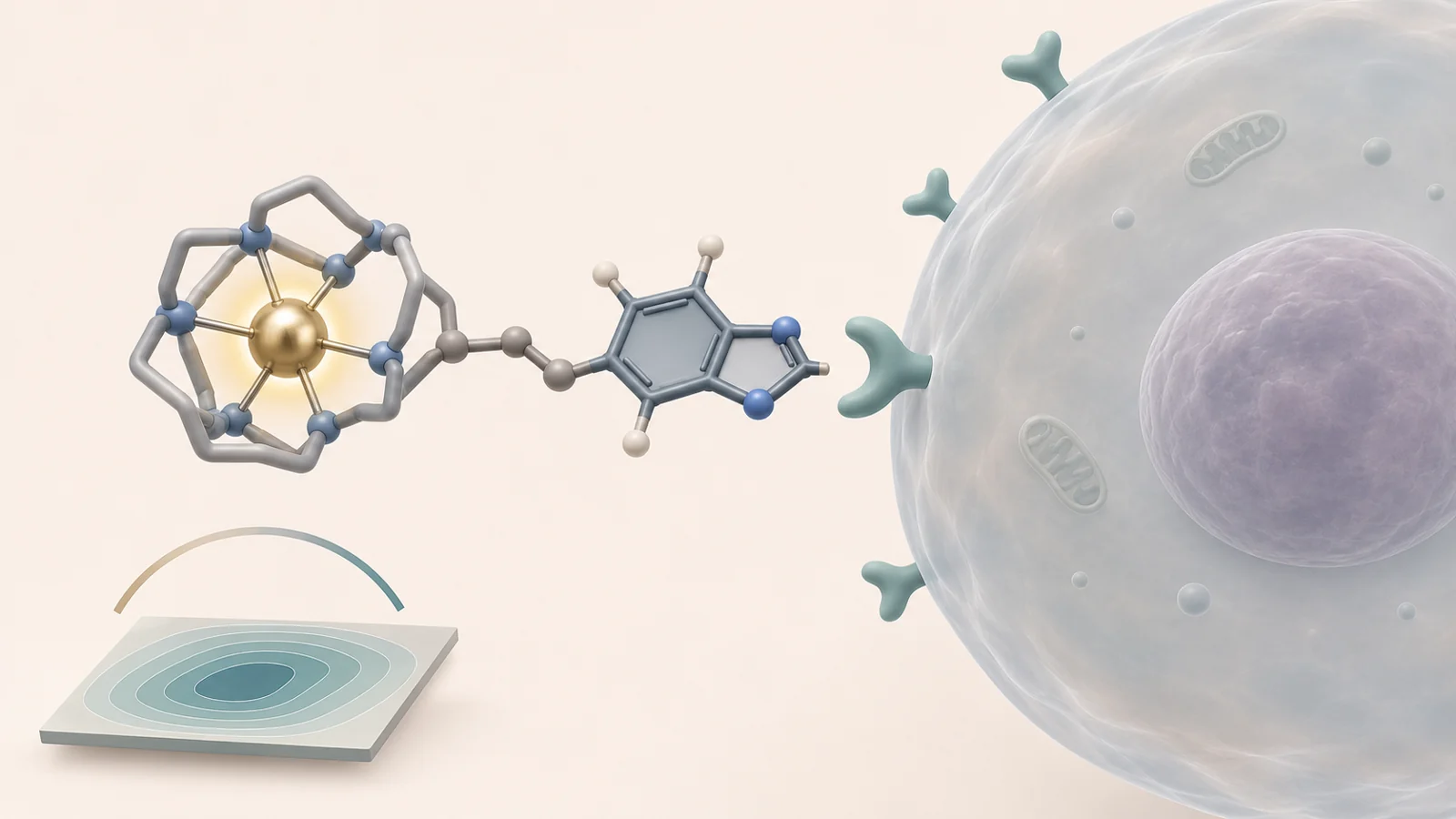
Radionuclide therapy changes the delivery approach: radiation comes attached to a targeting molecule, rather than being discussed only as an externally applied treatment. The payload may emit alpha or beta radiation. The article identifies this as a potential avenue when familiar treatment approaches have not achieved the desired response. It does not provide a quantified comparison showing that this approach works better than those treatments.
Three parts have different jobs
A useful radioactive treatment depends on more than the payload. The targeting molecule needs to bind its intended target with high affinity, meaning it must attach strongly. That binding is the delivery question: can the carrier associate with the intended tumor target?
The radionuclide is the radioactive payload. The article discusses alpha- and beta-emitting options, but the supplied evidence does not rank them or identify a particular tumor target. Their presence alone does not tell us whether a useful amount of radiation reaches a tumor.
A chelating agent helps hold the radionuclide in a stable chemical complex in the body. Stability matters because the proposed medicine depends on the radioactive material remaining associated with its carrier. It points to newer chelating agents that form stable complexes under conditions inside the body. This is a separate design concern from how strongly the targeting molecule binds.
Binding is not the same as measuring exposure
Even a carrier that binds its target needs an assessable radiation dose. Dosimetry is the work of estimating radiation exposure. It addresses how much radiation is delivered, a different question from whether the targeting molecule can bind to the intended target.
The article identifies progress in dosimetric studies, along with high-affinity targeting molecules and stable chelating agents, as developments that have expanded interest in radionuclide therapy. These pieces connect: a carrier needs to reach its target, the radioactive payload needs to stay in a stable complex, and the resulting exposure needs to be assessed. The abstract does not provide a patient result, safety comparison or response estimate with which to judge whether those requirements have produced a successful treatment for resistant tumors.
Pairing treatments raises another question
The article also points to preclinical interest in combining radionuclide therapy with chemotherapy. This is a distinct line of investigation from designing a carrier. It asks whether using two treatment approaches together could improve tumor response in early research, rather than whether the targeting molecule, payload and chelator form a workable radioactive medicine.
The mention of preclinical combinations is encouraging to the article’s authors, but it is not evidence of clinical benefit or synergy in patients. The supplied abstract offers no numerical outcome for a combination and no basis for comparing it with either treatment alone. Its prospective language reflects potential, not a demonstrated reversal of resistance.
Where this research could lead
For someone whose cancer returns after treatment, a future possibility would be to consider a validated radioactive medicine matched to a target in that person’s tumor. That option would depend on evidence that a specified agent can reach resistant tumors, keep its radioactive payload in a stable complex, deliver an assessable dose and improve patient outcomes with acceptable safety. The article’s focus on targeting, chelation and dosimetry points to parts of that evidence bridge; clinical testing and further advances would still be needed.
A nearer milestone would be a defined radionuclide agent studied in patients with resistant tumors, with both the delivered dose and patient outcomes reported. Together, those measures could show whether the proposed delivery approach translates into a meaningful clinical result. The 2022 article raises the possibility; the supplied evidence does not show that this milestone has been reached.
Key Sources
- Primary source: Breaking the Silence of Tumor Response: Future Prospects of Targeted Radionuclide Therapy.
DOI or Journal Page · Peer-Reviewed Paper · 2022-01-01
Keep exploring