
Evidence date · 2024-07-15 · Research note 2 of 3
1 2 3
See current Track status →
Since the previous research note · Earlier expectation not tested
Track continuity
Since the previous research note: Two sleep recordings linked deep-sleep loss with later dementia
Previous expectation: Preserving deep sleep might reduce dementia risk and help older adults maintain independence if safe changes to sleep were shown to improve dementia outcomes.
What this study adds: The current registry description sets out comparisons of slow waves, memory and vigilance across aging, alongside a proposed test of replaying learning-related sounds during sleep. These aims concern memory mechanisms and a possible memory aid; the supplied evidence does not test whether preserving deep sleep changes dementia outcomes.
What changed in this study
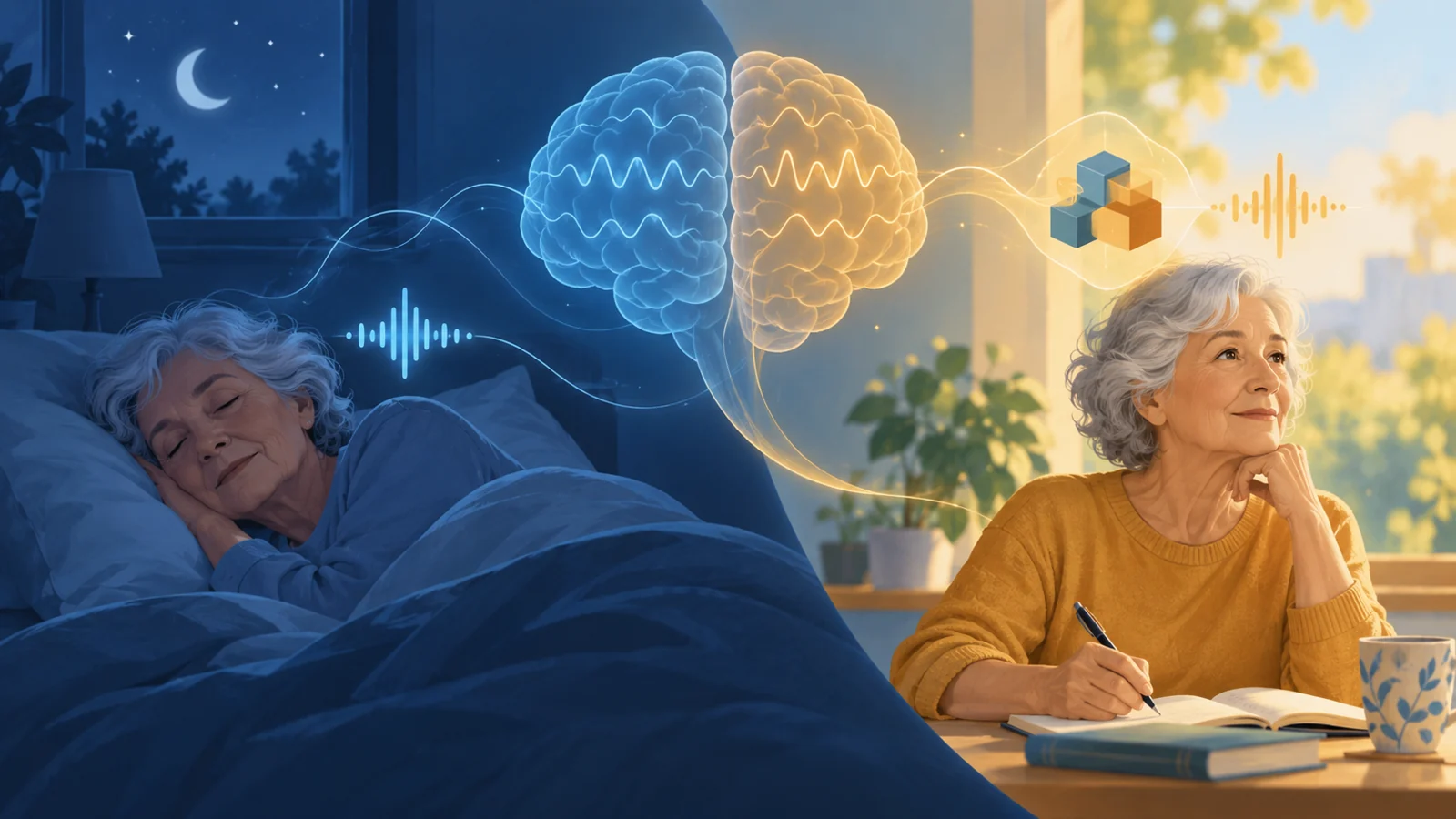
A study plan recorded in the ClinicalTrials.gov record NCT06501495 asks whether the same kind of brain activity could help explain two familiar features of aging: weaker memory and less reliable daytime alertness. The supplied source record is dated July 15, 2024. Its current description outlines comparisons across age and cognitive status, as well as a test of replaying learning-related sounds during sleep.
The central idea is not that a particular brain pattern has already been shown to improve memory. It is that slow waves may provide a way to study how sleep, waking attention and memory changes relate to one another.
Why slow waves matter beyond sleep
Slow waves are slow rhythms in recorded brain electrical activity. During sleep, they are part of the activity researchers associate with consolidating memories: helping newly learned information become more stable after learning. The study description also separates three stages of memory that can be affected by aging. Encoding is taking in new information, consolidation is stabilizing it, and retrieval is accessing it later.
The proposed research connects those stages with what happens during the day. Some slow waves can also appear in recordings made while a person is awake. In the investigators’ account, these waking slow waves have been linked with fluctuations in vigilance, including moments when attention may falter. The same broad pattern therefore raises two related questions. Are fewer or altered slow waves during sleep associated with poorer memory stabilization? And are more slow-wave intrusions during wakefulness associated with lapses in attention or difficulty encoding and retrieving information?
The investigators propose that slow waves in both states could act as a common marker of sleep disturbance, daytime vigilance problems and memory changes. That is a hypothesis about a measurable relationship, not evidence that slow waves cause cognitive decline or that one recording can diagnose it.
Three groups bring different kinds of aging into view
The planned comparisons include young adults, older adults without cognitive disorders and older adults of a similar age with prodromal Alzheimer’s disease, meaning early Alzheimer’s-related cognitive impairment. Studying these groups together could help separate changes associated with ordinary aging from changes associated with disease-related impairment.
The contrast matters because an older person may sleep differently or show different attention patterns for reasons that are not the same as those affecting someone with early Alzheimer’s-related memory problems. Comparing the groups could show whether slow-wave patterns track age broadly, align more closely with cognitive impairment, or vary across sleep and wakefulness in different ways.
The study description presents these as intended human comparisons. It does not provide participant results from which to say that one group has already shown a particular slow-wave pattern, memory deficit or vigilance outcome. The value of the design lies in putting the relevant measurements side by side: brain activity, performance on memory tasks and signs of sustained attention.
What the sound replay tests
The proposed auditory intervention asks a different question from the observational comparisons. Participants would first learn material while a sensory cue, such as a sound, is associated with it. During sleep, the cue would be replayed. The investigators would then evaluate whether this targeted memory reactivation supports the consolidation of what was learned.
The logic is specific. If a sound becomes connected with a learning episode, hearing it again during sleep might reactivate part of that episode at a time when memories are being stabilized. The test is therefore about whether a controlled cue can influence memory after learning. It is not simply a recording of whether slow waves and memory happen to vary together.
The registry description proposes this test in older adults with and without cognitive deficits. That opens a practical question alongside the biological one: could the same sleep-based cueing approach be useful when aging or early cognitive impairment makes it harder to retain newly learned information? The supplied evidence supports the proposed question and method, but not an answer.
From a brain association to a useful benefit
Several levels of evidence need to remain separate. A relationship between slow waves and memory or vigilance would be an association. A measurable change after replaying a learning-related sound would still need to be shown to result from the cue rather than other influences. Neither result alone would establish a meaningful clinical benefit.
For example, retaining more information on an experimental memory task would not by itself show that a person is better able to manage everyday activities, remain independent or avoid dementia. Those outcomes would require additional evidence, including reproducible benefits beyond the specific learning task and a safe way to deliver sounds during sleep. The study plan supplied here does not establish memory improvement from cue replay, validated biomarker performance or an effect on Alzheimer’s disease progression.
What replaying sounds during sleep could offer older adults
If the proposed cue-replay approach reliably helped older adults retain newly learned information, it could point toward a practical sleep-based aid for memory. That possibility could matter especially for people experiencing early Alzheimer’s-related cognitive impairment, for whom preserving access to recently learned information may have tangible value in daily life.
The useful outcome would not be a striking brain recording by itself. It would be a safe, repeatable way to support memory that works beyond a tightly controlled experiment and helps people hold on to information they need. The ClinicalTrials.gov description places that possibility alongside its effort to understand slow waves during sleep and wakefulness, but whether such a benefit exists remains a question for the proposed human research.
Key Sources
- Primary source: Links Between Cognitive Deficits During Normal or Pathological Aging and Slow Waves Measured in EEG
Government or Regulator · Clinical Trial · 2024-07-15