
Research Signal – Source date 2024-01-15
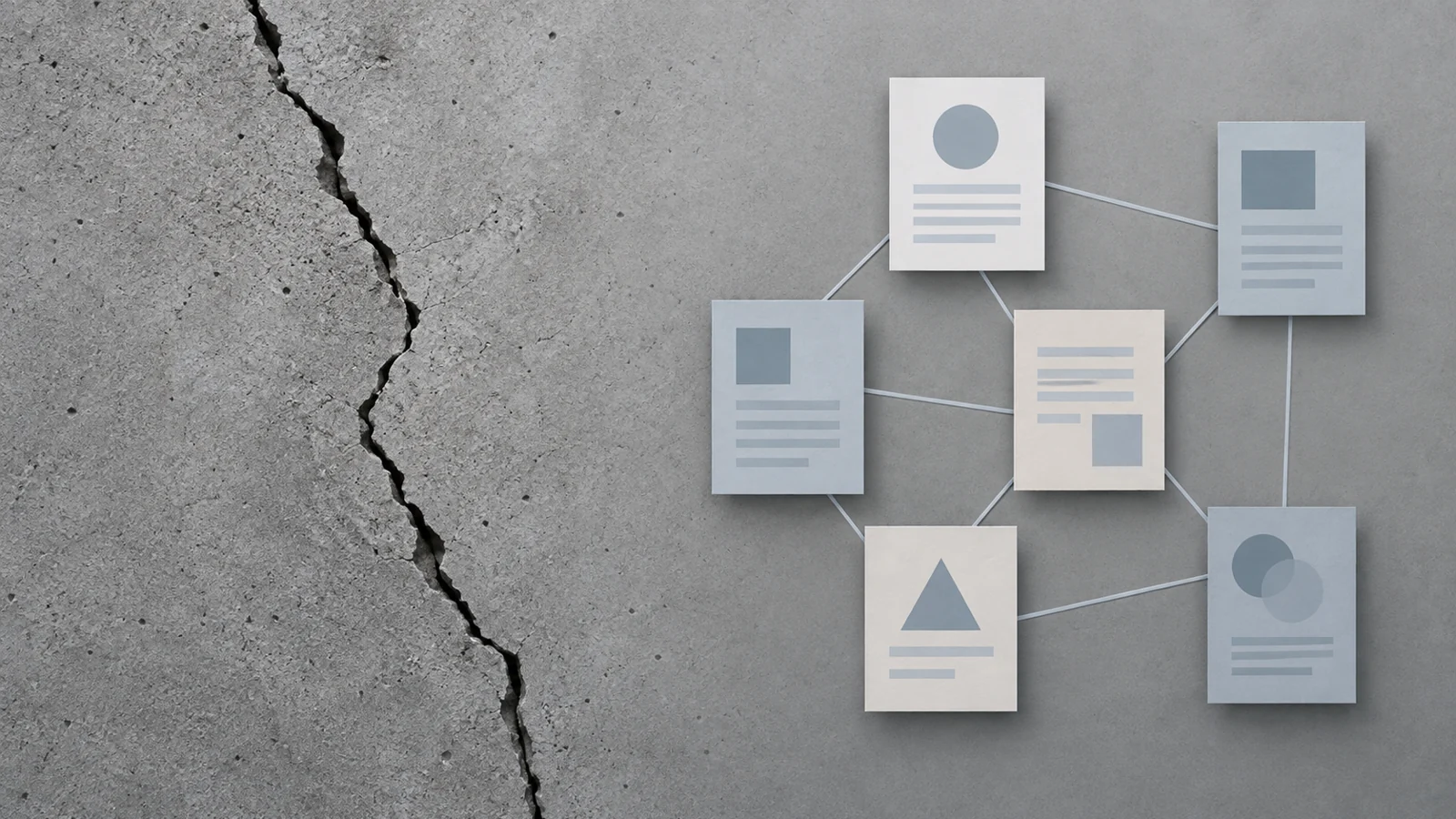
Cracks in concrete create a practical maintenance problem. Environmental conditions and external forces can cause cracking, and addressing the damage can require time and manual labor. Cracks can also have consequences for structural integrity, although that does not mean every crack threatens a building.
Self-healing concrete is concrete designed to repair its own cracks. The ambition is to give the material a capacity that would otherwise require people to intervene. A preprint published on January 15, 2024, titled A Bibliography Study of Self-Healing Concrete, examines the published research pursuing that goal.
Organizing the technologies and the people studying them
The paper describes a bibliographic analysis, meaning it examines scholarly articles to understand research activity. Its stated contribution is to organize knowledge about the field; examining publications is a different kind of investigation from testing a concrete specimen.
The abstract sets out two connected subjects. One is the technical work—identifying significant technologies and themes associated with autonomous crack repair. This gives the study a way to organize what researchers are investigating under the broad heading of self-healing concrete.
The other is the distribution of that work among countries, regions and research institutions. The authors also describe examining collaboration and knowledge sharing. Looking at contributors alongside research themes can help readers understand both the questions attracting attention and the relationships through which those questions are being pursued. Those are useful dimensions of a research landscape, especially for a topic that encompasses multiple technologies.
What the abstract can establish
The available account is the preprint’s abstract. It supports an explanation of the study’s purpose and stated approach, but it does not provide enough detail to identify leading countries or institutions, compare particular technologies, or describe how the articles were selected. The publication date also does not tell us when the literature search ended or which years it covered.
For a reader asking whether concrete can reliably repair itself in a building, a different set of details matters. How much repair occurs, under what conditions, and whether it restores a useful material property would determine what the capability means in practice. The abstract alone cannot establish those outcomes, a demonstrated structural repair, or readiness for construction use. Nor does it justify estimates of maintenance savings or longer service life. These are limits on what can be concluded from the available account, rather than a description of everything the full paper may discuss.
What this could change
If concrete could reliably repair cracks under the conditions it encounters in service, building maintenance teams could face fewer cracks requiring hands-on repair. That could reduce the labor and time devoted to those interventions. The practical payoff would depend on matching dependable material behavior to the damage it is intended to address. The bibliographic study’s contribution lies earlier in that effort, in organizing the technologies, research contributors and connections involved in pursuing the capability.
Key Sources
- Primary source: A Bibliography Study of Self-Healing Concrete
DOI or Journal Page · Peer-Reviewed Paper · 2024-01-15
Keep exploring