
Research Signal – Source date 2024-07-17
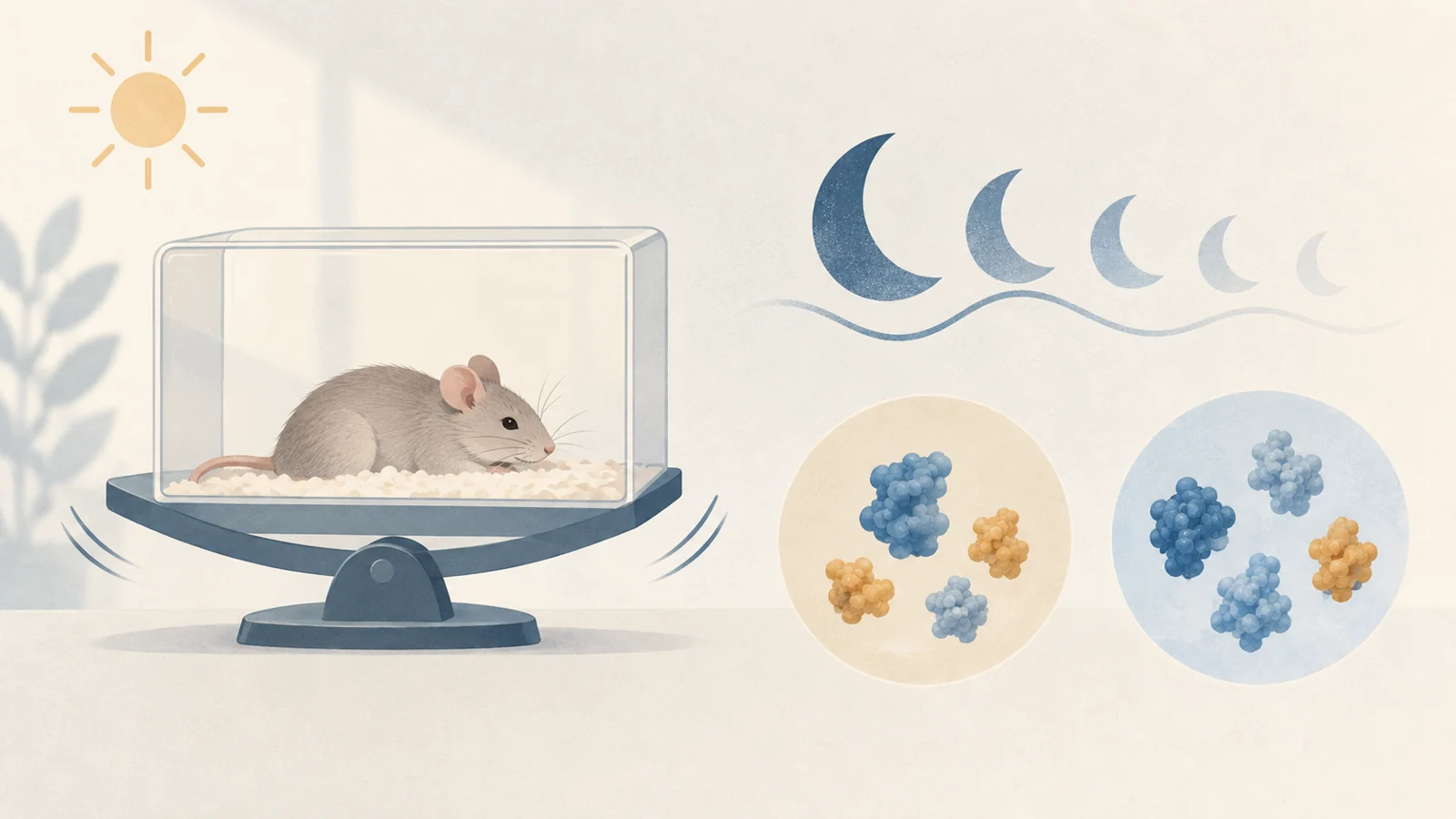
Could physically encouraging sleep change something beyond sleep itself? In a four-month experiment using the 3xTg mouse model of Alzheimer’s disease, researchers found that rocking increased sleep, slowed motor-function decline and reduced cortical beta-amyloid, a protein associated with Alzheimer’s plaques. Another disease-related protein, tau, showed no noticeable change.
The combination makes this experiment interesting, but its outcomes need to be read separately. The sleep boost diminished over time, movement is different from memory, and a reduction in one protein does not establish a broad reversal of disease. The study tests a physical intervention in mice; it does not demonstrate an Alzheimer’s treatment for people.
The sleep response faded during the experiment
The intervention began at postnatal day 60, in early adulthood, and continued for four months. Mice received 12 hours of rocking during the light period. The researchers used that movement to stimulate the vestibular system involved in balance, with the aim of enhancing sleep.
Rocking significantly increased the duration of non-rapid eye movement, or NREM, sleep. The abstract reports that this effect diminished as the mice habituated to the intervention. In other words, their sleep response weakened as they became accustomed to the repeated movement.
That time course matters. A four-month exposure did not produce an equally strong sleep response throughout the experiment. The available account does not establish that the response disappeared completely or show whether any sleep benefit persisted after rocking stopped.
Movement and disease-related proteins told different stories
The researchers reported less decline in motor function among the rocked mice. This describes a change in the course of their movement-related performance, rather than recovery of abilities already lost. It also cannot stand in for a memory result. Although memory was among the outcomes monitored, the abstract available for this account does not give its result, so it provides no basis for claiming improved memory.
The protein finding was also specific. Beta-amyloid levels were lower in the cerebral cortex of treated mice. Lower levels of this plaque-associated protein do not, by themselves, demonstrate that existing plaques were cleared. The result concerns the measured protein level in a particular brain region.
Tau, the protein associated with Alzheimer’s tangles, showed no noticeable change. Its different response limits how broadly the findings can be described. Rocking affected some reported outcomes while leaving another without a noticeable shift. That contrast does not prove that the intervention acts through a mechanism selective for beta-amyloid.
Did extra sleep drive the other changes?
The experiment brought increased sleep, reduced motor decline and lower cortical beta-amyloid into the same investigation. Establishing that extra sleep caused the latter two changes requires more than their occurrence under the same intervention. On the evidence available here, the biological pathway remains unresolved, including whether sleep mediated the effects or rocking influenced them through another route.
The fading sleep response makes that question especially relevant. Understanding how sleep changed across the four months, and how those changes related in time to movement and protein measurements, would help distinguish the possibilities. The abstract alone cannot resolve that relationship.
This account is limited to the study’s abstract. It does not provide numerical benefit sizes or enough detail about sample sizes, controls and design safeguards to assess the precision and robustness of the results. Those are limits of the material available here, not evidence that the full paper omitted those details. Human efficacy, safety, tolerability and an appropriate rocking schedule also remain unestablished by this mouse experiment.
What this could change
If a physical sleep intervention can produce durable improvements in people, and those improvements safely translate into preserved function, it could eventually add a drug-free option to Alzheimer’s care. The practical contribution would begin with better sleep and could extend to helping people retain abilities if that further benefit is demonstrated.
For that possibility to become useful in daily care, the sleep response would need to remain effective with repeated use, and the intervention would need to be tolerable over time. The habituation observed here therefore bears directly on the future capability: an approach that continues to help after people become accustomed to it would offer more than a short-lived sleep boost.
Key Sources
- Primary source: Enhancing sleep via rocking ameliorates motor behavior and reduces beta-amyloid levels in a mouse model of Alzheimer’s disease
DOI or Journal Page · Peer-Reviewed Paper · 2024-07-17
Keep exploring