
Research Signal – Source date 2021-05-11
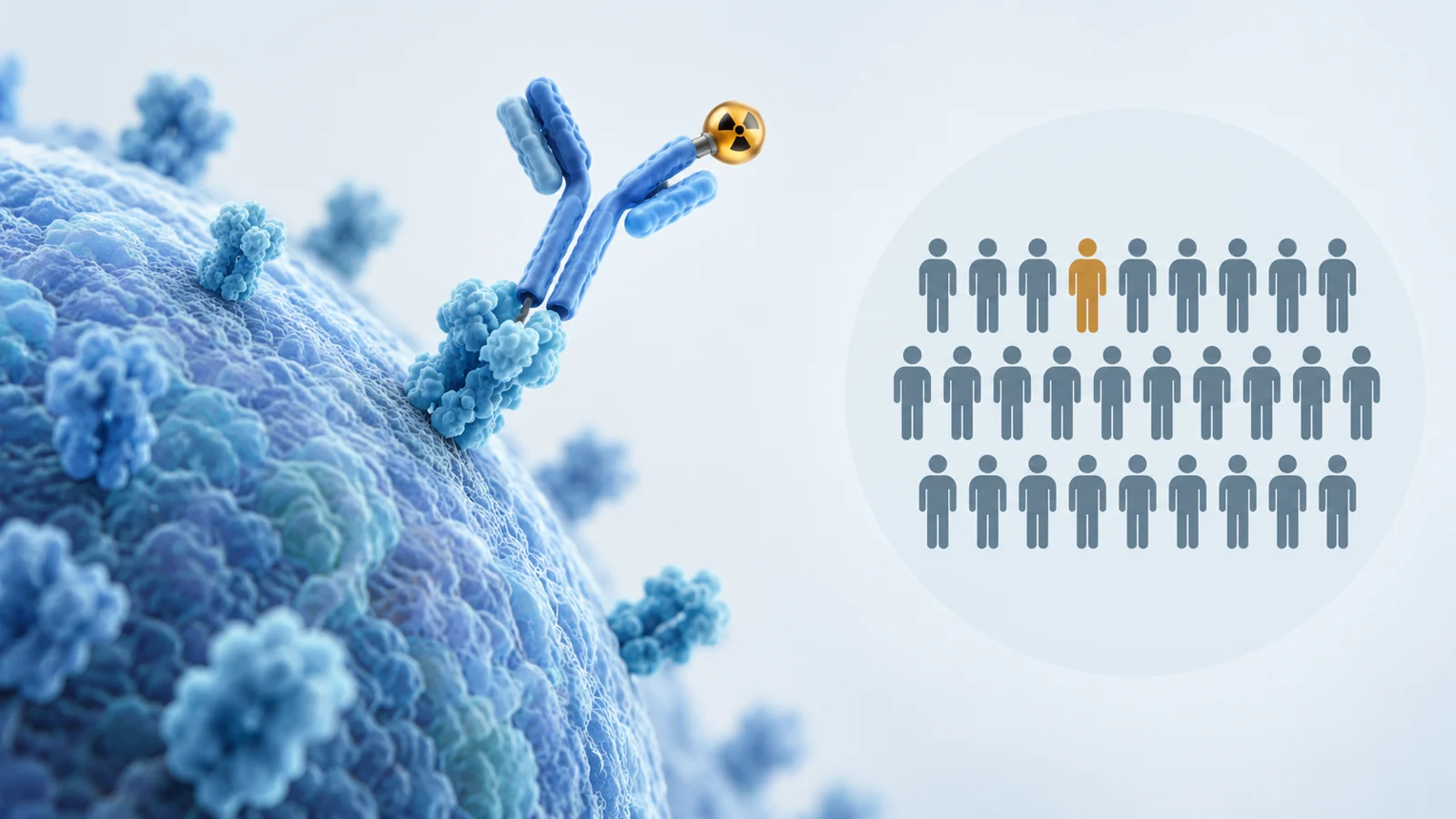
A pooled estimate from a 2021 review found that about 3 in every 100 people treated with radioimmunotherapy later developed a cancer. That figure describes what happened after treatment; by itself, it cannot show how many cancers the treatment caused or whether the rate was higher than it would have been with another treatment.
Radioimmunotherapy joins a cancer-targeting antibody with radiation. The antibody is intended to guide radiation toward lymphoma cells. Researchers have studied this approach as an option for non-Hodgkin lymphoma, including when the disease relapses or does not respond to treatment. Alongside possible treatment benefits, a safety question is whether later cancers—especially blood cancers such as myelodysplastic syndrome (MDS) or acute myeloid leukemia (AML)—occur after treatment, and whether treatment raises their likelihood.
The pooled figure counts cancers observed after treatment
The systematic review and meta-analysis combined findings from 29 studies of radioimmunotherapy for non-Hodgkin lymphoma. Among 1,117 recipients, the pooled observed incidence of subsequent cancers was 3%. The reported 95% confidence interval was 1% to 5%: based on the studies and the analysis, the pooled estimate was compatible with a range from about 1 to 5 cancers per 100 treated people.
That interval describes uncertainty around the pooled estimate; it is not a range of individual patients’ risk. Nor does the 3% figure identify what would have happened to those same people without radioimmunotherapy. People with lymphoma may receive other treatments and may face health risks related to their disease and treatment history. To estimate an excess risk attributable to radioimmunotherapy, researchers need a suitable comparison group and comparable follow-up. The available publisher preview does not show enough detail about comparator designs and follow-up to independently assess that question.
The estimate also combines results that varied across studies. The review reported I² of 58%, a measure of how much the study results differed beyond what would be expected from chance alone. That level of variation is a reminder that the pooled 3% summarizes a collection of studies, rather than a single uniform group or a guaranteed rate for every treatment setting.
The evidence came mostly from non-randomized studies
The 29 included studies comprised two randomized controlled trials and 27 non-controlled, non-randomized trials. In a randomized trial, participants are assigned to treatment groups by chance, which can help make a comparison fair. Because the other 27 studies had no controlled comparison, their findings cannot by themselves show whether radioimmunotherapy increased the chance of a later cancer.
The study count tells us the breadth and mix of the evidence base, but not how strong every comparison was. The authors interpreted their analysis as finding no increased risk of MDS or subsequent cancers with radioimmunotherapy. That is their conclusion, and it matters when weighing the findings. The partial publisher preview, however, does not provide the detailed comparisons and follow-up needed to verify that interpretation independently. The observed 3% incidence and the authors’ comparative conclusion are related pieces of information, but they answer different questions.
Separate treatment groups do not settle which is safer
The preview reports a 2% subsequent-cancer incidence among 787 recipients of yttrium-90 ibritumomab tiuxetan, with a 95% confidence interval of 1% to 5%. For 330 recipients of iodine-131 radioimmunotherapy, it reports 6%, with an interval of 2% to 11%.
Those estimates describe separate groups in the reviewed studies. The iodine-131 estimate is higher, but that alone does not show that iodine-131 caused more cancers or that yttrium-90 is safer. A head-to-head safety ranking would require a fair comparison that accounts for differences between the groups and how they were followed. The subgroup figures are useful descriptions of the evidence the review assembled, not a controlled contest between the two approaches.
What a clearer safety picture could mean for lymphoma care
Reliable long-term comparisons could help clinicians and patients weigh antibody-guided radiation alongside other options when lymphoma has relapsed or resisted treatment. If fair follow-up comparisons confirm the safety assessment, a more precise estimate of later-cancer risk could make that decision clearer while treatment benefits remain relevant. This review offers a pooled observation and the authors’ interpretation; the available preview leaves the comparative evidence difficult to assess in detail.
Key Sources
- Primary source: Adverse events of radioimmunotherapy for non-Hodgkin lymphoma: A systematic review and meta-analysis.
DOI or Journal Page · Review or Meta-Analysis · 2021-05-11
Keep exploring