
Research Signal – Source date 2025-07-15
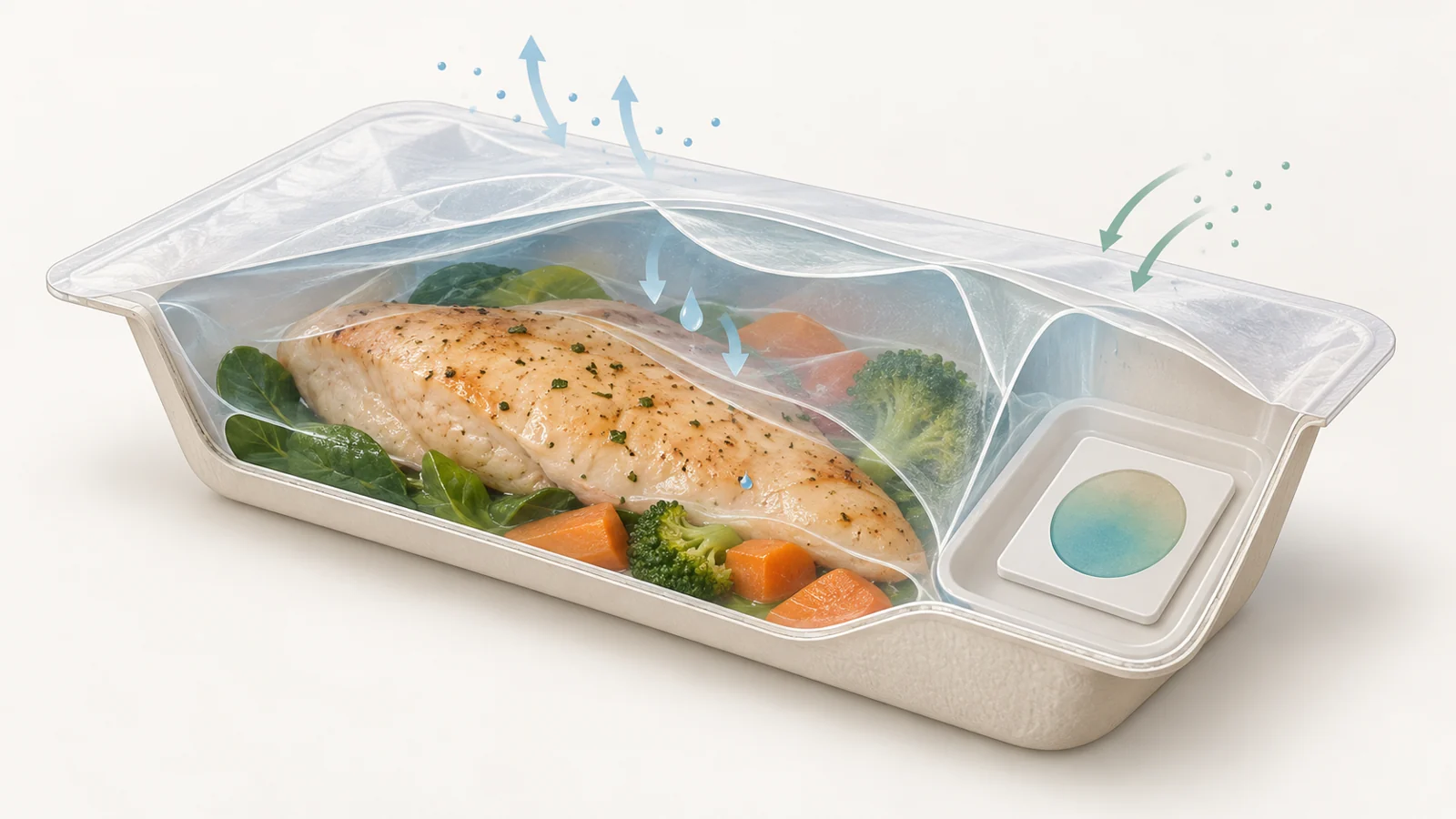
A food wrapper made from soy or whey protein might be designed to do more than keep food covered. A protein film could help limit the movement of water or gases, carry ingredients intended to slow spoilage, or respond to conditions inside a package. Those are related research directions, but they are different jobs—and the review does not show a single package performing all of them together.
A review published July 15, 2025, surveys films and coatings made from proteins from plant and animal sources. It describes possible packaging functions alongside a practical engineering challenge: protein materials can be sensitive to moisture and brittle. Whether a particular formulation can protect food reliably depends on how those properties are addressed and tested.
A wrapper can be a film or a coating
A film is a thin layer that can form packaging; a coating is applied over a food or another surface. The proteins used to make these materials can come from soy, whey, corn zein, collagen, or gelatin. That range matters because “protein packaging” names a broad material category, not one uniform substance with one predictable performance.
One possible job is to act as a barrier. Water and gases moving through packaging can affect the conditions around food, so a material that slows that movement may help protect what is inside. The review describes water and gas barrier properties among the potential benefits of protein-based films and coatings. It does not provide a basis here for ranking the listed proteins or claiming that a particular film blocks moisture or gases well enough for a specific food.
From passive barrier to active ingredient
A barrier mainly limits movement through the package. Active packaging adds an ingredient intended to interact with what is inside. The review discusses incorporating antimicrobials, which are intended to act against microbes, as well as antioxidants and oxygen or ethylene scavengers. Scavengers are ingredients designed to take up or remove a substance, such as oxygen or ethylene, from the package environment.
These approaches are being explored as ways to extend shelf life and reduce spoilage. That is a proposed application, not a measured result established by the evidence available for this article. The abstract does not supply a quantified shelf-life gain or show that one formulation reliably preserves a particular food. The ingredient and the material carrying it would both matter to how a package performs.
A responsive film would use conditions as cues
Some protein-based materials are designed to respond to changes in acidity (pH), temperature, moisture, or gases released inside a package. A response to a condition is distinct from actively changing the package environment: it could, for example, make a condition perceptible through a material change. The review presents materials designed to respond this way as a possible route toward monitoring food quality as conditions change.
A package cue would still need to be tested against the food itself. A response to a change in pH or gas, for instance, would not automatically amount to an accurate, readable judgment of food quality. Before a shopper could use such a cue to decide what to eat first, it would need to show that it works reliably under the relevant storage conditions. The review’s abstract describes the possibility, not a validated quality signal.
The material has to survive packaging use
Moisture sensitivity and brittleness pose practical problems for films and coatings expected to be handled and used around food. A material affected by moisture may not retain the properties sought from a barrier, while brittleness can make a thin layer harder to use as packaging. The review discusses plasticizers (to add flexibility), crosslinkers (to link protein molecules), and nanoparticles (very small added particles) as possible ways to address these problems.
Those approaches are ways to adjust a material, not proof that the tradeoff has been solved. Improving one property may need to be considered alongside others, including mechanical strength and barrier behavior. The review describes improvements in film strength and barrier properties, along with progress toward making these materials at larger scale. The supplied evidence still does not establish dependable performance for a particular formulation during humid storage or commercial readiness.
A renewable ingredient does not by itself prove that a package is better for the environment. The review discusses life-cycle assessment, which considers impacts from making through using and disposing of a material, but the available abstract does not report a measured net advantage for a particular protein film or coating. A meaningful comparison would have to account for what goes into the package and how it is made and used.
Where this research could lead
A shopper checking a trustworthy package-condition cue could eventually use it to decide which food pack to use first, while the package continues its ordinary protective role. That everyday use would depend on several pieces working together: a protein film that remains intact, a cue that responds in a readable and accurate way, manufacturing that can produce the material consistently, and validation with real food. The review describes protein films as candidates for barriers, active ingredients, and responsive materials; it does not establish that a dependable package already combines those functions.
One meaningful milestone would be a real-food storage comparison under humid conditions that measures both the accuracy of a package cue and the integrity of the film. If those measures hold up, the idea of a responsive protein package would have a stronger bridge from material research to a useful signal on food packaging.
Key Sources
- Primary source: Exploring protein-based films and coatings for active food packaging applications: A comprehensive review.
DOI or Journal Page · Review or Meta-Analysis · 2025-07-15
Keep exploring