
Microbial calcite precipitation for durable concrete
Can bacteria-induced calcite precipitation deliver reliable, lasting improvements in concrete durability?
Following this research connects efforts to optimise bacterial calcite production with evidence of durability gains in concrete. The key reader value is seeing whether biological improvements translate into better-performing material.
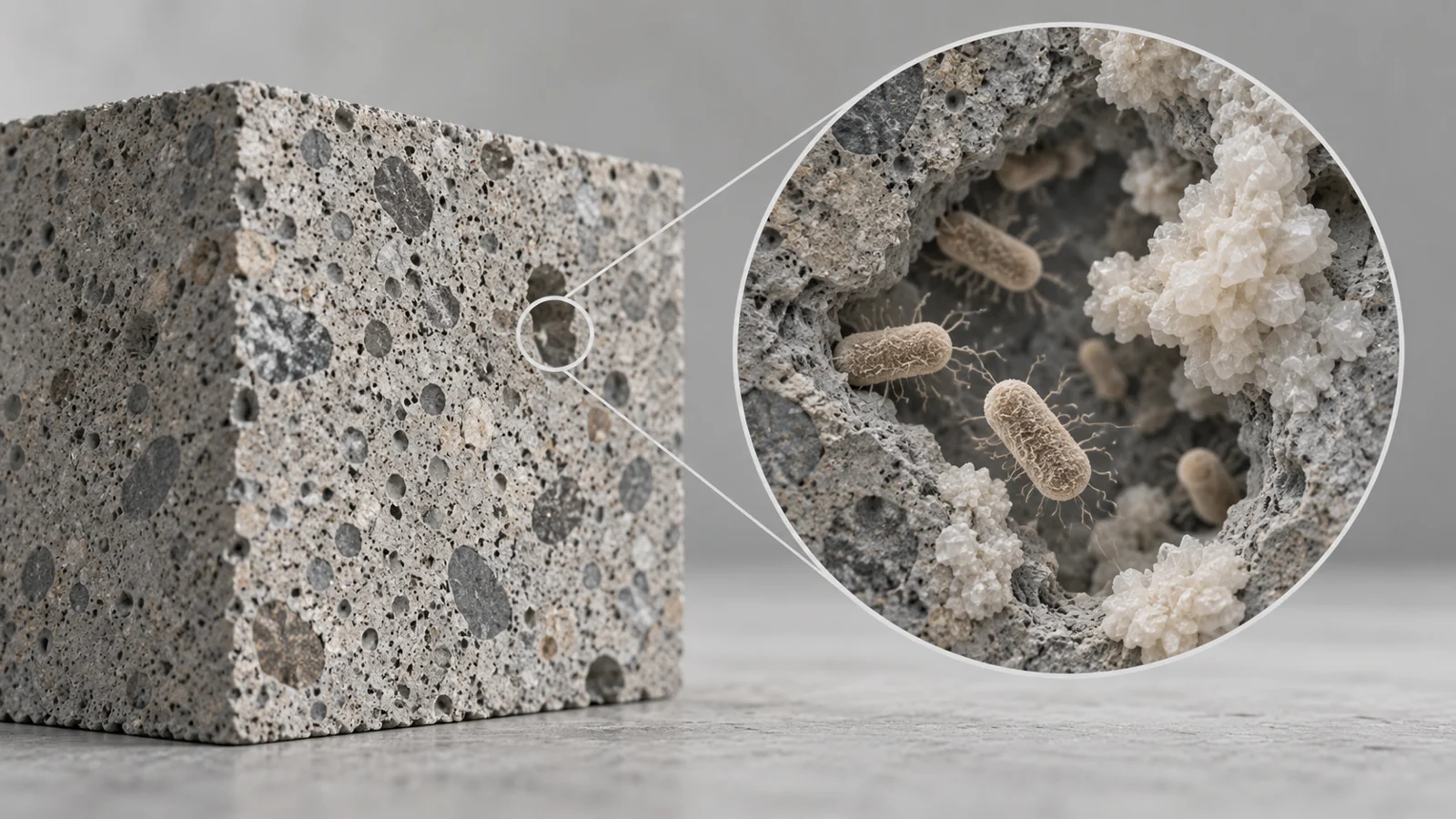
Where it stands now
Main bottleneck
Current evidence does not establish whether optimised bacterial calcite precipitation produces repeatable durability gains that persist under realistic concrete exposure conditions.
Watch next
A controlled concrete study comparing bacterial treatments with untreated samples and measuring whether durability gains persist during prolonged exposure testing.
Progress timeline
How the evidence has changed over time.
2022 · 2 updates
- How bacterial mineral formation may help mortar resist water and recover after loadingResearch note 2 of 3 · Source date 2022-07-01
Since the previous research note · Earlier expectation not tested
Track continuity
Since the previous research note: Could changing bacterial functions help supply microbes for self-healing concrete?
Previous expectation: Adjusting mineral-making functions in suitable bacteria might eventually support lasting crack repair and reduce maintenance of concrete structures.
What this study adds: The July 2022 study reports bacterial mortar with improved strength and reduced permeability, alongside recovery in reloaded reinforced laminates. The supplied evidence does not establish use or testing of the engineered functions or transfer tools behind the earlier expectation.
Current research note
- How bacteria place mineral cement inside sand poresResearch note 3 of 3 · Source date 2022-07-22
Since the previous research note · Earlier expectation not tested
Track continuity
Since the previous research note: How bacterial mineral formation may help mortar resist water and recover after loading
Previous expectation: Bacterial mineral formation might reduce concrete maintenance needs if useful performance persists under service conditions and repeated damage.
What this study adds: The July 22, 2022 review organizes the transport, crystal-growth and process constraints relevant to turning mineral formation into engineering treatments. It identifies limited field application and inadequate durability research, without establishing that the earlier mortar forecast was tested.
Current research note
2021 · 1 update
- Could changing bacterial functions help supply microbes for self-healing concrete?Research note 1 of 3 · Source date 2021-01-01
How this Track works
This page changes as new evidence arrives. Open any update to see what researchers found at that point in the story.