
Microbial Carbonate Mineralization for Biocement
Can microbial carbonate mineralization turn CO₂ into biocement with verified material performance and a measurable net climate benefit?
Following this cluster can help readers assess whether microbial mineralization methods, including the ocean-based microbial–electrochemical approach, produce useful binding materials and substantiate their environmental value.
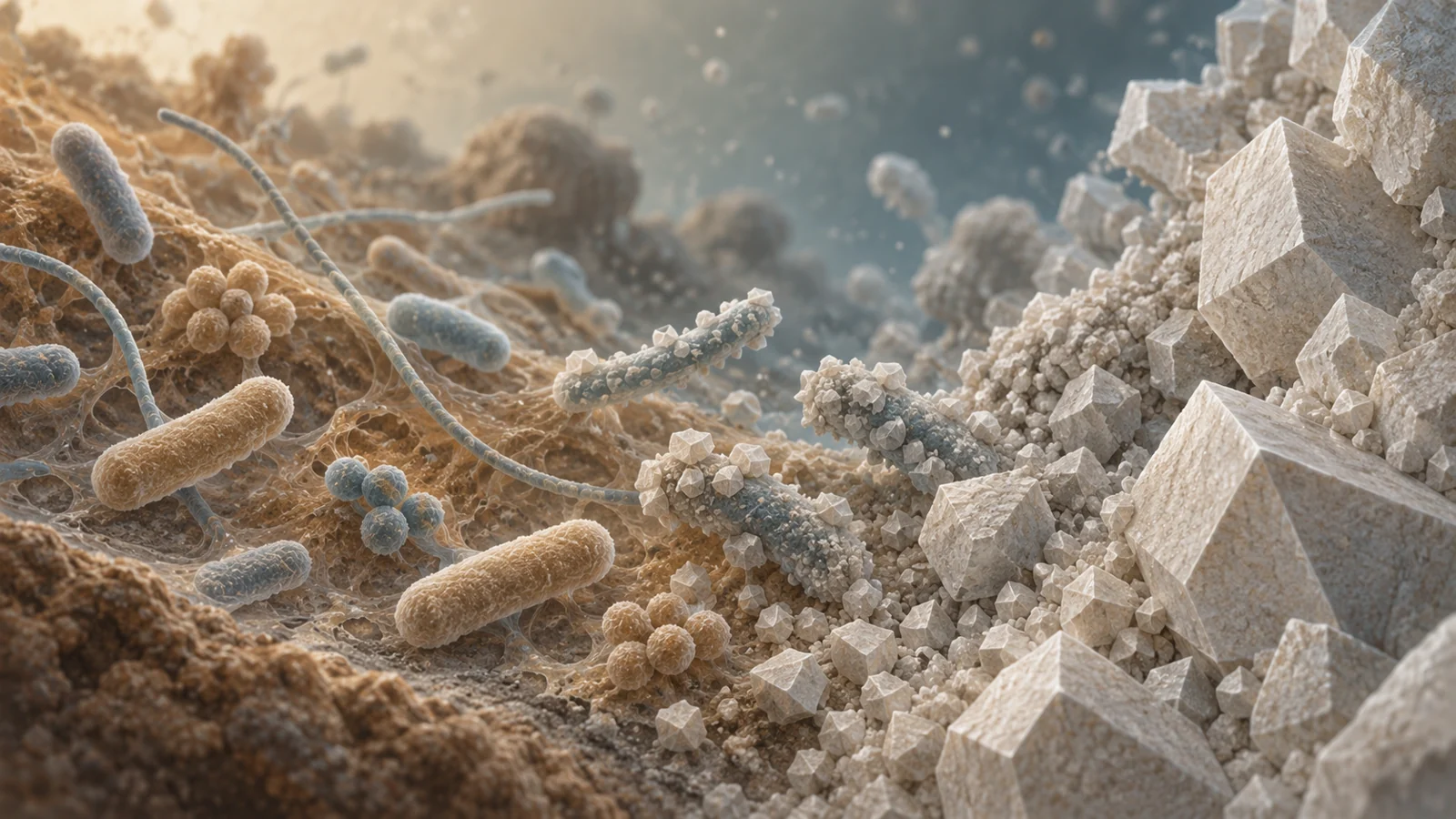
Where it stands now
Main bottleneck
The bounded evidence does not establish whether carbonate formation translates into reliable biocement performance or whether the process delivers a net CO₂ benefit after accounting for its inputs.
Watch next
A reproducible demonstration that measures biocement strength and durability alongside process inputs and a complete CO₂ balance.
Progress timeline
How the evidence has changed over time.
2026 · 1 update
- How microbial activity can help carbonate minerals form in concreteResearch note 2 of 2 · Source date 2026-03-01
Since the previous research note · Earlier expectation not tested
Track continuity
Since the previous research note: How microbes and adjusted seawater could make biocement
Previous expectation: Coastal water-treatment facilities might produce useful construction material while removing atmospheric carbon, provided the integrated process proved durable, manageable and environmentally acceptable.
What this study adds: The current review supplies a broader account of microbial carbonate-forming mechanisms, construction applications and implementation challenges. The supplied abstract does not establish a test of that integrated coastal process.
Current research note
2022 · 1 update
- How microbes and adjusted seawater could make biocementResearch note 1 of 2 · Source date 2022-09-17
How this Track works
This page changes as new evidence arrives. Open any update to see what researchers found at that point in the story.