
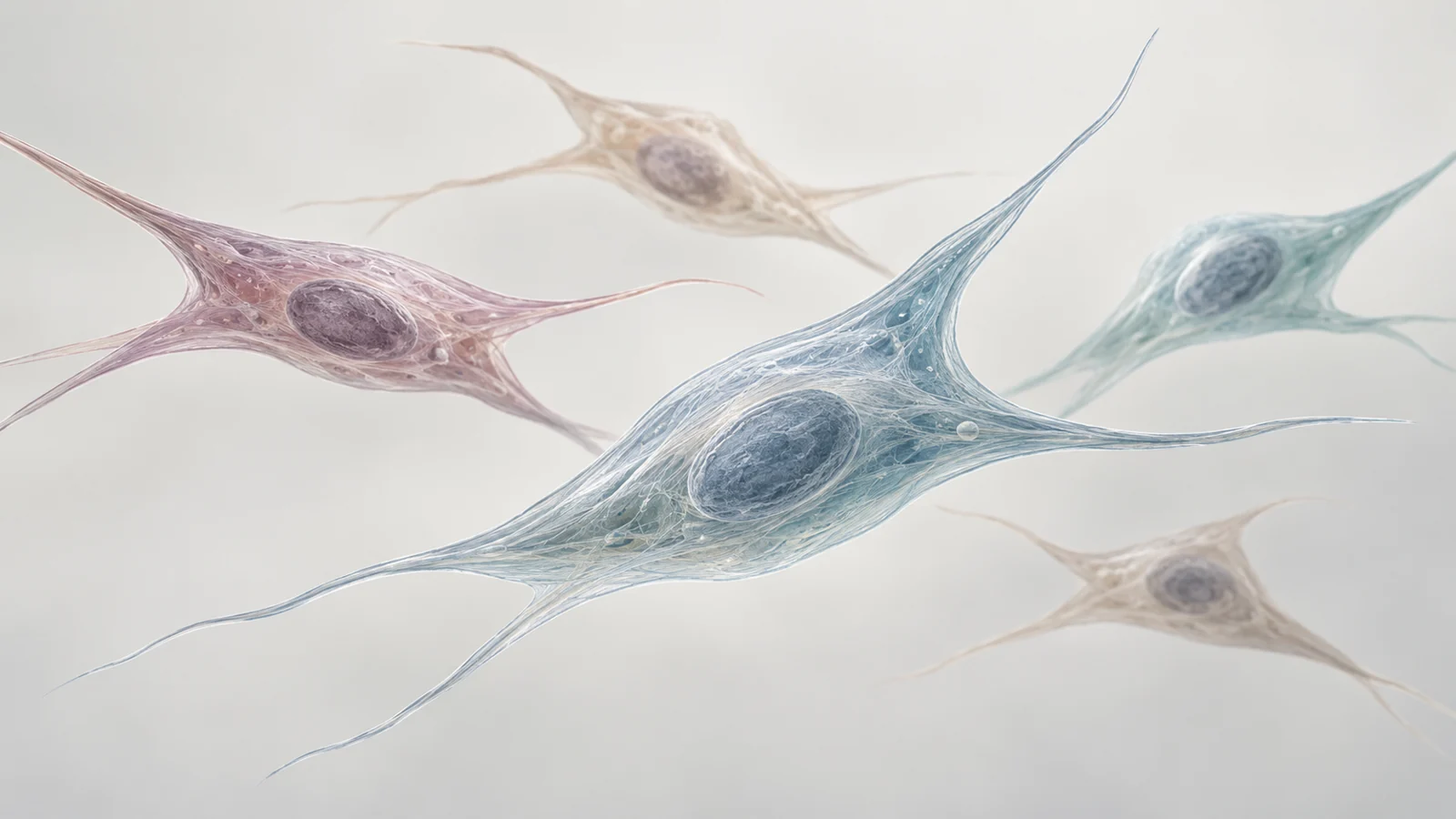
Rejuvenation of mesenchymal stromal cells
Can mesenchymal stromal cells be rejuvenated while retaining the functions needed for reliable therapeutic use?
Following lymphocyte-based rejuvenation and partial reprogramming could reveal whether suppressing signs of cell aging translates into useful cell function. Scalable production adds a further question: how consistently do the resulting cells perform?
Where it stands now
Main bottleneck
Current evidence does not establish whether rejuvenation produces durable functional improvement with consistent safety and quality across cells produced at scale.
Watch next
A reproducible comparison showing that rejuvenated cells retain improved function over time, with safety and consistency assessed across independently produced batches.
Progress timeline
How the evidence has changed over time.
2026 · 1 update
- A temporary reset made a diverse library of tissue-supporting cell linesResearch note 3 of 3 · Source date 2026-03-20
Since the previous research note · Earlier expectation not tested
Track continuity
Since the previous research note: How do immune cells change an aging stem-cell culture?
Previous expectation: More consistent expanded stromal-cell preparations could eventually improve the usable supply of material for regenerative treatment if reproducibility, cell separation, safety and patient benefit were established.
What this study adds: The March 20, 2026 study describes a different route, using temporary factor delivery in umbilical cord-derived stromal cells to establish expandable clones with distinct molecular profiles and some measured functional differences. It does not test the earlier lymphocyte coculture method or its predicted therapeutic reliability.
Current research note
2025 · 1 update
- How do immune cells change an aging stem-cell culture?Partly supportedResearch note 2 of 3 · Source date 2025-11-25
Since the previous research note · Partly supported
Track continuity
Since the previous research note: Can we grow enough useful cells for regenerative treatment?
Previous expectation: Growing enough cells while preserving their useful functions could make future regenerative treatments more dependable, provided production and patient benefit are validated.
What this study adds: Lymphocyte coculture improved functional measurements in expanded human amniotic membrane MSCs, and pretreated cells improved specified outcomes in a mouse colitis model. This supports part of the biological premise without testing manufacturing consistency across settings or benefit in patients.
Current research note
2024 · 1 update
- Can we grow enough useful cells for regenerative treatment?Research note 1 of 3 · Source date 2024-12-11
How this Track works
This page changes as new evidence arrives. Open any update to see what researchers found at that point in the story.