
Renal senescence and senolytic response
Can senolytic responses in kidney-cell models translate into measurable benefits for premature kidney aging?
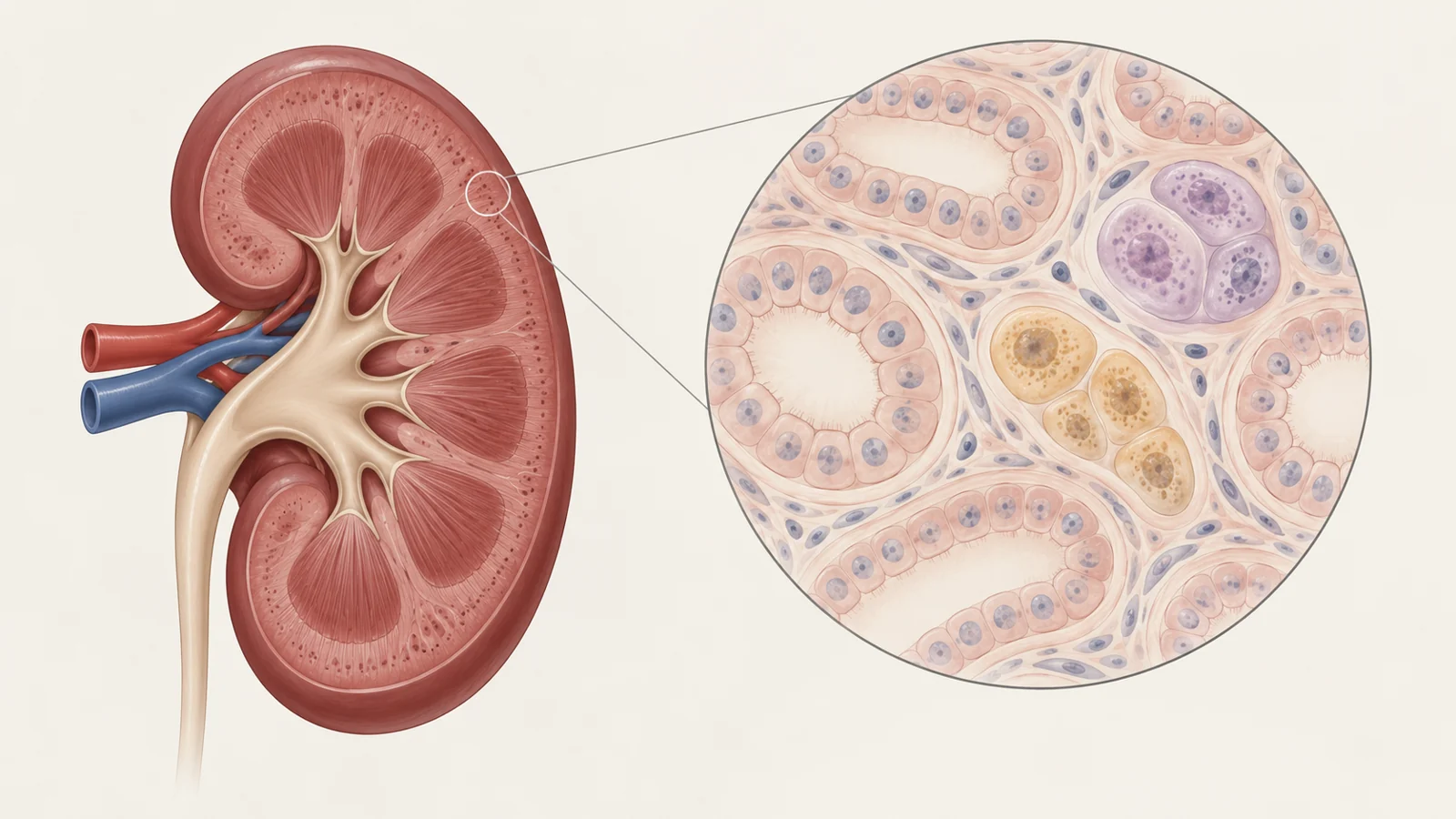
It can show whether research on renal senescence produces useful ways to evaluate treatments. The key connection is between molecular mechanisms, proximal tubule cell models, and evidence from human trials.
Where it stands now
Main bottleneck
Current evidence does not establish whether senolytic responses in the proximal tubule cell model predict meaningful benefits in human kidneys.
Watch next
Evidence testing whether the model’s senescence and senolytic-response findings correspond to findings in human kidney tissue or trials with measured kidney outcomes.
Progress timeline
How the evidence has changed over time.
2022 · 1 update
- How changing culture temperature made an engineered kidney cell model useful for testing drugs aimed at senescent cellsResearch note 2 of 2 · Source date 2022-03-29
Since the previous research note · Earlier expectation not tested
Track continuity
Since the previous research note: How nondividing cells can still affect kidney health
Previous expectation: A senescence-directed treatment during donor-kidney perfusion might improve the organ's resilience and function after transplantation while avoiding unacceptable damage to useful cells.
What this study adds: The March 2022 study characterized an engineered human kidney tubule cell model with senescence-like features and differential responses to senolytic drugs. It adds an experimental system for investigating cell susceptibility without testing donor-organ perfusion or graft outcomes.
Current research note
2021 · 1 update
- How nondividing cells can still affect kidney healthResearch note 1 of 2 · Source date 2021-04-29
How this Track works
This page changes as new evidence arrives. Open any update to see what researchers found at that point in the story.