
Allogeneic CAR Cell Therapy for B Cell Lymphoma
Can donor-derived CAR cell therapies treat B cell lymphoma while avoiding graft-versus-host disease and other barriers to reliable treatment?
Following this cluster shows whether allogeneic CAR approaches can address the limits of patient-specific CAR therapy. The evidence also tracks the safety challenges of using donor-derived cells.
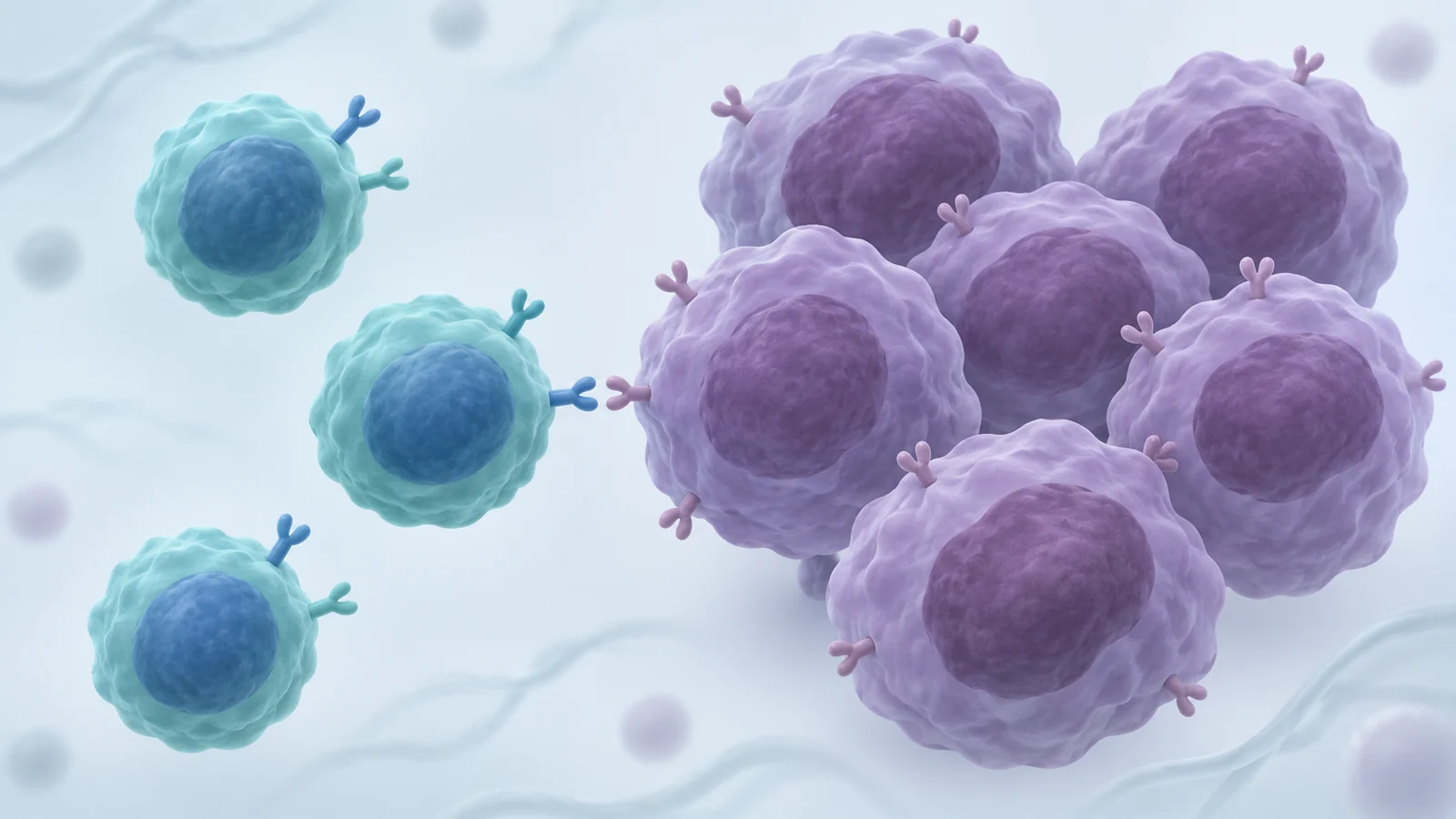
Where it stands now
Main bottleneck
Preventing graft-versus-host disease while maintaining effective, durable antitumor activity remains a central challenge; Current evidence contains reviews, not evidence that it has been resolved.
Watch next
Watch for primary clinical evidence in B cell lymphoma that reports both treatment activity and safety, including graft-versus-host disease and durability of response.
Progress timeline
How the evidence has changed over time.
2025 · 1 update
- Can donor-derived cell therapy control returning lymphoma without severe reactions?Partly supportedResearch note 3 of 3 · Source date 2025-07-08
Since the previous research note · Partly supported
Track continuity
Since the previous research note: Why might a different donor cell change cancer immunotherapy?
Previous expectation: A dependable donor-cell treatment might spare patients the wait for a product made from their own cells while retaining cancer activity and acceptable immune safety.
What this study adds: This July 2025 synthesis brings together early human response and adverse-event observations across donor-derived CAR-T and CAR-NK trials. Its pooled results do not test treatment wait time and do not establish the full combination for one defined product.
Current research note
2024 · 1 update
- Why might a different donor cell change cancer immunotherapy?Research note 2 of 3 · Source date 2024-08-10
Since the previous research note · Earlier expectation not tested
Track continuity
Since the previous research note: Could healthy-donor immune cells reach lymphoma patients sooner and still be compatible?
Previous expectation: A dependable prepared donor product might reach people with lymphoma sooner while remaining active and avoiding serious immune complications.
What this study adds: The 2024 review broadens the design discussion to alternative CAR-bearing cell types that might avoid conventional donor T-cell alloreactivity. Its supplied abstract does not test the earlier forecast's combined human milestone of delivery time, activity and immune safety.
Current research note
2022 · 1 update
- Could healthy-donor immune cells reach lymphoma patients sooner and still be compatible?Research note 1 of 3 · Source date 2022-05-18
How this Track works
This page changes as new evidence arrives. Open any update to see what researchers found at that point in the story.