
Research Signal – Source date 2025-06-01
Plastic recycling is a familiar response to waste, yet a review of plastic management says only 2% of total plastic waste enters a closed-loop system. In plain terms, that is the share described as returning through a route that makes plastic material available for plastic production again. It is not a measure of every kind of recycling, and the abstract does not explain how the figure was calculated or what period it covers.
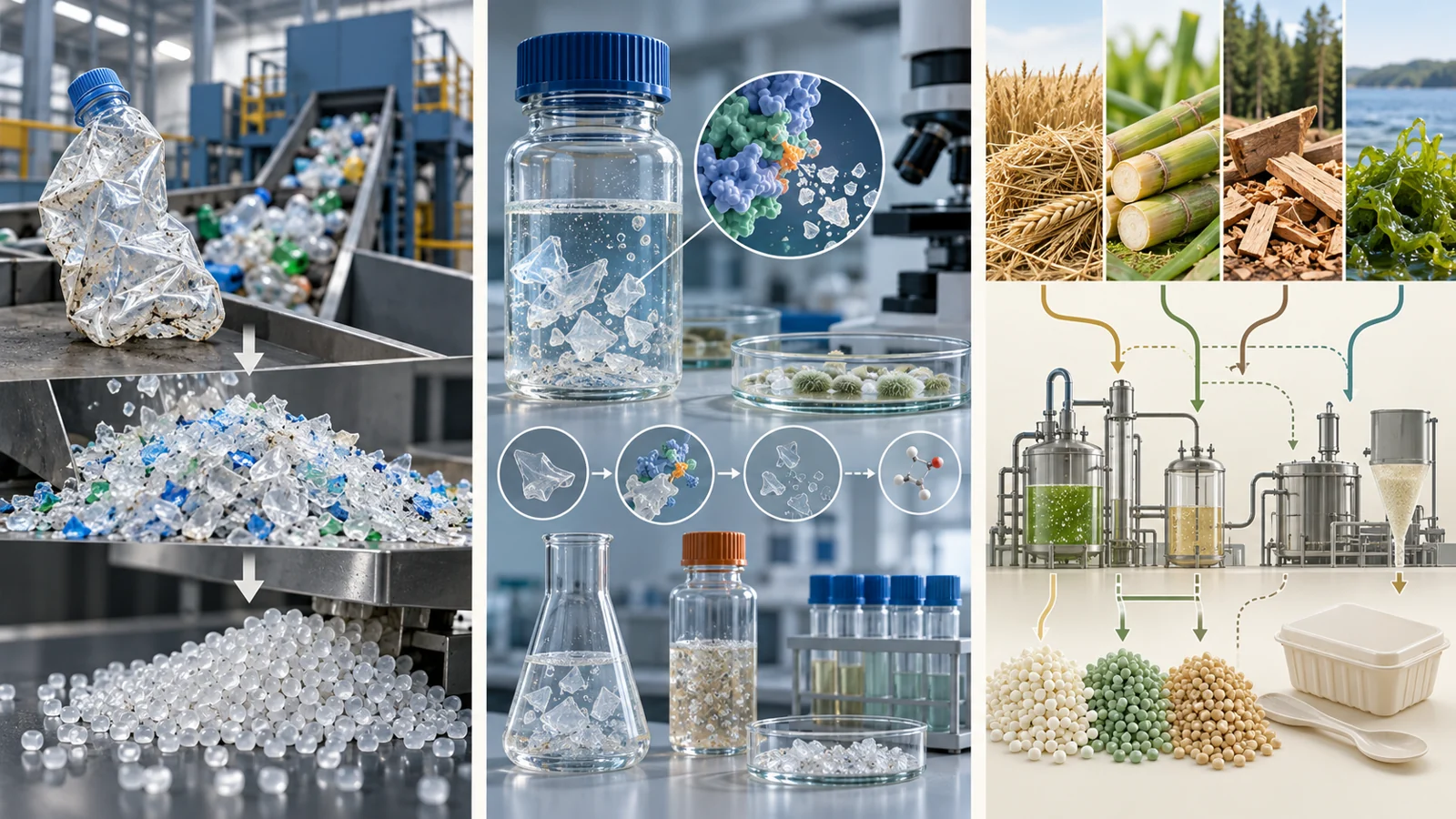
The small closed-loop share raises two questions: how to manage plastic already in circulation, and how choices of new materials may shape future waste. The review discusses recycling, biological approaches to degrading PET, and plastics made from renewable feedstocks with end-of-life options. It presents these as distinct approaches, not a combined system shown to work.
The 2% figure describes only one outcome
Recycling is widely used in plastic waste management, but the review’s closed-loop figure draws attention to one specific destination: material returning to plastic production. A waste stream can be managed in other ways without meeting that description. So the 2% claim should not be read as saying that all other plastic is unrecycled, or that every recycling route has the same outcome.
The distinction matters because the challenge is not only collecting discarded plastic. It is also what happens to the material after collection and whether it can re-enter a comparable use. The review identifies recycling as central while pointing to a narrow closed-loop share. The abstract does not provide the underlying accounting needed to compare that figure across types of plastic or waste systems.
PET gives biological research a specific target
Among the plastics the review discusses, it gives particular attention to polyethylene terephthalate, or PET, a common packaging plastic. PET is a significant contributor to plastic waste in landfills and oceans, according to the review’s summary. Researchers are exploring biocatalytic and bioengineering tools to degrade it: biological catalysts and engineered biological approaches are being investigated for their ability to break down this material.
That focus describes a research direction, not a demonstrated waste solution. The abstract does not establish how well these tools perform on collected waste, whether they can be used at scale, or how their results compare with other management routes. Their distinct potential role is to address PET itself, while recycling aims to recover usable material and alternative materials concern what products are made from in the first place.
Feedstock and end-of-life are separate questions
A plastic’s feedstock is the material used to make it. Its end-of-life is what can happen to it after use. The review discusses biobased plastics made from renewable feedstocks, biodegradable materials, and possible end-of-life options. These terms describe different properties: a renewable origin does not by itself say whether a material biodegrades, and biodegradability alone does not specify the conditions or route needed at end of life.
This distinction helps explain why alternative materials are not a single answer to existing plastic waste. They concern choices made when designing materials and products; PET-degrading research addresses a particular plastic already contributing to waste; recycling concerns how discarded material is handled and recovered. The review places these approaches alongside one another, but the supplied summary does not show that one outperforms another for a defined waste stream.
How this could shape the future
A used package could one day follow a dependable collection route that returns its material to comparable packaging, while other materials go to separately verified end-of-life routes suited to them. That kind of system could make the destination of discarded plastic more predictable and increase the share that returns to useful material. It would depend on matching products, collection, processing, and outcomes reliably at a wider scale.
The review’s closed-loop figure makes that possibility concrete: a larger, independently measured share of a defined plastic waste stream returning to new plastic would mark progress. Such a measure would need to state what counts in the denominator and account for the fate of the rest. Reaching that future would also require advances in collection systems, material performance, and processing beyond what this review’s abstract demonstrates. Recycling and alternative materials offer starting points, while PET-focused biological tools and other end-of-life options could serve different parts of the waste problem.
Key Sources
- Primary source: An analytical review on revamping plastic waste management: exploring recycling, biodegradation, and the growing role of biobased plastics.
DOI or Journal Page · Review or Meta-Analysis · 2025-06-01
Keep exploring