
Research Signal – Source date 2025-12-09
Can a short treatment for trouble sleeping delivered by phone help older adults living with HIV sleep better and think more clearly? A ClinicalTrials.gov registration describes a planned randomized study designed to compare two four-week options: Brief Behavioral Treatment for Insomnia, or BBTI, and Brief Mindfulness Treatment, or BMT.
It is a question about comparative effects, not a result announcement. The current registry details supplied for this article list the study as not yet recruiting, and no results have been posted. December 9, 2025 is the publication timing attached to this item. The design and status described here come from the registry record supplied for review; they are not presented as a verbatim reconstruction of the wording that appeared on that date.
What the trial will compare
The study is planned as a randomized, parallel-group treatment trial with estimated enrollment of 214 adults. Participants would be assigned to either BBTI or BMT. Because mindfulness is the active comparator, the study is not setting one intervention against an untreated group. It is asking whether a brief behavioral approach focused on insomnia produces different sleep or cognitive outcomes from a brief mindfulness approach delivered on the same schedule.
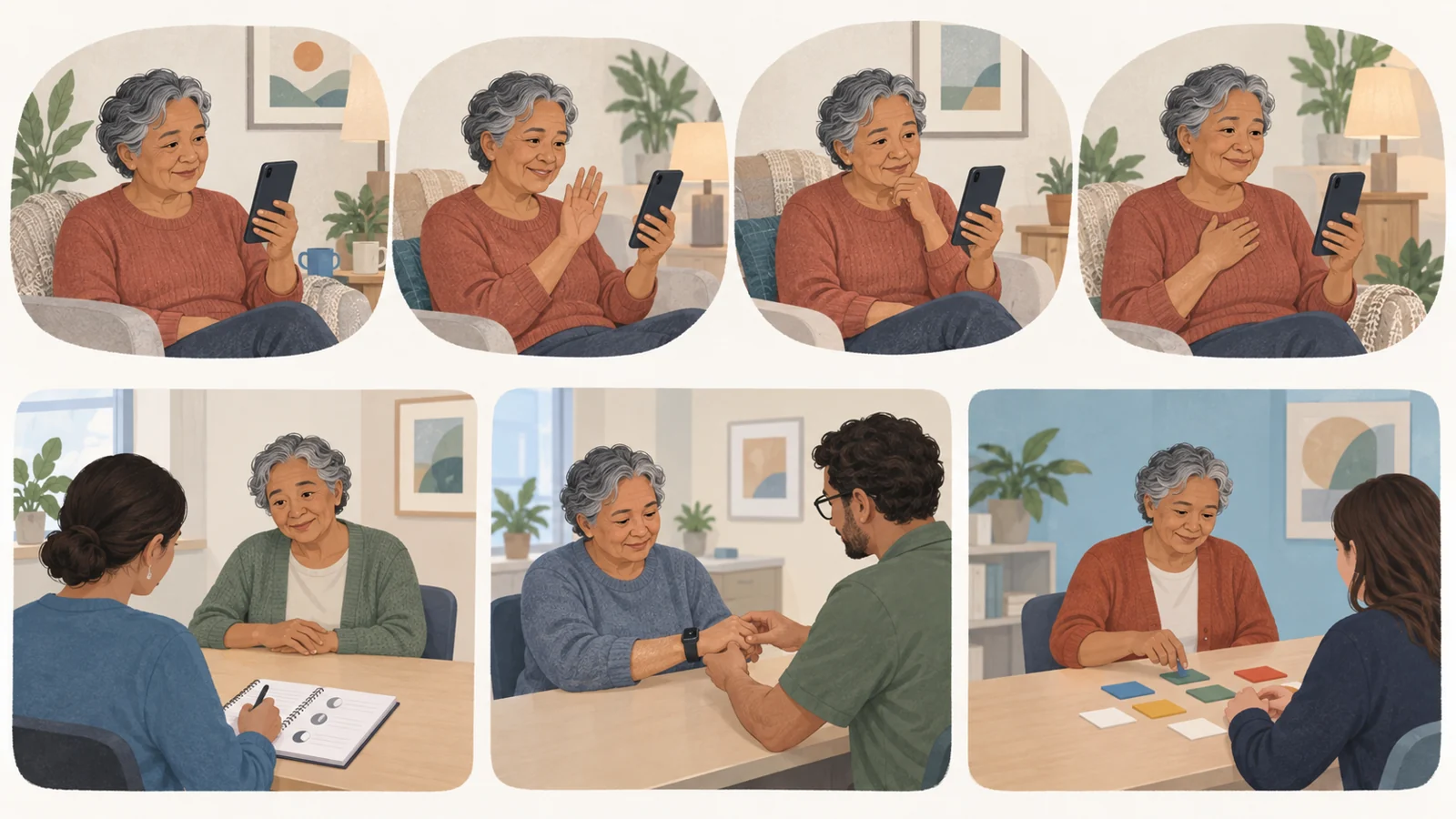
Both groups are scheduled for four weekly telephone sessions, with each session lasting 30 minutes. Keeping the number and duration of calls alike gives the comparison a defined shape: the treatment approach changes, while the scheduled telephone contact is held constant. The registry does not provide enough evidence here to describe the exercises or techniques used inside either intervention.
The record currently lists an estimated start in May 2026 and estimated completion in September 2030. Those dates are projections, not evidence that recruitment, treatment or follow-up has already occurred.
Four weeks of calls and a year of assessment
The weekly treatment is remote, but participation in the study is broader than four phone conversations. The planned schedule includes an in-person visit at baseline, another after the four-week intervention and a third one year after treatment. Blood would be collected at all three time points.
That arrangement lets the researchers compare outcomes before treatment, soon after it and after a longer interval. It also keeps two questions separate. One concerns whether a brief intervention is associated with changes shortly after the sessions. The other concerns whether any difference remains visible a year later. The registry does not yet provide findings for either question.
Sleep, test performance and everyday function are different outcomes
The planned sleep measures combine people’s reports with repeated observations. The Insomnia Severity Index records the intensity of insomnia symptoms, while the Pittsburgh Sleep Quality Index summarizes perceived sleep quality. Participants would also complete sleep diaries around a seven-day period of actigraphy, which is intended to capture measures such as total sleep time, time needed to fall asleep, awakenings and sleep efficiency.
Cognition is assessed separately. The Repeatable Battery for the Assessment of Neuropsychological Status covers immediate and delayed memory, attention, language and visuospatial or constructional abilities. Three parts of the Delis-Kaplan Executive Function System are also listed: trail making, verbal fluency and color-word interference. These tests look at performance under structured conditions rather than asking someone simply whether they feel mentally sharper.
The study also includes the Patient’s Assessment of Own Functioning Inventory, a questionnaire about how cognitive abilities affect everyday activities. A change in a sleep symptom score, a change in performance on a cognitive task and an easier experience of daily activities would represent different kinds of findings. The combination of measures is intended to show whether the two treatments are associated with the same pattern across sleep, formal testing and perceived day-to-day function, or whether those parts of the picture diverge.
What the blood markers can and cannot answer
Blood measurements add a biological association question to the treatment comparison. The registry lists an amyloid-beta Aβ42/40 ratio and p-tau as secondary outcomes, alongside the question of how these markers relate to sleep and cognitive outcomes over the study period.
That question is narrower than asking whether either treatment prevents Alzheimer’s disease or reduces dementia risk. A relationship between a marker and a sleep or cognitive measure would not, by itself, identify a diagnosis or establish that improving sleep causes a biological change that protects thinking. The supplied record supports investigation of these relationships; it does not provide a causal pathway or treatment result.
The same caution applies to the wider study. Its randomized design and planned follow-up can create a structured comparison once the trial is conducted, but the registration alone cannot show which intervention will work better, for whom, or whether any observed change will last.
Why brief telephone treatment could matter for older adults with HIV
For older adults with HIV and insomnia, a four-week behavioral option delivered by phone could eventually make treatment possible without traveling for every therapy session. That practical possibility would matter most if the comparison shows meaningful, sustained improvements in sleep and if better sleep is accompanied by measurable or everyday cognitive benefits.
Any real-world value would still depend on the intervention proving workable in care, not merely being convenient to describe in a registry. The study’s in-person visits and year-long assessments are important to that test: they distinguish a brief remote treatment schedule from evidence that the benefits are durable and relevant to daily life. At present, the registry describes the question being prepared for study, not an answer.
Key Sources
- Primary source: The Impact of Brief Behavioral Treatment for Insomnia Versus Brief Mindfulness Treatment on Cognition and Sleep Health in Adults (Age 50+) With HIV
Government or Regulator · Clinical Trial · 2025-12-09
Keep exploring