
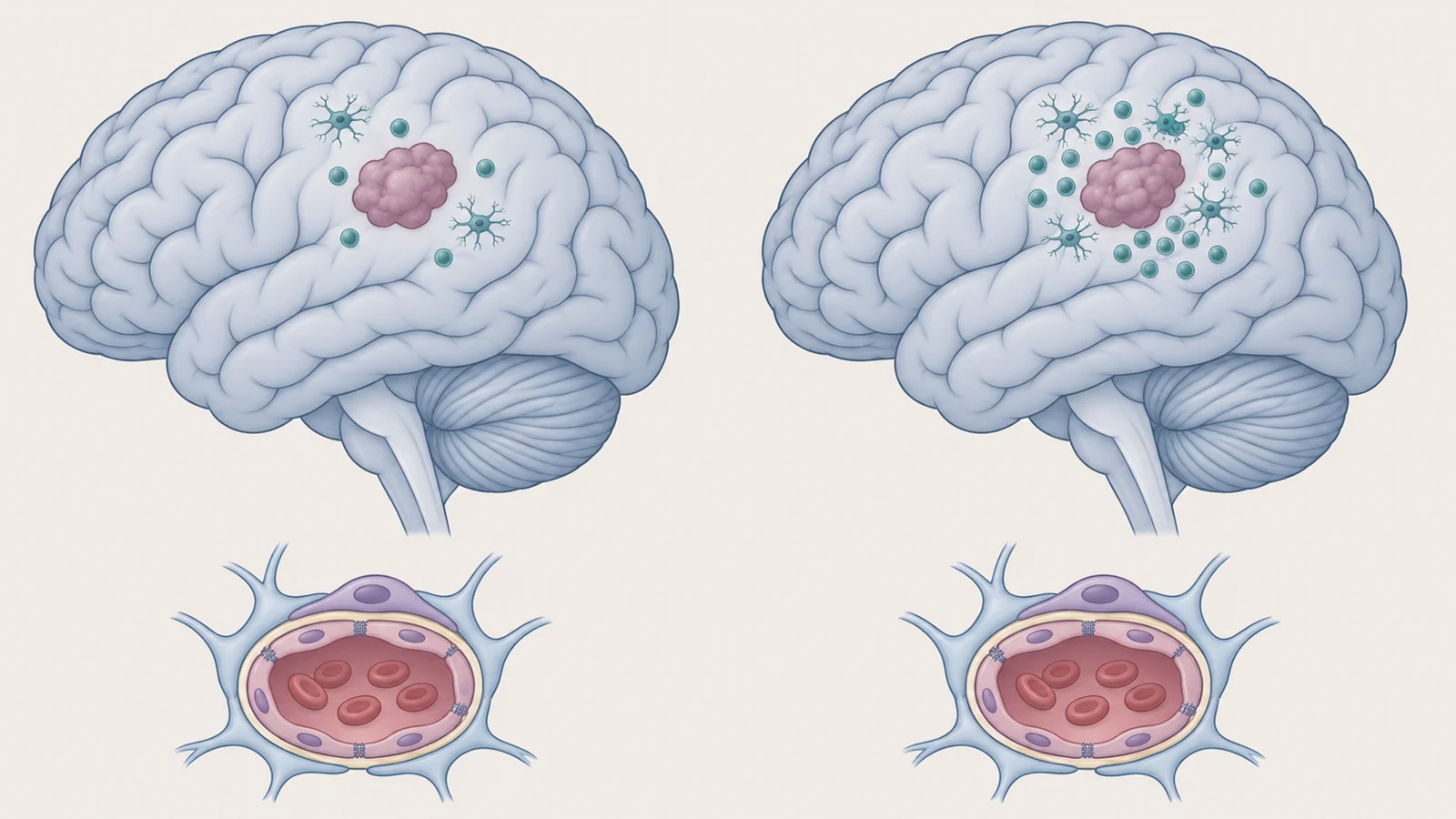
Research Signal – Source date 2025-03-14
A child’s glioma is not defined by one shared immune setting. Gliomas are brain tumors, and the pediatric forms include several subtypes with different immune profiles. A review published March 14, 2025, describes low-grade gliomas as often immunosuppressed, while high-grade gliomas can contain more complex immune infiltrates alongside mechanisms that suppress immune activity. The label “glioma” alone therefore cannot tell us what obstacles an immune treatment might encounter.
The immune picture changes across tumor types
The review discusses low-grade tumors such as pilocytic astrocytomas and high-grade tumors such as diffuse midline gliomas, including diffuse intrinsic pontine gliomas. Their immune environments are not interchangeable. In low-grade gliomas, the surrounding setting is often immunosuppressed. High-grade gliomas may have a more complicated mix of immune cells and suppressive processes.
An immune-cell presence is not the same as an effective attack. Cells can be present in or near a tumor while the conditions around them limit their activity. The review describes this broader setting as the tumor immune microenvironment: nearby immune cells, signaling molecules such as cytokines, and structural material around the tumor can all shape immune evasion and response to treatment.
What remains unknown about immune-cell interactions
T cells and natural killer cells are among the immune populations that may interact with glioma cells. Tumor-associated macrophages are another population of interest. The review highlights that these interactions in pediatric tumors remain poorly understood. Knowing which cell types are present is only part of the picture; how they interact with tumor cells and with one another may matter to whether an immune response can develop.
This is a particular gap in pediatric glioma research. Findings about adult gliomas cannot simply fill it, because children’s tumors have distinct subtypes and immune profiles. More subtype-specific evidence is needed to connect the surrounding immune conditions with the response to a particular treatment.
The brain adds a barrier to access
The blood-brain barrier creates another hurdle that cuts across subtype differences. This protective boundary can make it harder for immune cells to reach a tumor and can complicate delivery of a therapeutic agent. A treatment might therefore face challenges both in the tumor’s local immune environment and in reaching the relevant site in the brain.
Those are separate questions. A tumor’s immune surroundings concern the cells and signals near it; the barrier concerns access through the brain’s protective boundary. Understanding one does not settle the other, and neither can be inferred from the broad glioma label alone.
The March 2025 review brings together what is known about these subtype differences and barriers, and discusses emerging immunotherapeutic strategies aimed at addressing them. The evidence summarized here does not establish that a particular immunotherapy benefits children with glioma, or that tumor grade by itself predicts response. It also leaves important questions about how pediatric tumor cells interact with T cells, natural killer cells, and macrophages.
How this could shape the future
If researchers can repeatedly measure a child’s tumor immune profile and show that particular profiles predict outcomes, a pediatric tumor team could use that information to judge whether a specific immune strategy is worth considering. That could make treatment discussions more closely reflect the biology of an individual tumor instead of relying on broad labels or assumptions drawn from adult gliomas. Such selection would depend on reproducible pediatric profiling and evidence connecting those profiles to treatment outcomes; the review describes the differences and barriers that make this work necessary, not a method already shown to select effective care.
A nearer milestone would be a study that groups pediatric gliomas by subtype, measures their immune features, and tests whether those features predict response to a specified intervention. If that relationship proves reliable, it could help turn a broad menu of emerging strategies into better-informed questions about which approach deserves testing for which tumor.
Key Sources
- Primary source: Pediatric gliomas immunity challenges and immunotherapy advances.
DOI or Journal Page · Review or Meta-Analysis · 2025-03-14
Keep exploring