
Evidence date · 2021-03-30 · Research note 1 of 2
1 2
See current Track status →
A PD-L1 score and a tumor’s genetic changes describe different features of gastroesophageal adenocarcinoma. In a study of 2,518 tumors, researchers found that certain gene alterations were associated with higher PD-L1 scores in one subgroup. Separate analyses of patients who received immune checkpoint inhibitors linked those alterations to contrasting survival patterns. The findings raise questions about how genetics might complement PD-L1 testing, but they do not establish a gene-based treatment rule.
The study sorted tumors by a three-part PD-L1 score
Gastroesophageal adenocarcinoma affects the stomach or the area where the esophagus joins it. The researchers used next-generation sequencing to compare genetic alterations across tumors grouped by their PD-L1 combined positive score, or CPS. CPS is the study’s measure of PD-L1 expression, a marker involved in immune activity around a tumor.
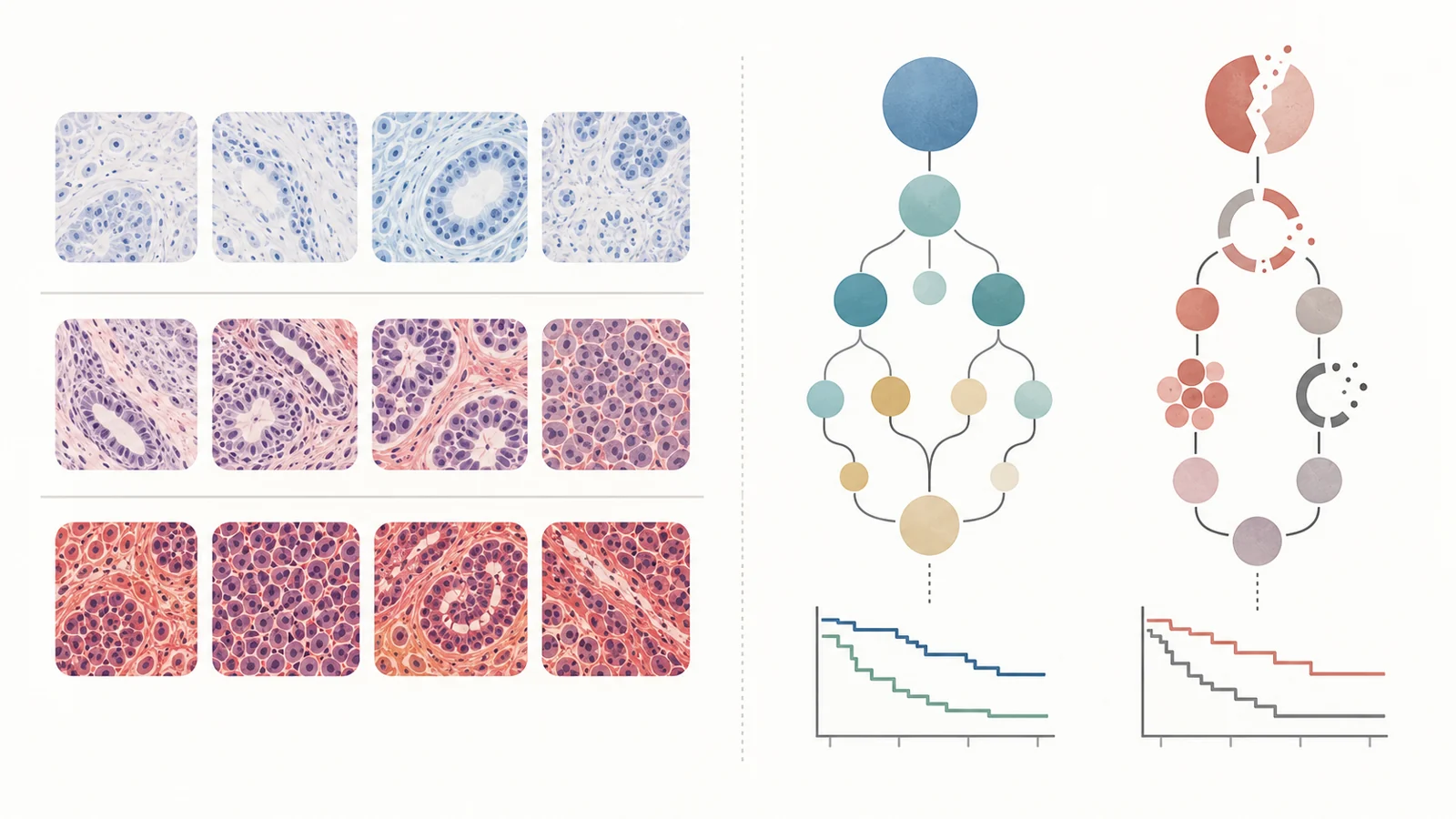
Among the 2,518 tumors, 18% had a high score of 10 or more, 54% fell in the intermediate range of 1–9, and 28% had a low score below 1. These groups show how common each score range was in the analyzed tumor set; they are not estimates of how well a particular patient would respond to treatment.
The study also reported that PD-L1 positivity was less prevalent in women and in samples from metastatic sites. Its main genomic comparisons found a positive association between higher CPS and mismatch-repair deficiency or high microsatellite instability. DNA mismatch repair is a process that corrects copying errors in genetic material; microsatellite instability can occur when that repair system is impaired.
CPS did not track the distribution of total tumor mutation burden in the reported analysis. Tumor mutation burden counts mutations across a tumor’s DNA, while CPS measures PD-L1 expression. The two measures therefore did not move together in these data.
Gene associations appeared within repair-proficient tumors
The researchers examined the subgroup with proficient mismatch repair and microsatellite stability, meaning the repair system was functioning and the tumors did not show the high-instability pattern. Within this subgroup, mutations in KRAS and TP53, as well as alterations in the broader RAS-MAPK pathway, were associated with higher PD-L1 scores.
RAS-MAPK is a cell-signaling pathway that includes genes involved in growth-related signals. The study’s finding connects pathway alterations with a higher immune-marker score in this specific subgroup. It does not show that the alterations raised PD-L1, or that every tumor carrying one would have the same score.
These score and mutation relationships came from the genomic comparison of the tumor set. The survival findings came from separate database-based analyses of patients treated with immune checkpoint inhibitors, drugs that act on immune-control pathways. Keeping those analyses distinct matters: a pattern across tumor samples is not itself a treatment outcome.
Survival patterns differed for RAS-MAPK and TP53
Among checkpoint-inhibitor recipients, patients whose tumors had RAS-MAPK pathway alterations had a reported overall survival of 27 months, compared with 13 months for patients without those alterations. A similar pattern appeared in the microsatellite-stable subgroup, but that comparison was less conclusive.
The TP53 pattern went the other way in the microsatellite-stable subgroup. Patients with TP53 mutations had reported overall survival of 5 months, compared with 21 months for patients without TP53 mutations.
These are associations among people who received checkpoint inhibitors. They do not show that the mutations caused the survival differences. Nor does a comparison among treated patients establish whether a mutation identifies extra benefit from immunotherapy compared with another treatment. Demonstrating that kind of treatment-specific prediction requires an appropriate comparison between treatment groups and further validation.
How tumor genetics might guide immunotherapy choices
If these gene-linked patterns hold up in clinical validation, combining tumor genetics with PD-L1 testing could help clinicians better match people with gastroesophageal cancer to checkpoint treatment. It could also help researchers design rational combinations that account for different tumor features. That capability depends on showing that the genetic signals reliably identify treatment-specific benefit; this study offers potential clues, not a validated way to choose therapy.
Key Sources
- Primary source: Distinct genomic landscapes of gastroesophageal adenocarcinoma depending on PD-L1 expression identify mutations in RAS-MAPK pathway and TP53 as potential predictors of immunotherapy efficacy.
DOI or Journal Page · Peer-Reviewed Paper · 2021-03-30