
Research Signal – Source date 2026-01-08
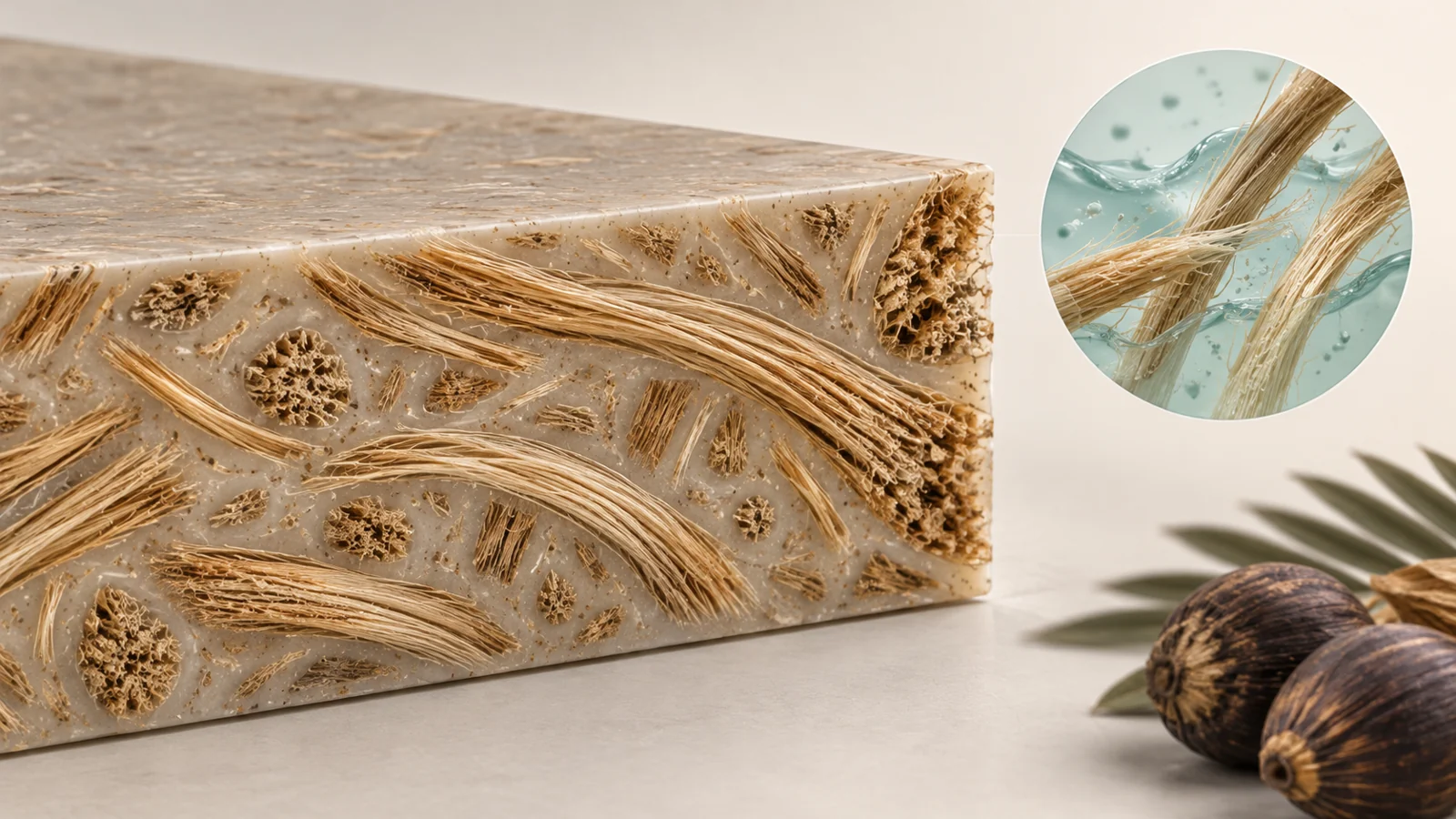
In Bangladesh, fibre from the fruit of the palmyra palm, Borassus flabellifer, is described as underused, often directed to disposal or waste-to-energy. A preprint published on 8 January 2026 asks whether this material could instead reinforce composites: materials made by combining fibres with a surrounding material.
The appeal is straightforward. A plant-derived fibre that is light, relatively resistant to moisture and able to provide insulation could suit some engineering designs. The review also reports mechanical strength and discusses composites with improved performance. Those observations make palmyra fibre worth investigating, while leaving open whether it can meet the demands of a particular part or deliver a measurable environmental benefit.
A fibre with several useful design traits
The review describes palmyra fibre as having low density, low moisture absorption, thermal insulation and mechanical strength. Each trait can matter when choosing a reinforcement. Low density may help keep a material light; lower moisture uptake may be relevant where moisture affects a material’s use; insulation can matter when heat transfer is a design concern. Mechanical strength is relevant to the loads a material might need to bear.
These are fibre-level properties. They do not by themselves specify how a finished composite will behave: that also depends on the surrounding material and the design and use of the component. The abstract provides no numerical property values or test conditions with which to make a direct comparison among fibres or applications.
Treatment changes the fibre surface
The preprint says alkali treatment removes hemicellulose and surface impurities from the fibre. It links that removal to improved morphology and thermal stability. In practical terms, the review presents treatment as a way to change the fibre before it is incorporated into a composite.
The account supports that reported connection, but the abstract does not provide a quantified treatment effect or details that would show how the result varies under different conditions. The point is a described material-processing step and reported improvement, not a universal performance guarantee.
Composite performance remains a broad claim
The review reports that palmyra-fibre-reinforced composites show improved performance and are comparable to conventional natural-fibre composites. This is a qualitative comparison. It suggests the material belongs in further engineering evaluation, but it does not establish that a specified panel, housing or structural component will perform reliably in service.
For that, engineers would need comparable tests on finished materials and components under the conditions relevant to their intended use. The supplied abstract does not identify a qualified application, commercial adoption, field deployment or service-life durability. Those are separate questions from whether the fibre has promising traits or whether a composite can show improved performance in reported work.
The sustainability case also needs its own evidence. Using a renewable, underused resource may be attractive, and higher-value use could matter to producers in Bangladesh. But the review’s rationale does not quantify production impacts or demonstrate lower life-cycle emissions. A net environmental advantage would depend on how the fibre and composite are sourced, processed and used, as well as what material they replace.
What palmyra fibre could make possible
Lightweight, insulating engineering components made with palmyra fruit fibre could give this underused material a higher-value role and potentially benefit material producers and communities in Bangladesh. That prospect depends on composites proving reliable for real components and on their production showing an environmental advantage over relevant alternatives.
Key Sources
- Primary source: Comprehensive Review of Borassus flabellifer Fibre: Potential as a Sustainable Material in Bangladesh and Worldwide for Engineering Applications
DOI or Journal Page · Preprint · 2026-01-08
Keep exploring